









UPDATES

In its 2021 study of the warehouse automation services market, Interact Analysis estimated that a lifetime service contract on an automation project is worth about as much as the original project. That spending peaks at the five, ten and fifteen-year marks, when parts need replacing and control systems are due for an upgrade.
A tender quote prices the equipment, the software licences and the installation, and it is the figure buyers put side by side when they compare offers. The rest of the cost of ownership arrives over fifteen years or more, spread across the facilities, operations and maintenance budgets, and part of it comes back years later as a second capital request. This issue follows that money through the life of an automated warehouse and sets out what we do at each stage to keep it down.
Five costs outside the quote
The building takes the first share, because its floor, ceiling height, column grid, power supply and network all have to suit the system before any equipment arrives. MHI's guidance on preparing a site asks buyers to check each of them early, since retrofitting after installation is costly. Fire protection belongs in the same conversation, and FM Global's data sheet on automatic storage and retrieval systems asks owners to coordinate construction, occupancy and protection in the planning stage. The data sheet requires in-rack sprinklers and vertical barriers wherever a rack cannot keep its flue spaces clear, and it singles out mini-load racks, where the angle-iron supports divert sprinkler discharge away from those spaces.
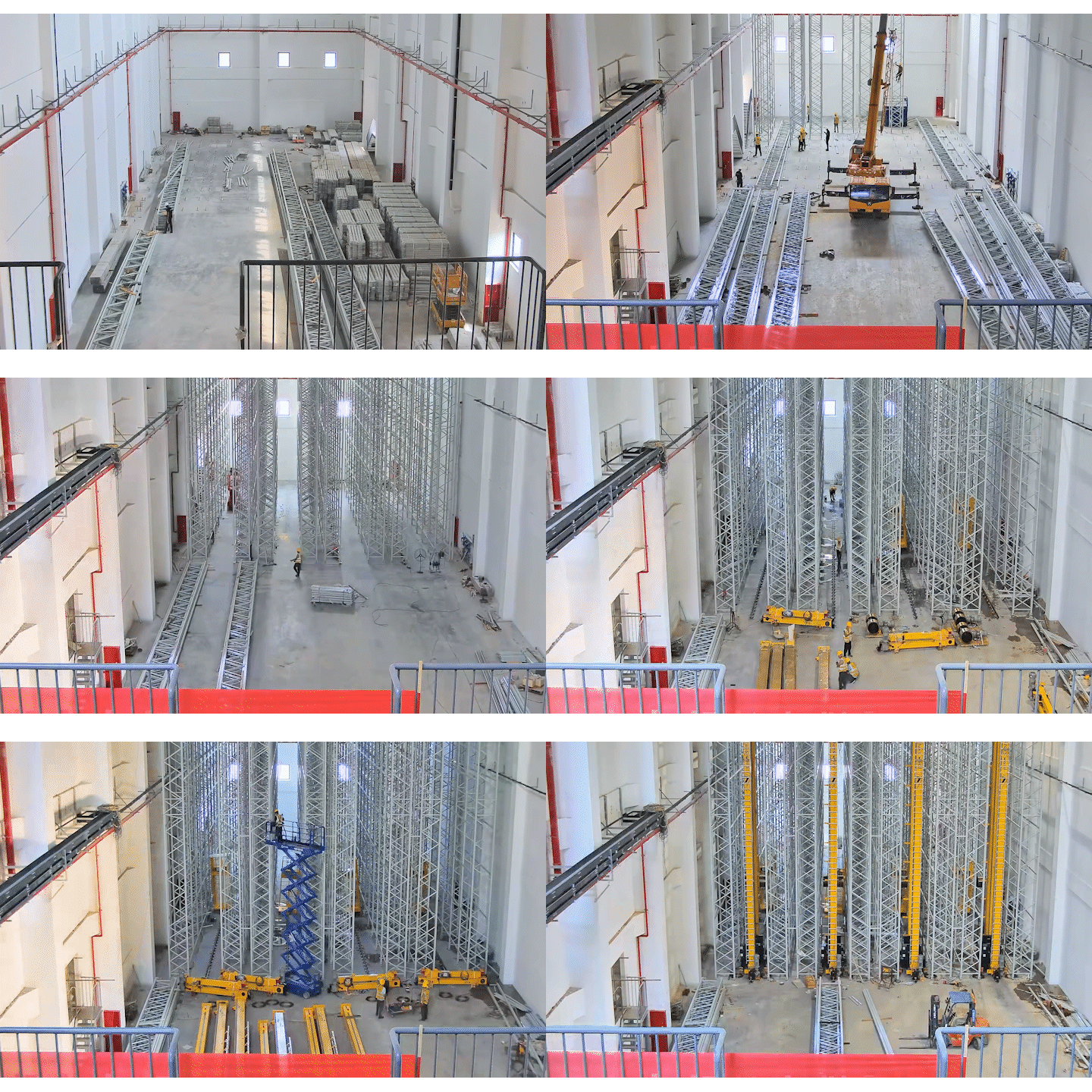
The start-up period runs from final commissioning through testing, training and go-live, and for much of it the site works below its design rate while customers keep ordering at their normal rate. MHI's go-live guidance recommends a phased launch that brings parts of the system online first and runs lighter volumes or a narrower product mix before full load. That approach protects service levels, and it also lengthens the period in which the owner pays for the new system and the old way of working at the same time. Control logic proven before equipment reaches site shortens that period, because fewer faults surface during live commissioning.
Every hour the system stops has a price that belongs in the investment case. Siemens' True Cost of Downtime 2024 puts a lost hour of production at $36,000 in fast-moving consumer goods and $2.3 million in automotive, and finds that plants run by the world's 500 largest companies lose 27 hours a month to unplanned downtime. A warehouse that feeds a production line turns its own stop into a line stop, and one that feeds a carrier schedule turns it into a missed cut-off.
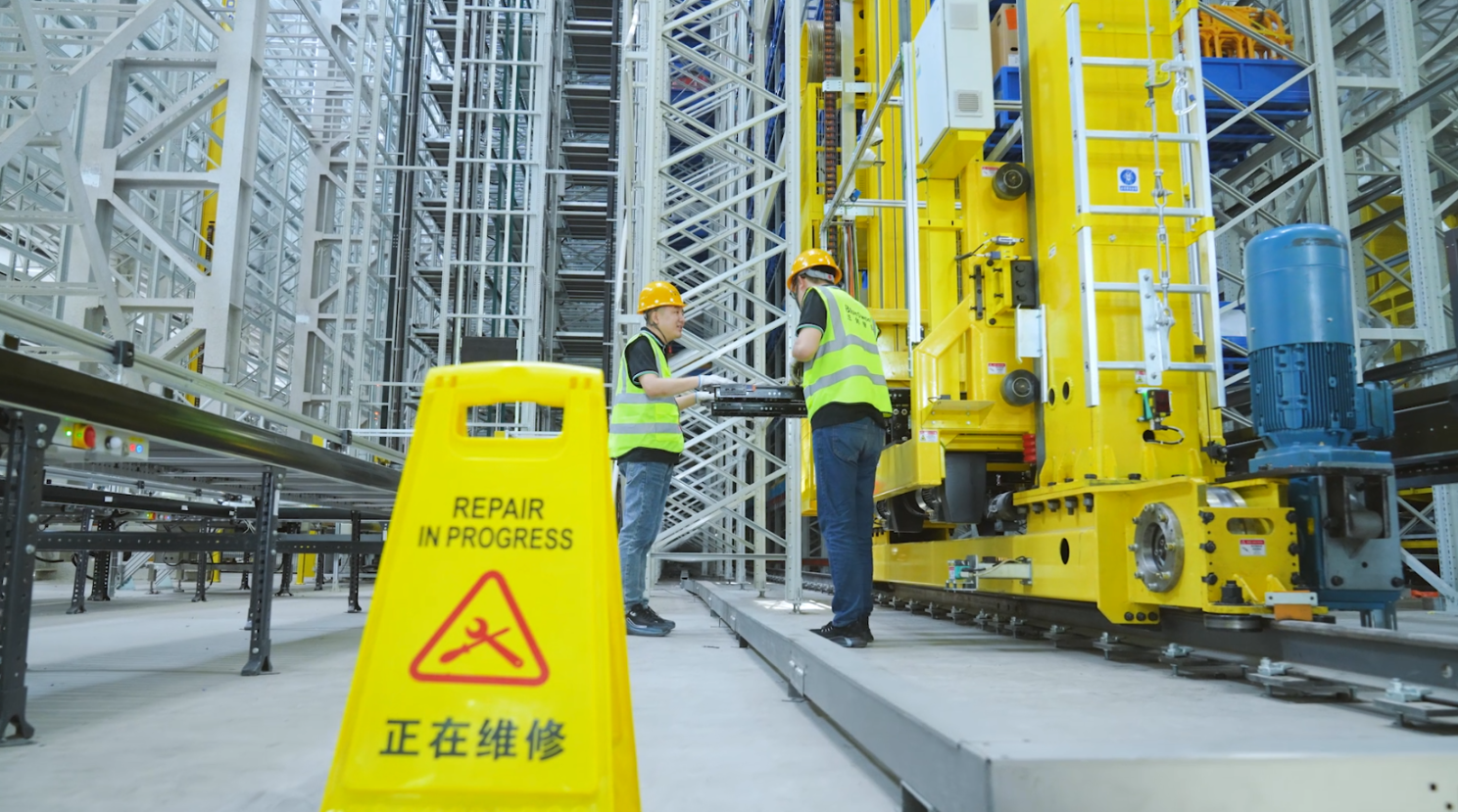
Keeping the system running is where the service spending Interact Analysis measured lands, in maintenance visits, replacement parts, software support and control upgrades. Bought-in components go out of production on their own manufacturers' schedules, so the share of the system a supplier designs and builds itself shapes how long the same parts stay available. Electricity is a cost for the whole life of the system, and Eurostat puts the average price for non-household users in the EU at €18.37 per 100 kWh in the second half of 2025, with Germany at €22.64. The drive technology you choose for each conveyor and crane fixes that cost for fifteen years.
The next change in the business is the cost hardest to see at tender, because it depends on volumes, order profiles and stock levels that are still unknown when the specification is written. A system sized closely to the tender data turns a rise in volume or a shift in order profile into a second capital project. Space, rack positions and software capacity reserved for a second phase at the start keep that change inside the original investment.
You can put each of these costs to a supplier at tender, starting with which building conditions the layout depends on and who confirms them, and how much of the control logic the supplier will test before equipment reaches site. The next questions cover how the system detects faults and how long a technician takes to reach it, what the system draws at design throughput, where its spare parts are held, and what a second phase would look like and cost.
Our work at each stage
Some of these costs stay with the owner whoever the supplier is: the building permit, the insurer's approval of the fire protection design, and the enterprise systems on the other side of each interface. A supplier controls how early it raises them and how much of the rest it can design out.
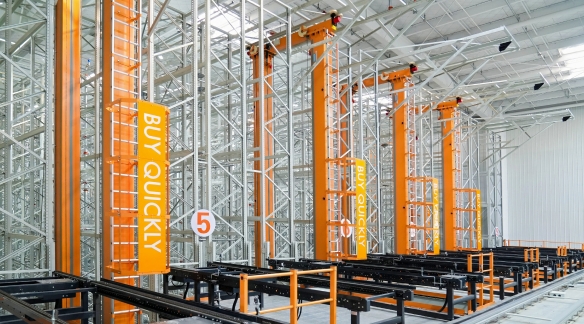
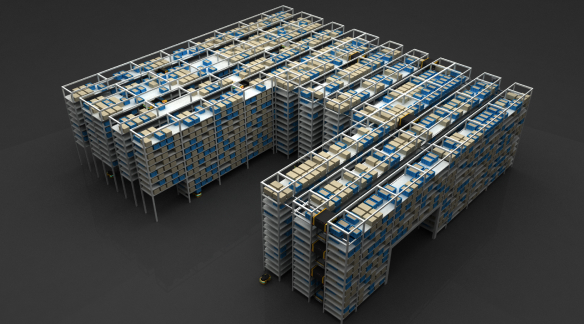
Before installation, our Spider Sky-Shuttle requires relatively little floor preparation and only simple modifications to existing racking, enabling deployment in as little as three days. Our distributed ultra-low-voltage direct current servo conveyor uses tool-free modular assembly that cuts installation time by 40%. At a regional tobacco distribution centre, integrating shuttle storage with the sorting lines took nearly 1,000 m² off the equipment footprint and shortened installation and commissioning by about 30%. For a battery manufacturer on a constrained site, a four-way pallet shuttle layout gave more than 30% more storage than a stacker crane design and more than 50% more than conventional high-bay racking.
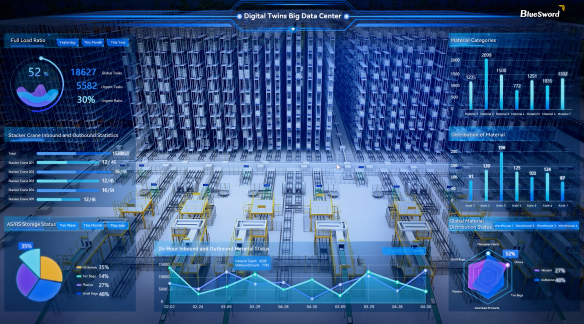
Through start-up, we prove the control logic before the steel arrives. Our VirtuSync digital twin connects virtual devices to the warehouse management system, the warehouse control system and the programmable logic controllers, so we test the integration between software and hardware for accuracy and completeness in simulation. In a working pharmaceutical plant we retrofitted 15,562 m² and more than 23,000 storage positions, and cut over in stages of under eight hours each, with the old and new systems running in parallel for three to seven days and no production stoppage.
Once the system is live, the cost of a stop depends on how early someone sees the fault and how soon the machine is back in service, and we work on both. Spider's sensors monitor at least 132 failure indicators for predictive maintenance, and our total productive maintenance system raises threshold-based alerts from the digital twin's 3D monitoring view. High-volume systems carry backup robots for swap-and-go maintenance, and Spider runs without track switches, which removes a single point of failure from the system. Our conveyors detect faults in real time over a CAN bus, which cuts downtime by up to 30%. If a technician has to attend, our 42 service hubs worldwide work to an 8-hour emergency response, and augmented reality remote support resolves 90% of issues without a site visit.
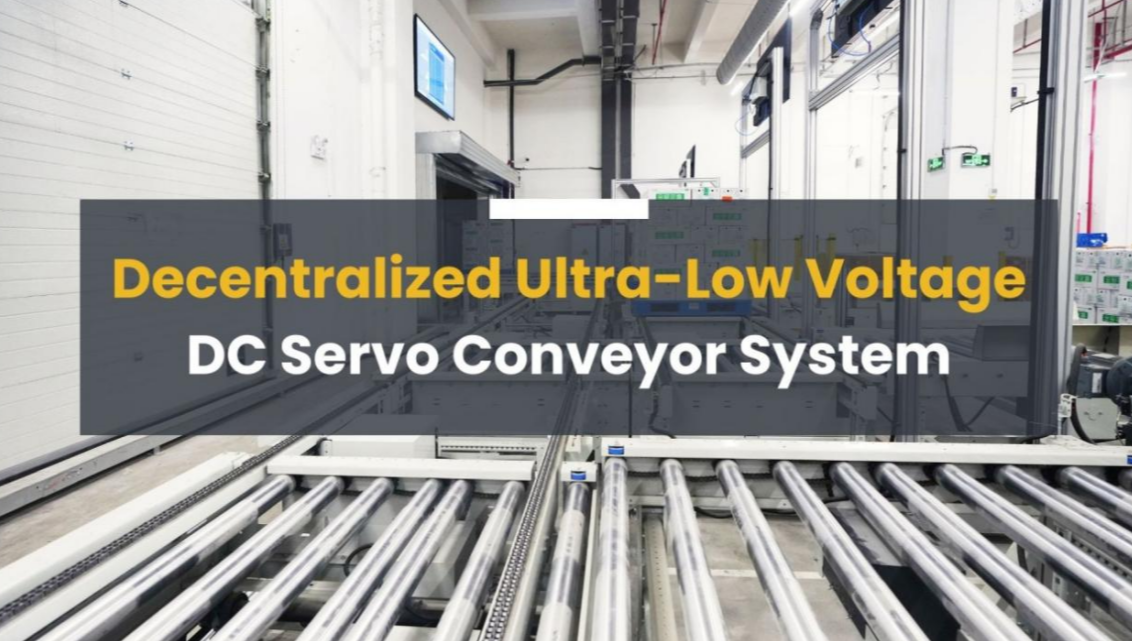
Year after year, spare parts depend on who makes them, and our in-house design and manufacturing rate is above 80%, which lets us keep the same components and configuration available across the years a site runs. We manage spare parts at global, regional and project level, and we have subsidiaries in Germany, Hungary and the United States. On Spider, lifecycle maintenance costs come down by 60%. Our conveyors run on 48 V direct current servo drives, which use more than 51% less energy than three-phase asynchronous motors and need 70% fewer cables.
If the investment itself is the constraint, our Robotics-as-a-Service model moves it into operating cost. We invest in the robots, infrastructure and software, operate and maintain the system around the clock, and charge by usage, time or personnel.
Meet us in Madrid in November
Logistics & Automation Madrid runs on 11 and 12 November 2026 at IFEMA Madrid, and we will be on stand 4E10 for both days. One ticket covers Logistics & Automation, Empack and Logistic & Industrial Build, so packaging, intralogistics and industrial construction share the same venue, which suits a conversation that starts with the building.

If you are weighing an automation investment, bring the quote, the layout or the tender data to the stand, and our engineers will go through the costs around it with you: the building conditions, the start-up plan, the service model and the second phase. The detail of our service model is at https://www.bluesword.com/services/technical-support, and you can book a meeting with the team at https://www.bluesword.com/contact.
Sources for the external data in this issue: Interact Analysis, warehouse automation services market release, May 2021; Siemens, The True Cost of Downtime 2024; FM Global Property Loss Prevention Data Sheet 8-34, Protection for Automatic Storage and Retrieval Systems, interim revision July 2024; MHI, Go-Live Best Practices for Warehouse Automation, January 2026, and Preparing Your Warehouse for Material Handling Automation, July 2026; Eurostat, non-household electricity prices for the second half of 2025, published 8 May 2026; China Alcoholic Drinks Association and KPMG, 2025 China Baijiu Market Mid-Year Research Report, June 2025.
Read More
-
 September 29 / 2026Beyond the Quote: What an Automated Warehouse Costs Over Its Working Life
The real cost of warehouse automation goes far beyond the initial quote. Discover the hidden costs of installation, downtime, maintenance, energy, upgrades, and expansion—and how smarter system design can keep them under control.
READ MORE
-
 June 29 / 2026Inside the Electronics Factory: What Changed in Material Handling This YearREAD MORE
-
 April 28 / 2026Fixed or Flexible: What Manufacturing Deployments Are Telling Us
Fixed infrastructure once defined manufacturing efficiency. But as production cycles shorten and flexibility becomes critical, mobile automation is changing how factories think about material flow.
READ MORE
-
 March 27 / 2026The Part of Your Warehouse Nobody Wants to Talk About
The warehouse's biggest bottleneck may not be where you think. BlueSword looks at why the dock is becoming the next frontier of automation.
READ MORE
-
 January 28 / 20262026 Manufacturing Upgrade and Industry Trends
As manufacturers plan toward 2026, automation, smart manufacturing, and integrated material flow are becoming central to capacity and resilience. This article explores industry trends, labor constraints, and how integrated warehouse and production automation help reduce internal logistics losses and support phased manufacturing upgrades.
READ MORE
-
 September 24 / 2025Why Automated Warehousing Matters
Global supply chains face constant disruption. Automation is redefining warehouses as resilient hubs that keep goods moving no matter the challenge.
READ MORE
-
 August 27 / 2025How Automation Changes the Nature of Frontline Work: Confidence, Retention, and Workforce Value
Automation is no longer just about efficiency—it’s transforming warehouses and factories into safer, smarter, and more rewarding places to work.
READ MORE
-
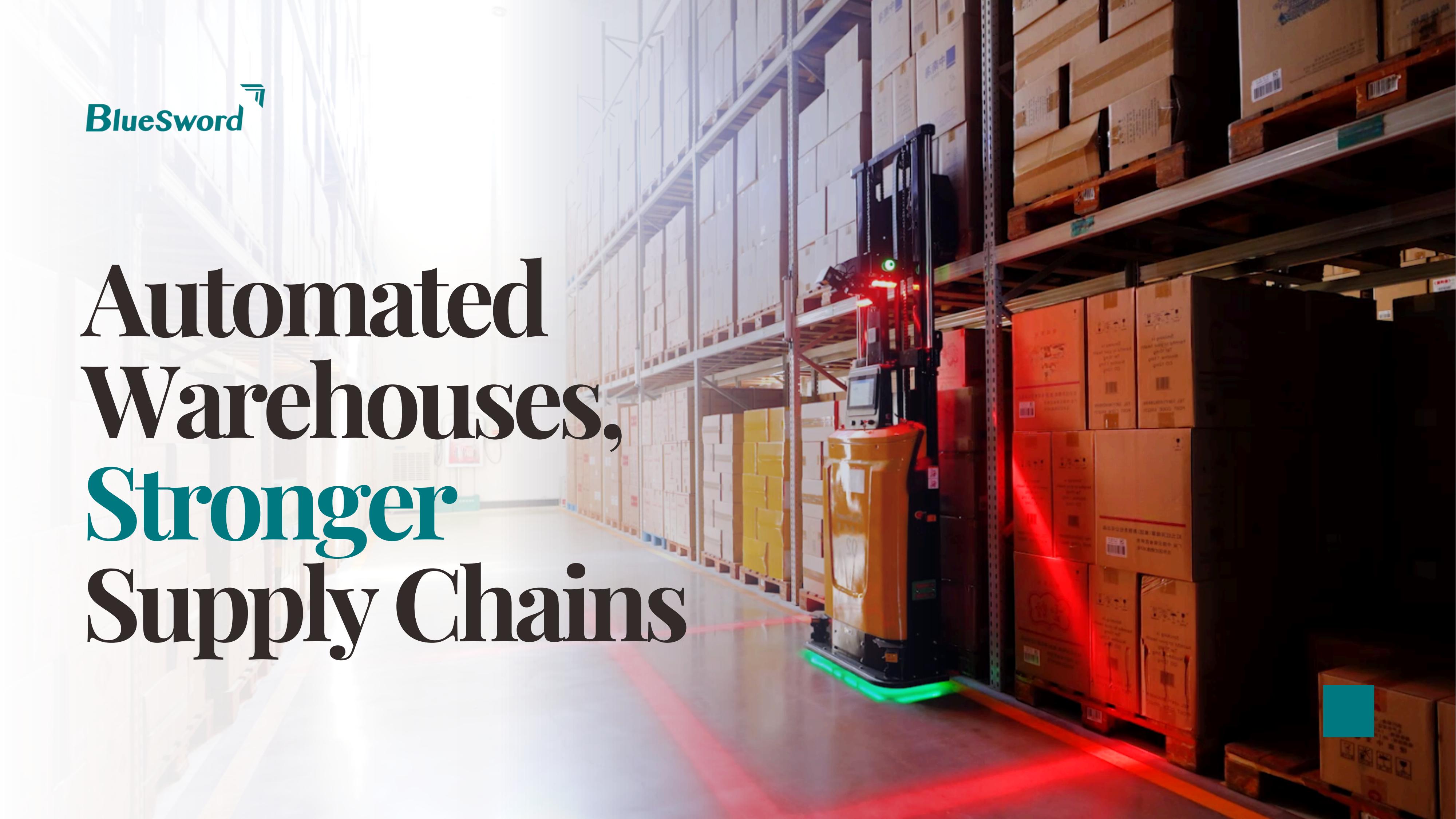 August 19 / 2025Automation in Logistics: Solving Workforce Challenges with Smart Systems
Discover smart logistics solutions with AMRs, shuttle systems, and automated warehouses. Future-proof your supply chain with intelligent intralogistics systems.
READ MORE
-
 July 25 / 2025Robotics Driving Real Safety Transformation in Factories and Warehouses
Safety in factories and warehouses is often discussed in terms of compliance and injury rates. But true safety goes beyond meeting standards. It requires addressing the root causes of risks and understanding how automation reshapes the daily reality for frontline workers—physically and mentally.
READ MORE
-
 May 25 / 2025Are Warehouse Robots Here to Replace Workers—Or to Back Them Where It Counts?
Automation is advancing fast—but where does that leave the people on the ground? This article explores why the future of warehousing isn't a story of replacement, but one of smart collaboration. With real-world cases from BlueSword and global data, we dive into what human-machine partnerships really look like on the warehouse floor.
READ MORE
-
 March 30 / 2025What’s Slowing Down Manufacturing—and What Leading Factories Are Doing About It
While automation continues to gain attention across the production line, internal logistics often remains untouched in traditional manufacturing plants.
READ MORE
-
 January 2 / 2025Building a Green Logistics Ecosystem with Servo Technology
The conveyor system is essential in modern production and logistics, facilitating the efficient storage, sorting, handling, and distribution of materials. By automating transport processes, it enhances efficiency, accuracy, and safety while effectively reducing labor costs.
READ MORE
-
 September 29 / 2024Logistics Transformation: Navigating Challenges in the FMCG Industry
Fast-moving consumer goods (FMCG) are an essential part of our everyday lives. With their large market size and ongoing growth, the FMCG industry plays an important role in the global economy.
READ MORE


