








UPDATES

Run an electronics plant this year and the internal logistics carries a different load than it did last year. A single line now runs more product variants, and customer orders land closer to the ship date. At the same time, the floor staff to move material between stations is harder to hire and keep. Those conditions change how you design component flow, line feeding, and finished-goods handling. This issue sets the international market data against the systems BlueSword builds, so you can see where the two line up.
The labor shortage became a structural constraint
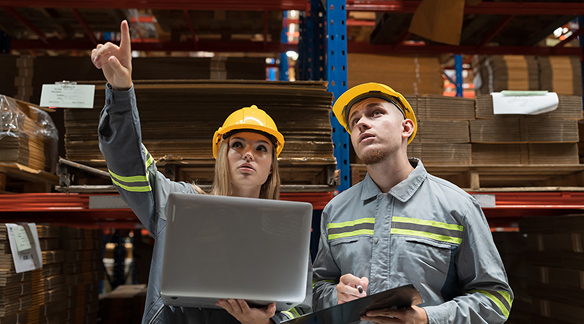
Market analysts changed how they describe the workforce gap. Market Business Insights now frames the shortage of industrial labor as a structural barrier for manufacturers and third-party logistics providers, one that holds through economic cycles, so you cannot wait it out. Industry surveys through 2026 keep ranking recruitment and retention of warehouse staff as the hardest operational problem to fix.
A plant running multiple shifts cannot hold throughput on the staff it can hire, so material handling automation becomes a baseline requirement. The pressure shows in what factories order. The Association for Advancing Automation (A3) recorded an 18% jump in robot orders across the semiconductor, electronics, and photonics sectors in one quarter of 2025. Factories buy this capacity because the headcount to move material by hand is not there.
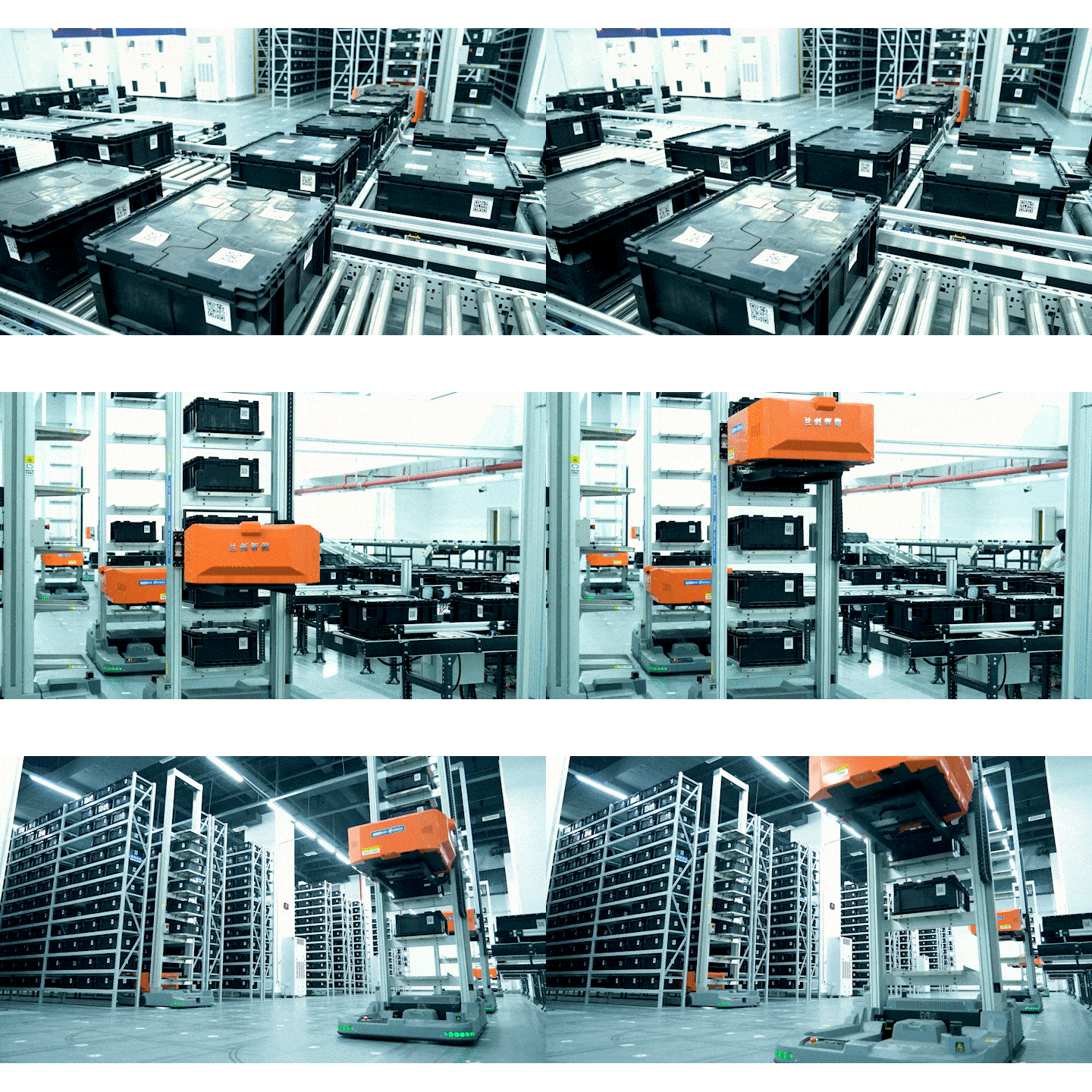
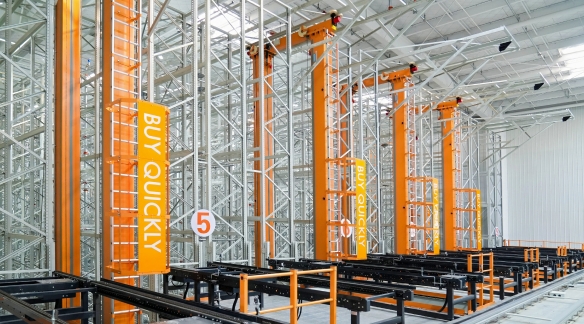
Lenovo Lights-out Smart Manufacturing Facilities (BlueSword Project)
Electronics production moved toward high mix
Consumer electronics used to run as high-volume, low-mix work. A single shift now puts several product variants down the same line. Automate (A3) ties this to plug-and-produce modular manufacturing built on Module Type Package standards, the industry's response to wider product mixes and faster spec changes. Contract manufacturers run vision-guided lines that read which model variant is arriving and adjust the assembly parameters for it. The pull on logistics is to feed precision components and fragile parts to a line that keeps changing what it builds.
A line that switches models several times a shift needs storage and transport you can re-sequence without rebuilding the floor. Fixed conveyor with hard-coded routing cannot keep up.
BlueSword designed the four-way pallet shuttle around that problem. The shuttles run across and along the rack and change aisles on their own, so you move from one SKU profile to another by changing the control logic and the storage map and leaving the steel in place. For component storage, the Gecko Sky-MiniLoad holds totes and small cases at the density electronics parts need, which fits the wide, shallow inventories a high-mix line pulls from.
Mobile automation is growing faster than fixed
Roland Berger put numbers on the shift in its material handling outlook. The firm projects autonomous mobile robots and automated guided vehicles at about 30% compound annual growth between 2025 and 2030, ahead of fixed automation like conveyors and sorters. It credits deployment speed, flexibility, and easier scaling, which let you adapt to demand swings and SKU complexity.
In an electronics plant, the mobile layer covers the ground between fixed points: it feeds components to the line and clears finished cartons. BlueSword's FMR forklift robots handle the pallet moves between receiving, storage, and the line edge with no dedicated lanes or floor changes. The fleet shares the floor with the people already working there and re-routes around obstacles, so material keeps moving while assembly runs.
The advantage is in integration
Market Business Insights labels the current shift a move from hardware-first to software-defined intralogistics. The problem it points to sits on any plant floor: WMS, conveyors, robots, scanners, sorters, and ERP run as separate systems that do not talk to each other, and the fix is an orchestration layer that pulls them into one control hub. Roland Berger reaches the same point from the investment side and argues that the operators who master integration across systems take the advantage.
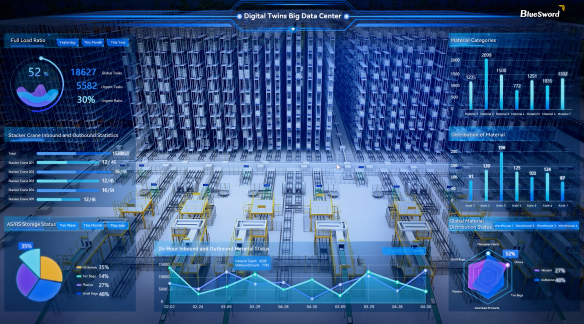
BlueSword puts the control software at the center of the system. The WMS and WCS layer schedules the shuttles, the mini-load, and the FMR fleet against one set of order and inventory data, and it connects up to your MES and ERP. On a high-mix electronics line, that link lets a model changeover on the production side pull the right components on the logistics side with no one re-planning by hand.
BlueSword carries the same consolidation into the hardware with the Spider Sky-Shuttle. The Spider takes cases from any height across N, L, and T-shaped layouts, reaches 20 metres inside a one-metre aisle, and runs on existing racks with no structural work, which lifts storage density by up to 300% over a conventional case-handling setup. Its latest upgrade folds direct production line integration and overhead transport into the same platform, so storage, retrieval, and material flow run through one system instead of three. BlueSword calls it the All-in-One Robot. For your plant it means a component moves from the rack to the line edge inside one coordinated system, which cuts out the handoffs where delays and damage start.
Keeping the line fed without contamination
Many electronics components are small, fragile, and sensitive to static and particulates, so the handling system has to protect them while it moves them. Plants now run AMRs for just-in-time delivery so a line does not stop for a missing part, and move sensitive goods in a contamination-controlled flow.
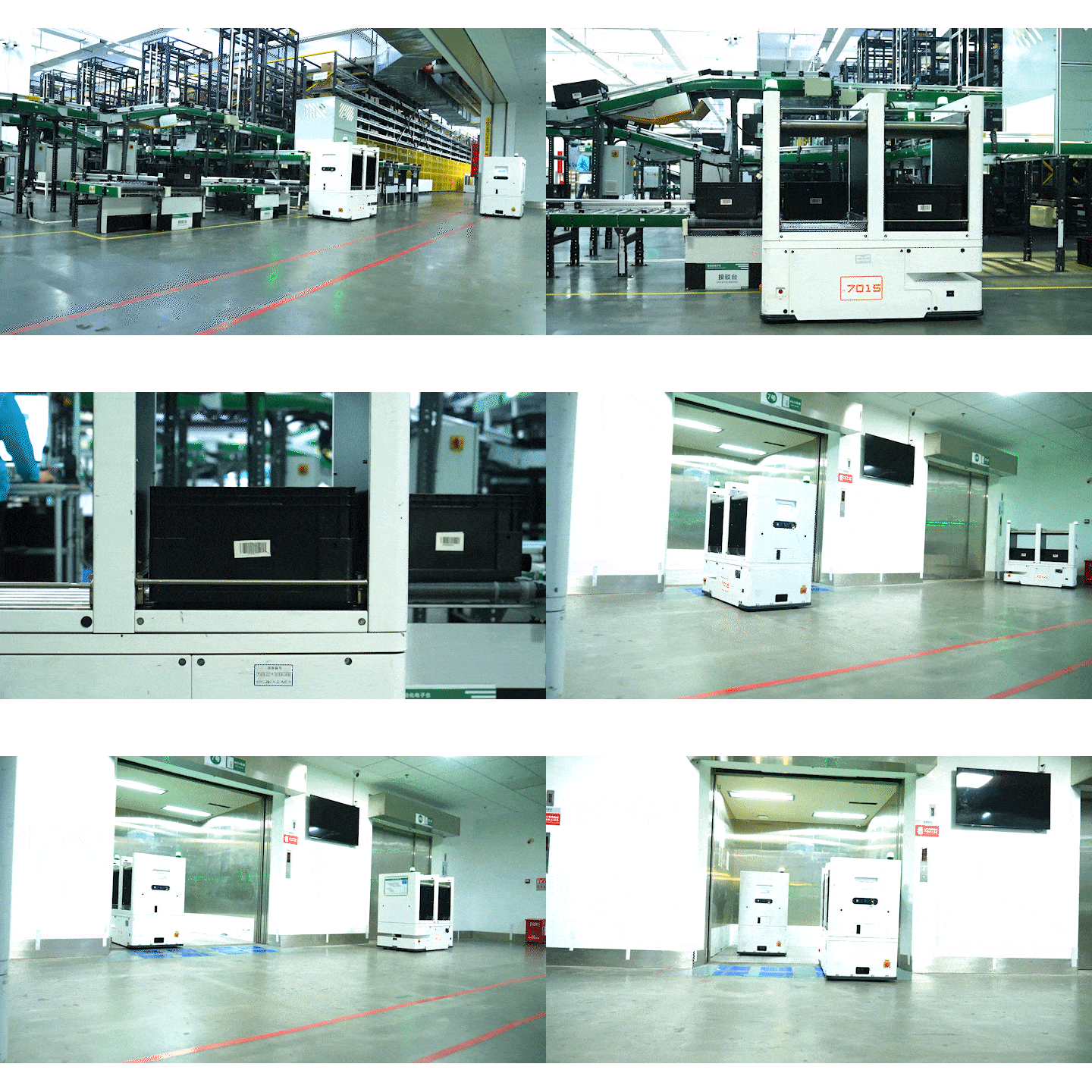
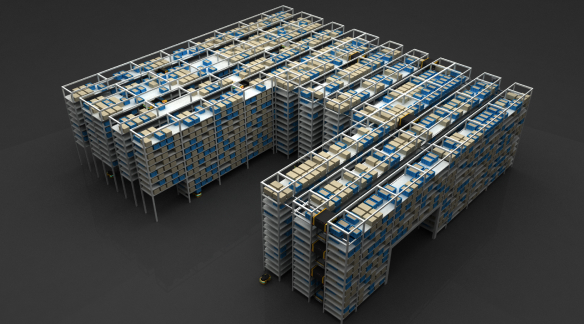
OPPO Smart Manufacturing (BlueSword Project)
BlueSword built its component handling for that envelope. The Gecko Sky-MiniLoad buffers parts next to the line and releases them in the order the line calls for, which holds work-in-process down and cuts the repeated handling that breaks fragile parts. The FMR robots bring full pallets and totes to the line edge on the schedule the WCS sets, so your operators spend their time on assembly and inspection while the system moves the stock.
RaaS is opening automation to smaller manufacturers
Buyers changed how they pay for automation, and the change matters most to the companies that could not justify a big capital project before. Market Business Insights points to robotics-as-a-service as a way to move heavy capital expenditure into flexible operating expenditure, which drops the entry barrier for mid-market firms. A small or mid-sized electronics contract manufacturer runs on thin margins and short, uncertain product cycles, so a multi-year capital commitment to a fixed build is a real exposure when the next product might need a different layout. A usage-based model lets you pay against what you ship.
BlueSword runs its own RaaS program on a build-operate-own model. BlueSword puts up the infrastructure, the robots, and the software, designs and builds the warehouse, then operates it, while you pay a fee tied to usage, time, or headcount with no upfront CAPEX. The operating side covers round-the-clock maintenance, live optimization, and a dedicated technical team, so a smaller manufacturer gets a running automated facility without hiring the specialists to keep it running. BlueSword reports that the model cuts staffing by more than half through AI-driven robotics and lowers total operating cost by about 45% against a manual warehouse, with goods-to-person picking about three times faster.
For an SME the shared-facility option changes the math. BlueSword runs multi-client Smart Hub warehouses where several customers share one automated space and split the cost, which suits a business whose volume cannot fill a dedicated site. The same setup scales up when a launch or a seasonal peak lifts volume, because the operator adds capacity inside the hub instead of waiting on a new build. If you would rather own the system over time, you phase the investment the same way, starting with the storage and retrieval core and adding the mobile fleet and software as volume justifies it.
If you are specifying a system this year
A few things follow from the data if you are scoping electronics intralogistics in 2026. Your line will switch models more often than the original spec assumed, so the storage and transport have to re-sequence in software. Weigh the software and the integration as heavily as the hardware, because that is where the flexibility and the long-run cost sit. Specify a mobile layer for the moves between fixed points, since it redeploys when you change the layout. On cost, a robotics-as-a-service deal lets a smaller plant match the spend to the production ramp and skip the upfront build.
BlueSword builds across that stack, from the Spider Sky-Shuttle and Gecko Sky-MiniLoad in storage to the FMR forklift robots on the floor, tied together by one WMS and WCS layer, and offered as a managed RaaS service for plants that would rather pay by usage. If you want these trends mapped onto a specific plant, our team will walk through the layout and the numbers with you.
Contact us today: https://www.bluesword.com/contact
Sources for the market data in this issue: Roland Berger Material Handling and Warehouse Automation Outlook; Association for Advancing Automation (A3) / Automate; Market Business Insights.
Read More
-
 June 29 / 2026Inside the Electronics Factory: What Changed in Material Handling This YearREAD MORE
-
 April 28 / 2026Fixed or Flexible: What Manufacturing Deployments Are Telling Us
Fixed infrastructure once defined manufacturing efficiency. But as production cycles shorten and flexibility becomes critical, mobile automation is changing how factories think about material flow.
READ MORE
-
 March 27 / 2026The Part of Your Warehouse Nobody Wants to Talk About
The warehouse's biggest bottleneck may not be where you think. BlueSword looks at why the dock is becoming the next frontier of automation.
READ MORE
-
 January 28 / 20262026 Manufacturing Upgrade and Industry Trends
As manufacturers plan toward 2026, automation, smart manufacturing, and integrated material flow are becoming central to capacity and resilience. This article explores industry trends, labor constraints, and how integrated warehouse and production automation help reduce internal logistics losses and support phased manufacturing upgrades.
READ MORE
-
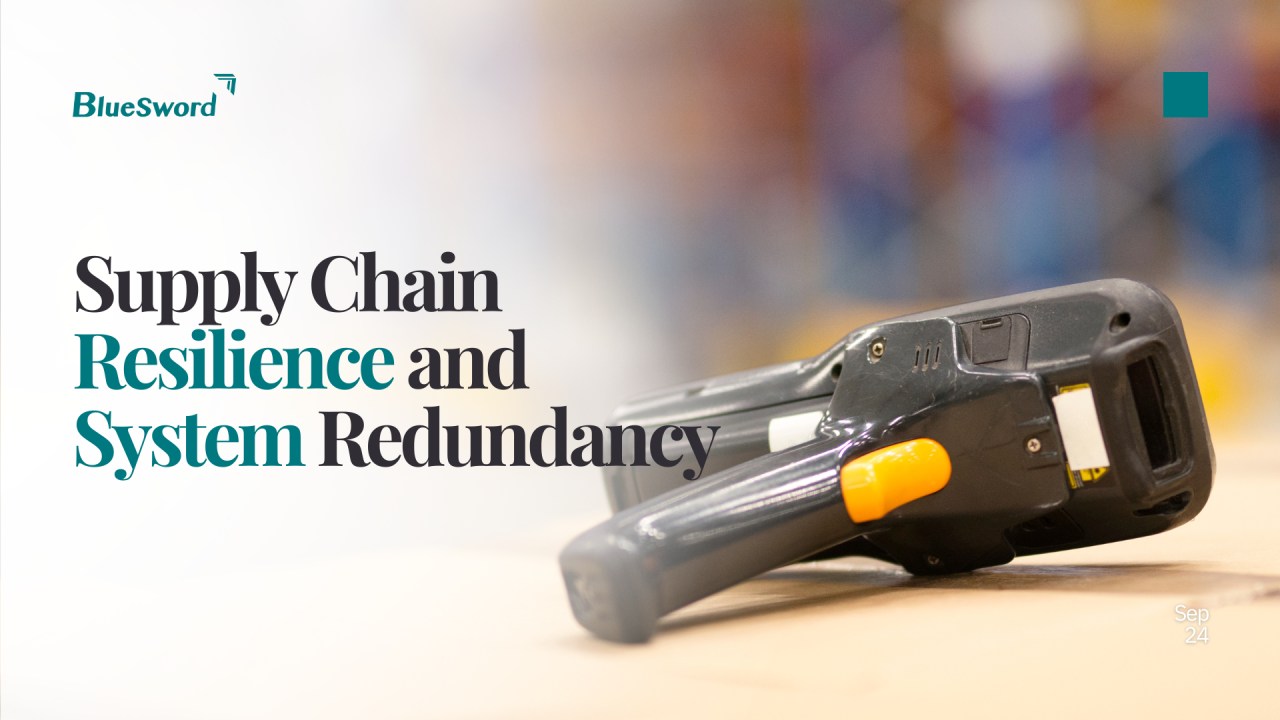 September 24 / 2025Why Automated Warehousing Matters
Global supply chains face constant disruption. Automation is redefining warehouses as resilient hubs that keep goods moving no matter the challenge.
READ MORE
-
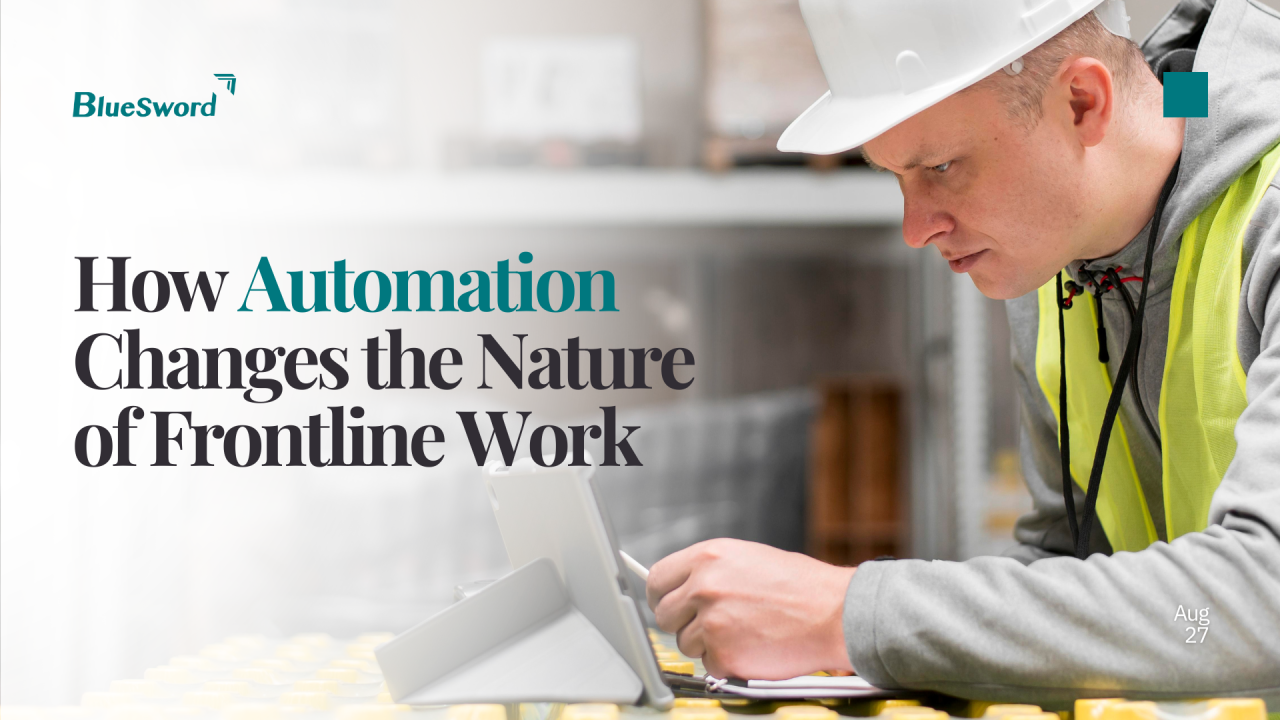 August 27 / 2025How Automation Changes the Nature of Frontline Work: Confidence, Retention, and Workforce Value
Automation is no longer just about efficiency—it’s transforming warehouses and factories into safer, smarter, and more rewarding places to work.
READ MORE
-
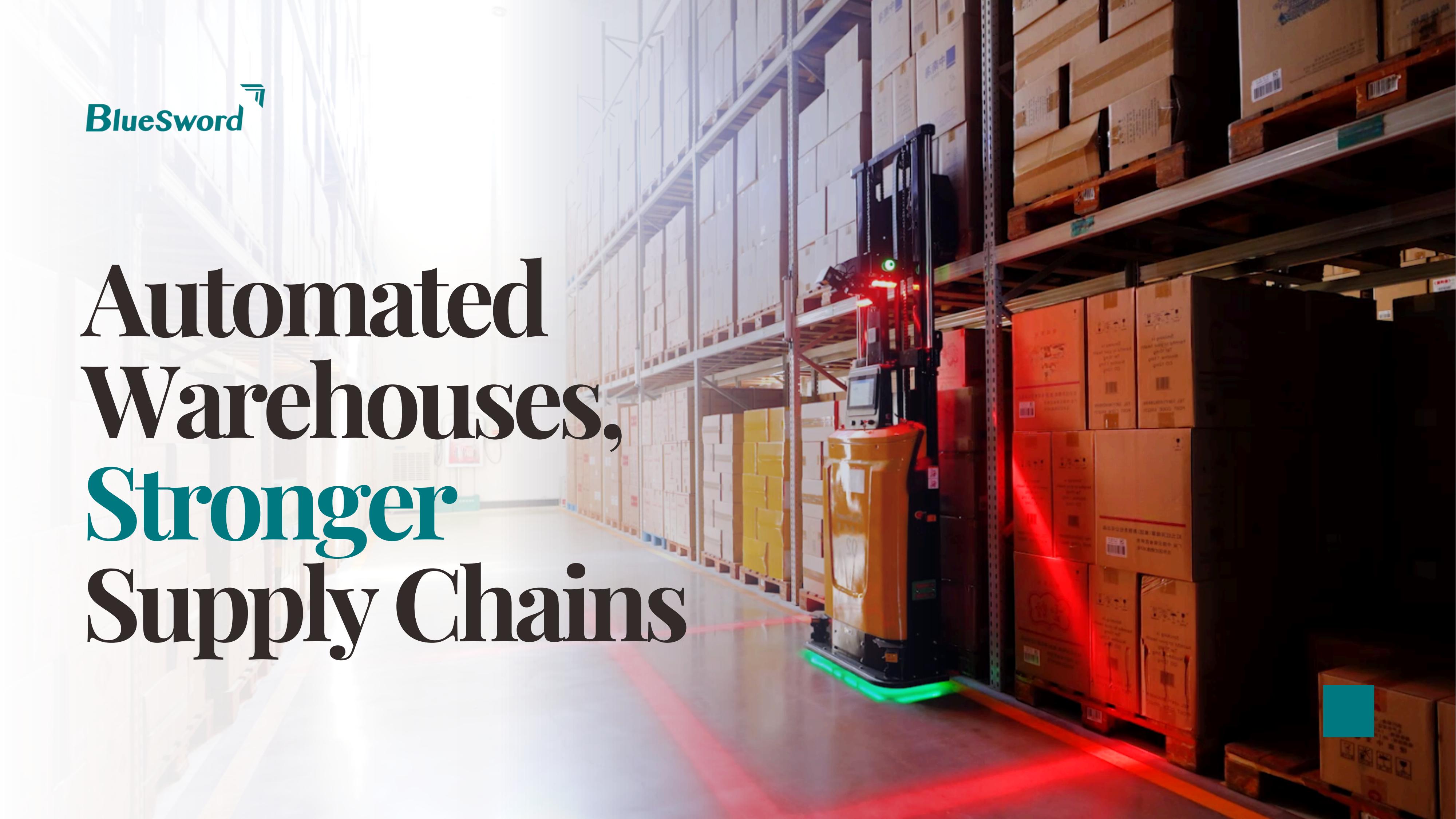 August 19 / 2025Automation in Logistics: Solving Workforce Challenges with Smart Systems
Discover smart logistics solutions with AMRs, shuttle systems, and automated warehouses. Future-proof your supply chain with intelligent intralogistics systems.
READ MORE
-
 July 25 / 2025Robotics Driving Real Safety Transformation in Factories and Warehouses
Safety in factories and warehouses is often discussed in terms of compliance and injury rates. But true safety goes beyond meeting standards. It requires addressing the root causes of risks and understanding how automation reshapes the daily reality for frontline workers—physically and mentally.
READ MORE
-
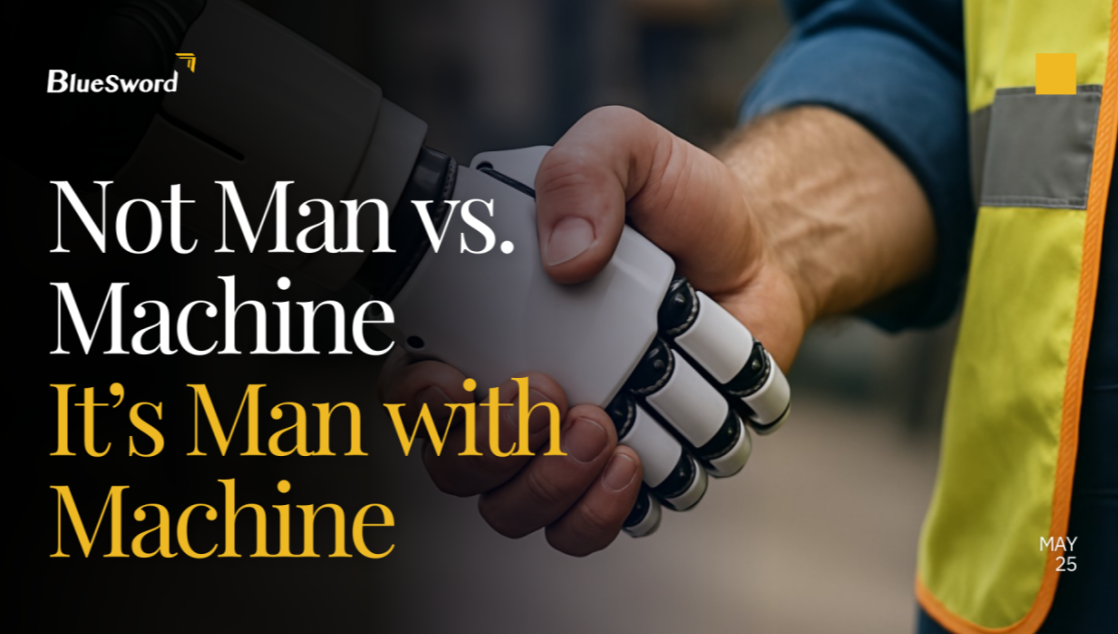 May 25 / 2025Are Warehouse Robots Here to Replace Workers—Or to Back Them Where It Counts?
Automation is advancing fast—but where does that leave the people on the ground? This article explores why the future of warehousing isn't a story of replacement, but one of smart collaboration. With real-world cases from BlueSword and global data, we dive into what human-machine partnerships really look like on the warehouse floor.
READ MORE
-
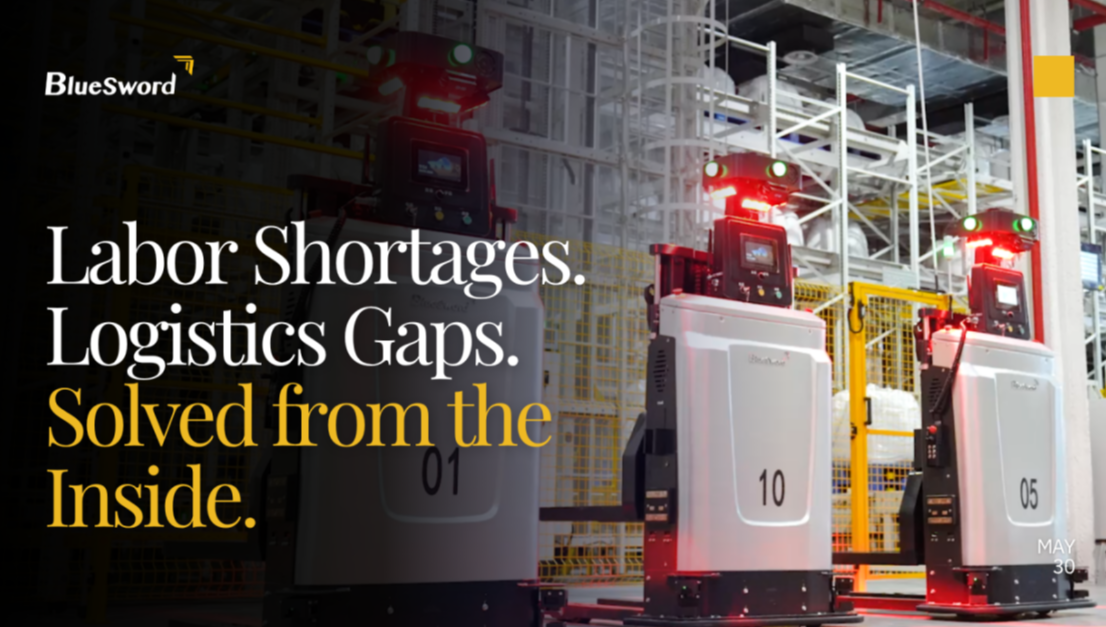 March 30 / 2025What’s Slowing Down Manufacturing—and What Leading Factories Are Doing About It
While automation continues to gain attention across the production line, internal logistics often remains untouched in traditional manufacturing plants.
READ MORE
-
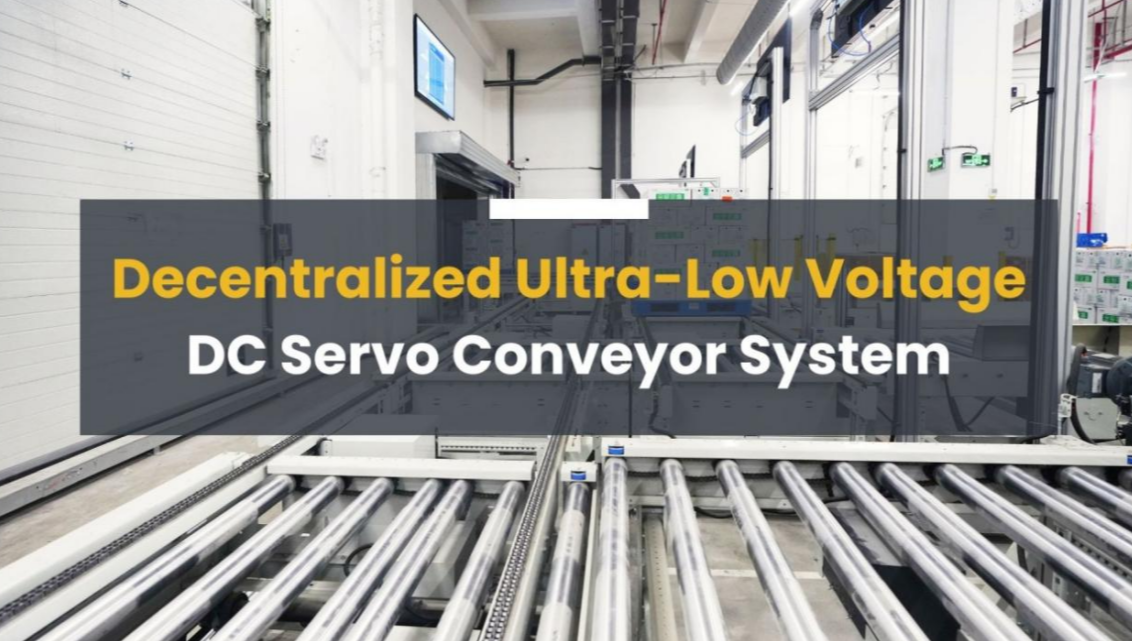 January 2 / 2025Building a Green Logistics Ecosystem with Servo Technology
The conveyor system is essential in modern production and logistics, facilitating the efficient storage, sorting, handling, and distribution of materials. By automating transport processes, it enhances efficiency, accuracy, and safety while effectively reducing labor costs.
READ MORE
-
 September 29 / 2024Logistics Transformation: Navigating Challenges in the FMCG Industry
Fast-moving consumer goods (FMCG) are an essential part of our everyday lives. With their large market size and ongoing growth, the FMCG industry plays an important role in the global economy.
READ MORE


