









UPDATES

Manufacturing leaders are preparing for a new investment cycle as they plan toward 2026. According to a 2025 Deloitte survey of more than 600 manufacturing executives, around 80% expect to allocate at least 20% of their operational improvement budgets to smart manufacturing initiatives, with automation, data analytics, and connected systems listed as top priorities for capacity improvement and operational resilience.
At the same time, workforce constraints remain a persistent challenge in advanced economies. A 2025 industry survey covering Australia and New Zealand manufacturers reported that 79% face ongoing difficulty filling skilled trade roles, with official projections pointing to a structural shortfall of tens of thousands of qualified workers over the coming years. These labor constraints directly affect production continuity, internal coordination, and the ability to absorb demand fluctuations.
Supply chain uncertainty continues to shape manufacturing strategy as well. In the 2025 State of Manufacturing and Supply Chain report, 77% of manufacturing and supply chain leaders identified resource constraints, particularly labor and budget availability, as a central operational challenge. Together, these data points describe a consistent industry context. Manufacturers are prioritizing digital and automation investment while operating under labor pressure and tighter resource conditions as they plan the next stage of growth toward 2026.
Internal Material Flow as a Growing Source of Production Loss
Across sectors, internal material flow has become a measurable contributor to production loss. Multiple industry studies published between 2024 and 2025 indicate that 30% to 40% of unplanned production delays are linked to internal logistics issues, including late line feeding, temporary congestion, and sequencing mismatches between processes. In multi line manufacturing plants, inefficiencies in internal transport and intermediate storage account for up to 25% of schedule deviations, even when core production equipment remains available.
These losses tend to accumulate rather than originate from isolated failures. Fragmented control across production, storage, and transport leads to materials waiting for availability, local reprioritization by operators, and decisions made without system level coordination. As product variants increase and batch sizes continue to shrink, coordination gaps widen and generate indirect downtime that traditional OEE metrics often fail to capture.
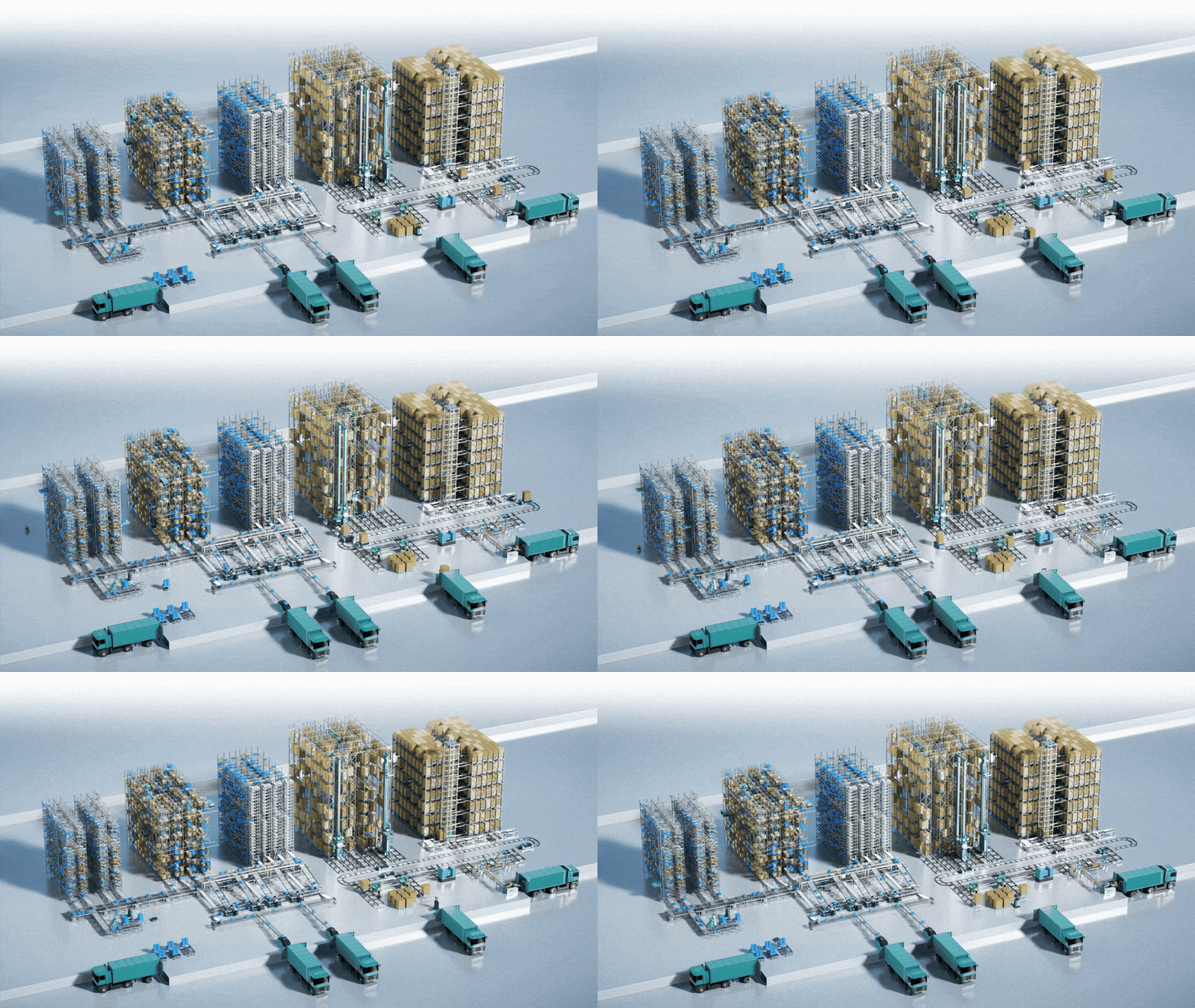
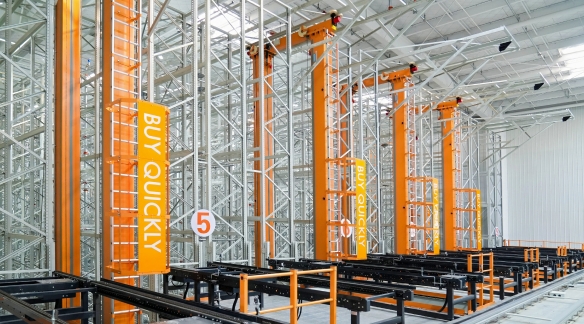
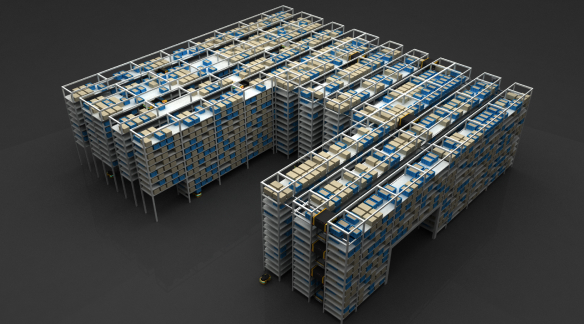
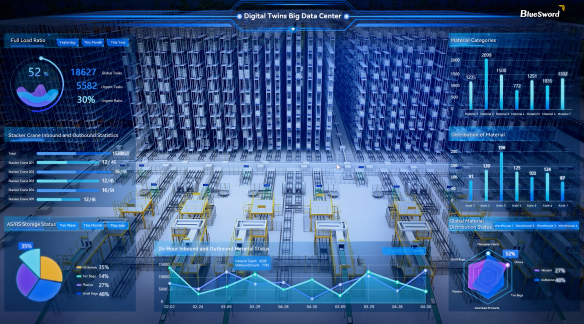
In manufacturing automation projects delivered over recent years, integrating storage, transport, and production supply under unified software logic has proven effective in reducing these gaps. Automated warehouses, shuttle systems, and internal transport equipment are planned as operational elements within the manufacturing process. Material availability, sequencing, and buffer levels are managed as part of production execution, reducing manual intervention and limiting the spread of small disruptions across the system.
Operational results observed in these environments show improved execution consistency. When material flow follows system logic rather than informal coordination, production schedules absorb variability more effectively and indirect losses associated with internal logistics decline in measurable terms.
Automation Investment Shifts Toward Integrated and Phased Manufacturing Upgrades
From the perspective of automation turnkey solution providers, the integration of warehouse automation with production operations is increasingly evident across manufacturing projects. Storage, buffering, and internal material handling are being planned alongside production execution rather than addressed as standalone facilities.
Looking toward 2026, industry expectations point to a higher volume of automation investment than in previous cycles. This includes manufacturers planning new Industry 4.0 factories as well as a larger group focusing on upgrading existing sites. In many cases, these initiatives involve reworking how automated warehouses, transport systems, and production supply interact, while preserving existing equipment and infrastructure.
In recent manufacturing projects, this trend appears in both newly built facilities and existing plants under phased upgrades. Some manufacturers design fully integrated production and warehousing systems from the outset. Others advance in stages by upgrading existing automated assets, strengthening system coordination, and expanding functionality over time. This combination of new investment and staged modernization reflects how manufacturing automation is evolving as the industry moves toward 2026.
Read More
-

 September 29 / 2026Beyond the Quote: What an Automated Warehouse Costs Over Its Working Life
The real cost of warehouse automation goes far beyond the initial quote. Discover the hidden costs of installation, downtime, maintenance, energy, upgrades, and expansion—and how smarter system design can keep them under control.
READ MORE
-
 June 29 / 2026Inside the Electronics Factory: What Changed in Material Handling This YearREAD MORE
-
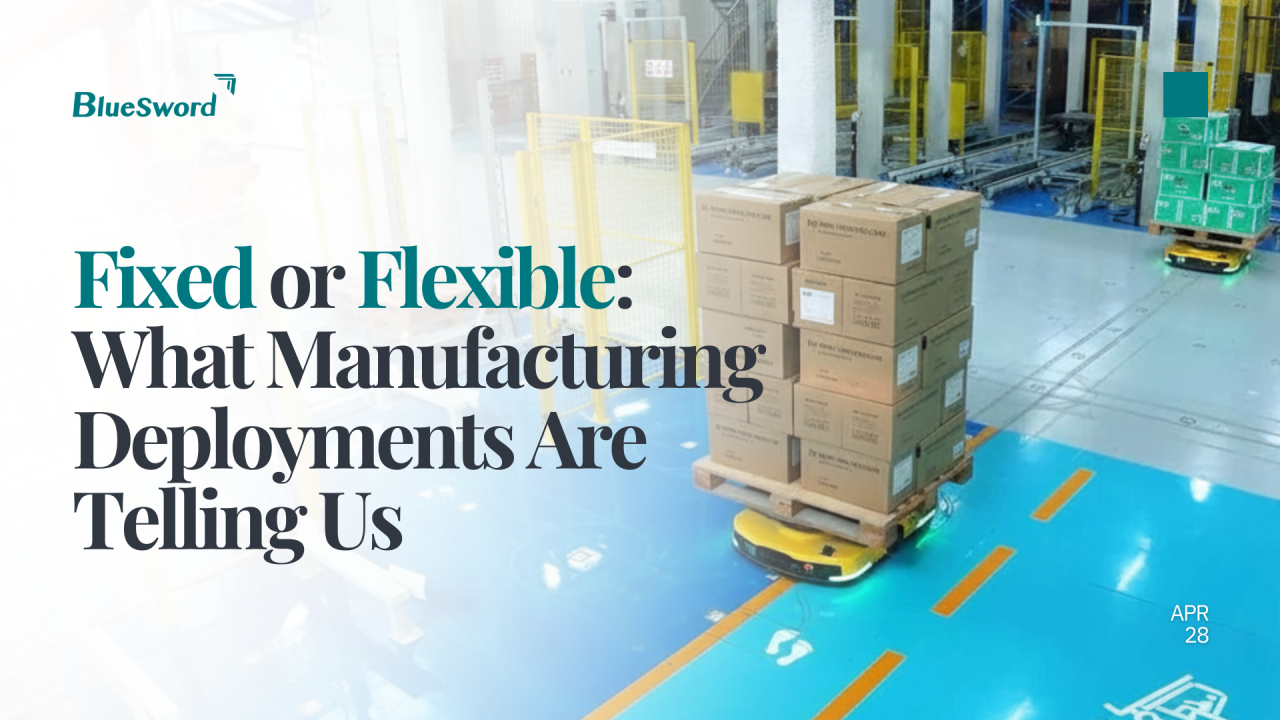 April 28 / 2026Fixed or Flexible: What Manufacturing Deployments Are Telling Us
Fixed infrastructure once defined manufacturing efficiency. But as production cycles shorten and flexibility becomes critical, mobile automation is changing how factories think about material flow.
READ MORE
-
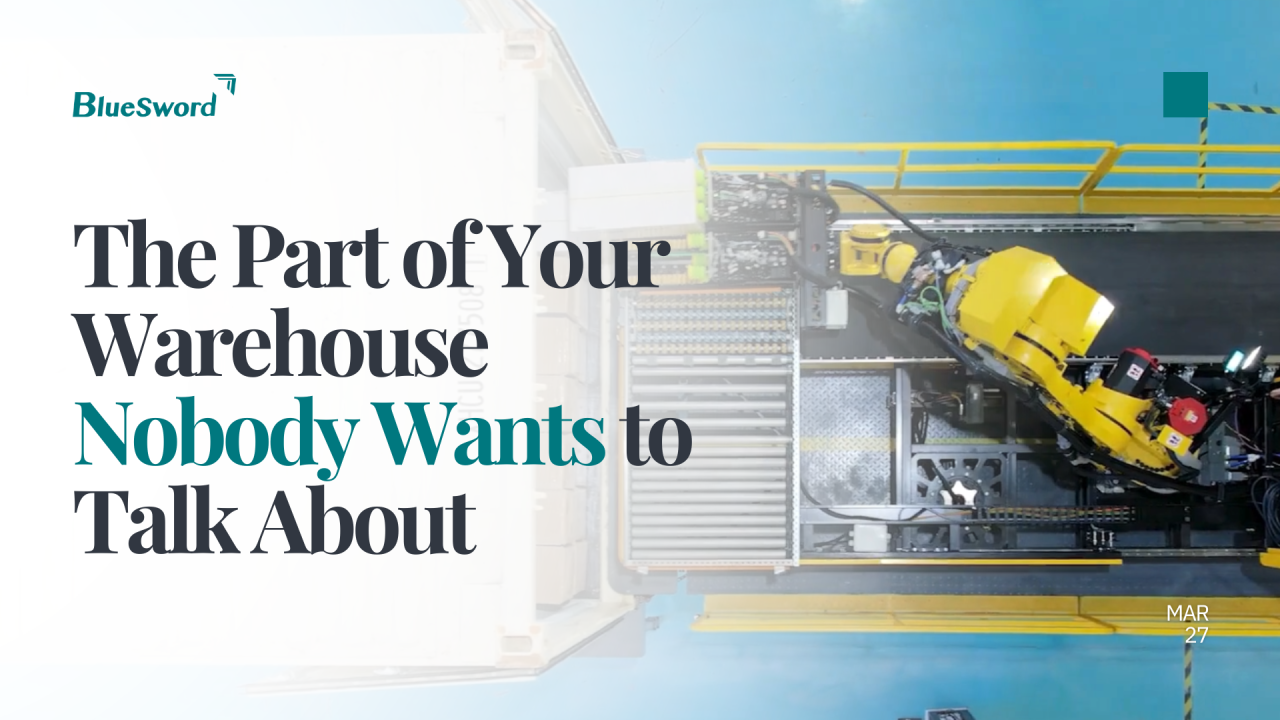 March 27 / 2026The Part of Your Warehouse Nobody Wants to Talk About
The warehouse's biggest bottleneck may not be where you think. BlueSword looks at why the dock is becoming the next frontier of automation.
READ MORE
-
January 28 / 20262026 Manufacturing Upgrade and Industry Trends
As manufacturers plan toward 2026, automation, smart manufacturing, and integrated material flow are becoming central to capacity and resilience. This article explores industry trends, labor constraints, and how integrated warehouse and production automation help reduce internal logistics losses and support phased manufacturing upgrades.
READ MORE
-
 September 24 / 2025Why Automated Warehousing Matters
Global supply chains face constant disruption. Automation is redefining warehouses as resilient hubs that keep goods moving no matter the challenge.
READ MORE
-
 August 27 / 2025How Automation Changes the Nature of Frontline Work: Confidence, Retention, and Workforce Value
Automation is no longer just about efficiency—it’s transforming warehouses and factories into safer, smarter, and more rewarding places to work.
READ MORE
-
 August 19 / 2025Automation in Logistics: Solving Workforce Challenges with Smart Systems
Discover smart logistics solutions with AMRs, shuttle systems, and automated warehouses. Future-proof your supply chain with intelligent intralogistics systems.
READ MORE
-
 July 25 / 2025Robotics Driving Real Safety Transformation in Factories and Warehouses
Safety in factories and warehouses is often discussed in terms of compliance and injury rates. But true safety goes beyond meeting standards. It requires addressing the root causes of risks and understanding how automation reshapes the daily reality for frontline workers—physically and mentally.
READ MORE
-
 May 25 / 2025Are Warehouse Robots Here to Replace Workers—Or to Back Them Where It Counts?
Automation is advancing fast—but where does that leave the people on the ground? This article explores why the future of warehousing isn't a story of replacement, but one of smart collaboration. With real-world cases from BlueSword and global data, we dive into what human-machine partnerships really look like on the warehouse floor.
READ MORE
-
 March 30 / 2025What’s Slowing Down Manufacturing—and What Leading Factories Are Doing About It
While automation continues to gain attention across the production line, internal logistics often remains untouched in traditional manufacturing plants.
READ MORE
-
 January 2 / 2025Building a Green Logistics Ecosystem with Servo Technology
The conveyor system is essential in modern production and logistics, facilitating the efficient storage, sorting, handling, and distribution of materials. By automating transport processes, it enhances efficiency, accuracy, and safety while effectively reducing labor costs.
READ MORE
-
 September 29 / 2024Logistics Transformation: Navigating Challenges in the FMCG Industry
Fast-moving consumer goods (FMCG) are an essential part of our everyday lives. With their large market size and ongoing growth, the FMCG industry plays an important role in the global economy.
READ MORE


