








UPDATES

Every warehouse operator knows the drill. The pitch decks are full of AS/RS towers, high-speed sorters, and robotic picking arms moving at superhuman speed. The demos are impressive. The ROI models look great.
But walk to the loading dock. Look at what is actually happening there.
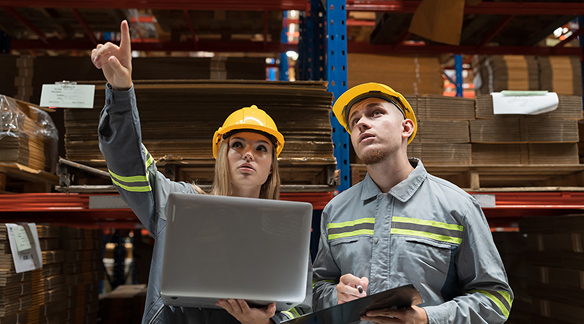
Pallets arriving in mixed orientations. Cartons stacked inconsistently. Workers manually breaking down loads under time pressure, in tight spaces, with little to no systematic support. Then, at the other end, someone is building outbound pallets by hand, guessing at the right stacking pattern, hoping nothing shifts in transit.
This is palletizing, depalletizing, and truck loading/unloading. And for years, it has been the part of the warehouse that automation quietly skipped over.
Inbound automation is the next frontier, and most operations are not ready for it.
For most of the past decade, warehouse automation investment followed a simple logic: fix outbound first. Picking, sorting, dispatch. The customer-facing side. The side where speed is most visible and most measured. That logic made sense, for a while.
But the conversation is shifting. Inbound operations are now recognized as one of the most significant untapped efficiency gains in the entire supply chain. Inbound bottlenecks do not stay inbound. When goods pile up at the dock, the ripple reaches the sorter, the storage system, the picking stations, and ultimately the customer promise.
The industry has started paying attention. In 2025, UPS committed to deploying 400 truck-unloading robots. Early data shows robotic systems can cut labor and processing time at the dock by up to 85% compared to manual methods. The market for loading and unloading automation is growing fast, and companies that waited are now catching up in a hurry.
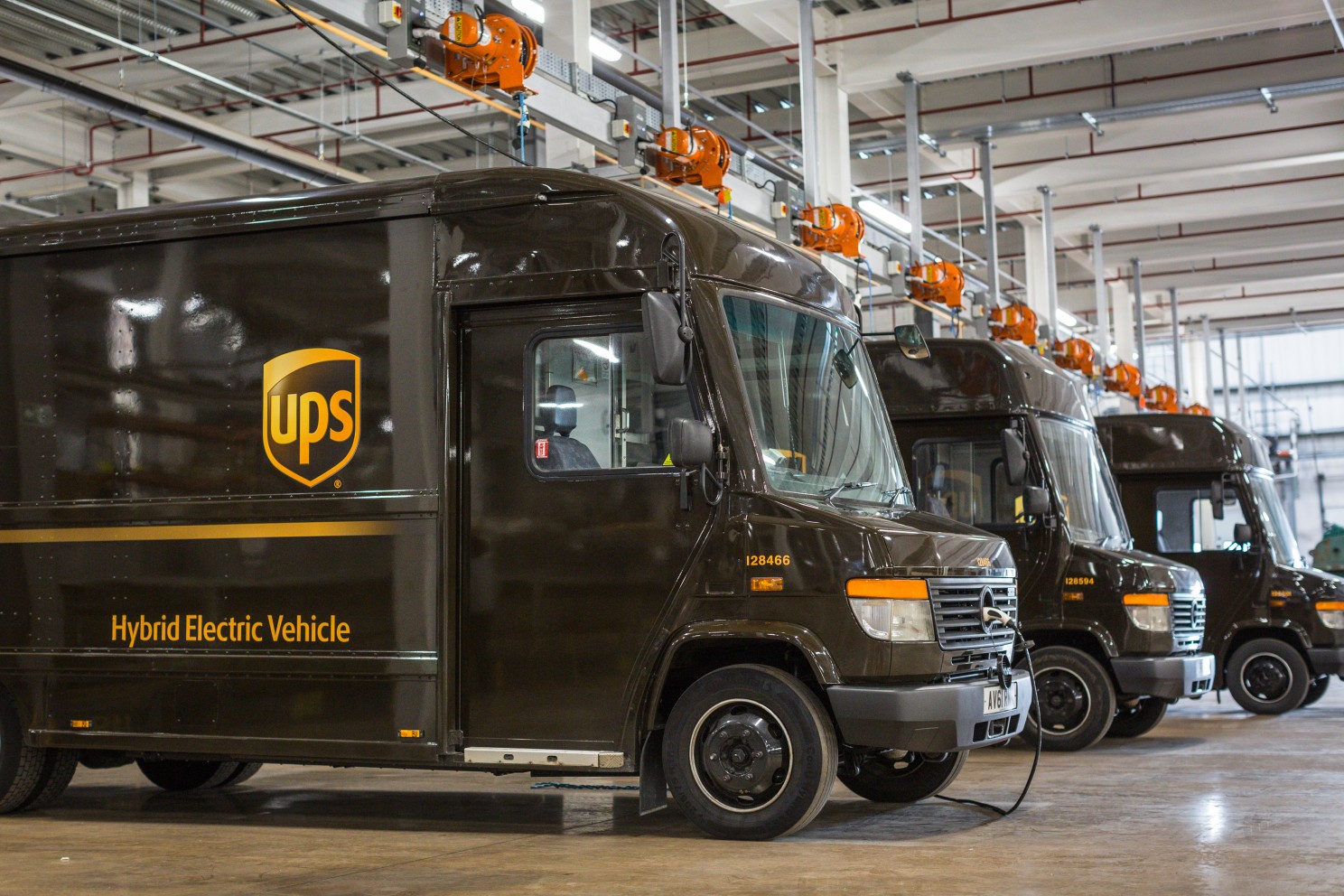
Caption Image courtesy of TechCrunch - Darrell Etherington
So why was this underestimated for so long?
Three reasons.
First, physical complexity. Unlike a conveyor or a shuttle system operating in a controlled, structured environment, the loading dock is chaos by design. Mixed carton sizes. Shifted loads. Variable truck dimensions. No two inbounds look the same. Building reliable automation for unstructured environments is genuinely hard.
Second, the measurement problem. Downtime on a picking system is immediately visible and costly. Slowdowns at the dock are absorbed by buffer stock, extra labor, and manual workarounds. The cost is real, but it is diffused and harder to trace directly to the dock.
Third, organizational blind spots. Procurement, warehouse management, and operations teams often optimize their own slice of the process without looking at where the actual drag is. The dock is nobody's priority department.
Closing the Gap at the Truck
The loading dock has long been treated as a boundary between the automated world and the manual one. What happens inside the truck stays manual, because the environment is simply too unstructured for traditional automation to handle.
That assumption is no longer true.
BlueSword's Asian Elephant Loading and Unloading Robot is purpose-built for exactly this environment. Using 3D visual recognition, the system identifies carton status, quantity, and orientation in real time, even when loads have shifted in transit. A dedicated dual-box gripper allows it to handle two cartons simultaneously, reaching speeds of up to 800 to 900 cases per hour.
What makes the system genuinely practical is its integration logic. The Asian Elephant does not operate in isolation. It connects directly with backend scanning, posture adjustment conveyors, robotic palletizing, and pallet destacking to form a continuous inbound flow. Cartons come off the truck, get scanned, reoriented, and inducted into the warehouse system without a human hand in the chain. The same hardware can switch between loading and unloading modes with minimal reconfiguration, meaning one system covers both ends of the dock.
For operations requiring higher per-pick payload or container truck compatibility, the Hammerhead Robot addresses a different set of constraints. Built on a six-axis robotic architecture, it handles cartons ranging from 200 to 600 mm across all dimensions, with a pick capacity of up to 60 kg and the ability to grip one to four cartons per cycle. At up to 900 cases per hour, it matches the throughput of the Asian Elephant while extending the operational envelope to both vans and container trucks, in temperatures from -10°C to 40°C. The six-axis design gives it the reach and orientation flexibility needed to work within the tighter geometric constraints of a sealed container, where a tracked-chassis system cannot always operate effectively.
For operations running both inbound and outbound through the same facility, that flexibility changes the economics of the investment entirely.
From Pallet to Process, Without the Manual Middle
Once goods are off the truck, the next challenge is getting them into the warehouse system in a usable format. That often means depalletizing, decanting, and inducting individual cartons or items onto conveyors for scanning, sorting, or put-away. Done manually, this is slow, inconsistent, and a surprisingly common cause of downstream errors.
BlueSword's palletizing and depalletizing robots approach this differently. The robotic arm system, capable of handling mixed SKUs and non-standard stacking patterns, works directly with the conveyor layer to create a seamless hand-off. Cases come off the pallet, move onto the conveyor, and enter the induction flow already oriented, scanned, and ready.
The conveyor system itself is designed for this integration. A modular, chain-driven architecture handles mixed pallet and case flows with 70% fewer cables than conventional designs and a plug-and-play component structure that cuts installation time by 40%. Real-time diagnostics via CAN bus mean that if something goes wrong anywhere in the line, the system flags it immediately rather than letting errors accumulate. The result is faster receiving, with clean and consistent induction data that the rest of your automated system can rely on.
The Bookends Matter
The warehouse is only as strong as its slowest point. For most operations right now, that slowest point is not in the middle. It is at the very beginning and the very end. The moment goods arrive, and the moment they leave.
Getting that right is where the next wave of operational gains will come from. If you are looking at where to focus your next automation investment, the dock and the pallet line are worth a much closer look.
We would be glad to walk you through how BlueSword approaches these challenges in practice. Reach out to our team at sales@bluesword.com to start the conversation.
Read More
-

 September 29 / 2026Beyond the Quote: What an Automated Warehouse Costs Over Its Working Life
The real cost of warehouse automation goes far beyond the initial quote. Discover the hidden costs of installation, downtime, maintenance, energy, upgrades, and expansion—and how smarter system design can keep them under control.
READ MORE
-
 June 29 / 2026Inside the Electronics Factory: What Changed in Material Handling This YearREAD MORE
-
 April 28 / 2026Fixed or Flexible: What Manufacturing Deployments Are Telling Us
Fixed infrastructure once defined manufacturing efficiency. But as production cycles shorten and flexibility becomes critical, mobile automation is changing how factories think about material flow.
READ MORE
-
March 27 / 2026The Part of Your Warehouse Nobody Wants to Talk About
The warehouse's biggest bottleneck may not be where you think. BlueSword looks at why the dock is becoming the next frontier of automation.
READ MORE
-
 January 28 / 20262026 Manufacturing Upgrade and Industry Trends
As manufacturers plan toward 2026, automation, smart manufacturing, and integrated material flow are becoming central to capacity and resilience. This article explores industry trends, labor constraints, and how integrated warehouse and production automation help reduce internal logistics losses and support phased manufacturing upgrades.
READ MORE
-
 September 24 / 2025Why Automated Warehousing Matters
Global supply chains face constant disruption. Automation is redefining warehouses as resilient hubs that keep goods moving no matter the challenge.
READ MORE
-
 August 27 / 2025How Automation Changes the Nature of Frontline Work: Confidence, Retention, and Workforce Value
Automation is no longer just about efficiency—it’s transforming warehouses and factories into safer, smarter, and more rewarding places to work.
READ MORE
-
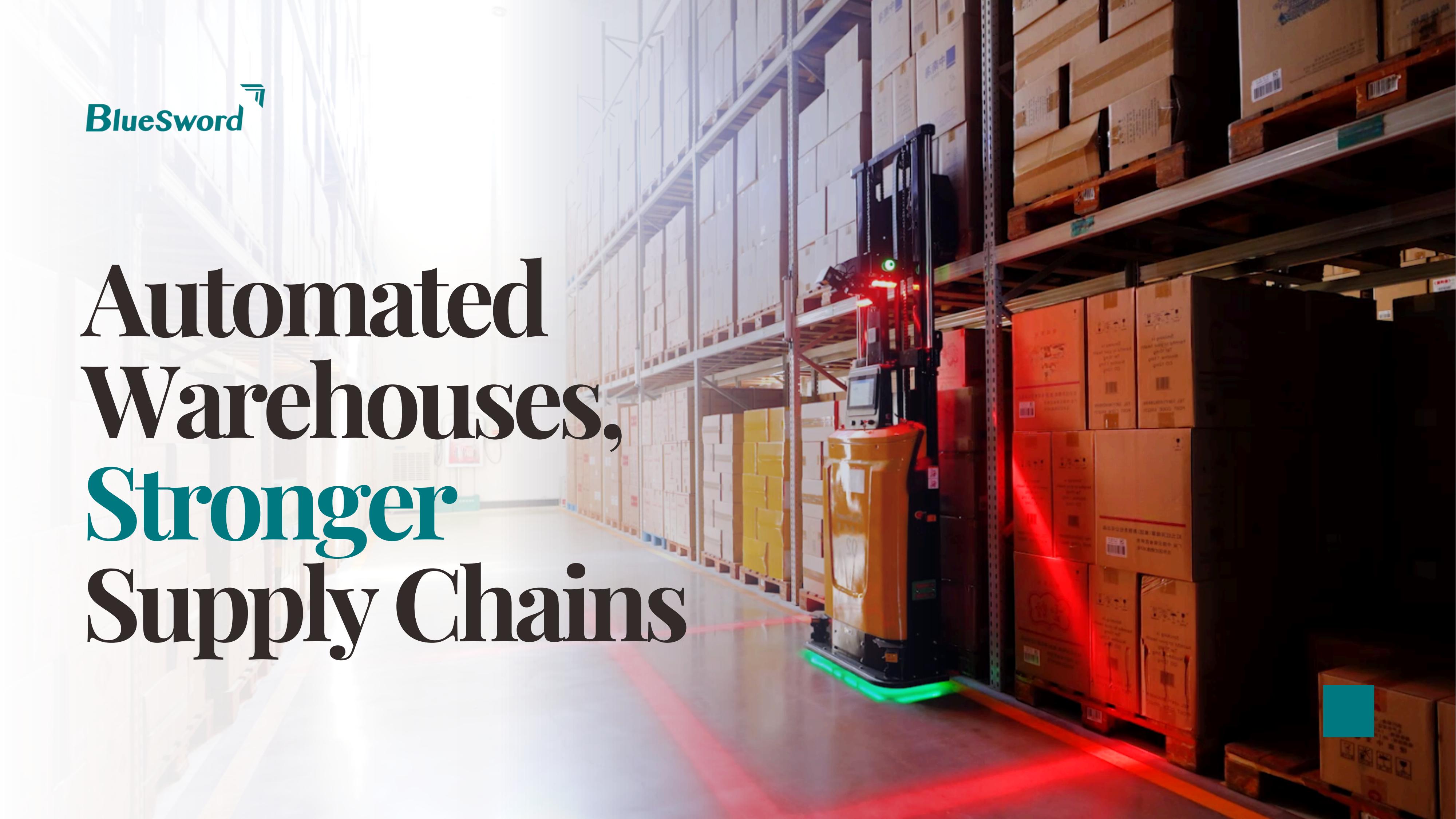 August 19 / 2025Automation in Logistics: Solving Workforce Challenges with Smart Systems
Discover smart logistics solutions with AMRs, shuttle systems, and automated warehouses. Future-proof your supply chain with intelligent intralogistics systems.
READ MORE
-
 July 25 / 2025Robotics Driving Real Safety Transformation in Factories and Warehouses
Safety in factories and warehouses is often discussed in terms of compliance and injury rates. But true safety goes beyond meeting standards. It requires addressing the root causes of risks and understanding how automation reshapes the daily reality for frontline workers—physically and mentally.
READ MORE
-
 May 25 / 2025Are Warehouse Robots Here to Replace Workers—Or to Back Them Where It Counts?
Automation is advancing fast—but where does that leave the people on the ground? This article explores why the future of warehousing isn't a story of replacement, but one of smart collaboration. With real-world cases from BlueSword and global data, we dive into what human-machine partnerships really look like on the warehouse floor.
READ MORE
-
 March 30 / 2025What’s Slowing Down Manufacturing—and What Leading Factories Are Doing About It
While automation continues to gain attention across the production line, internal logistics often remains untouched in traditional manufacturing plants.
READ MORE
-
 January 2 / 2025Building a Green Logistics Ecosystem with Servo Technology
The conveyor system is essential in modern production and logistics, facilitating the efficient storage, sorting, handling, and distribution of materials. By automating transport processes, it enhances efficiency, accuracy, and safety while effectively reducing labor costs.
READ MORE
-
 September 29 / 2024Logistics Transformation: Navigating Challenges in the FMCG Industry
Fast-moving consumer goods (FMCG) are an essential part of our everyday lives. With their large market size and ongoing growth, the FMCG industry plays an important role in the global economy.
READ MORE


