









UPDATES

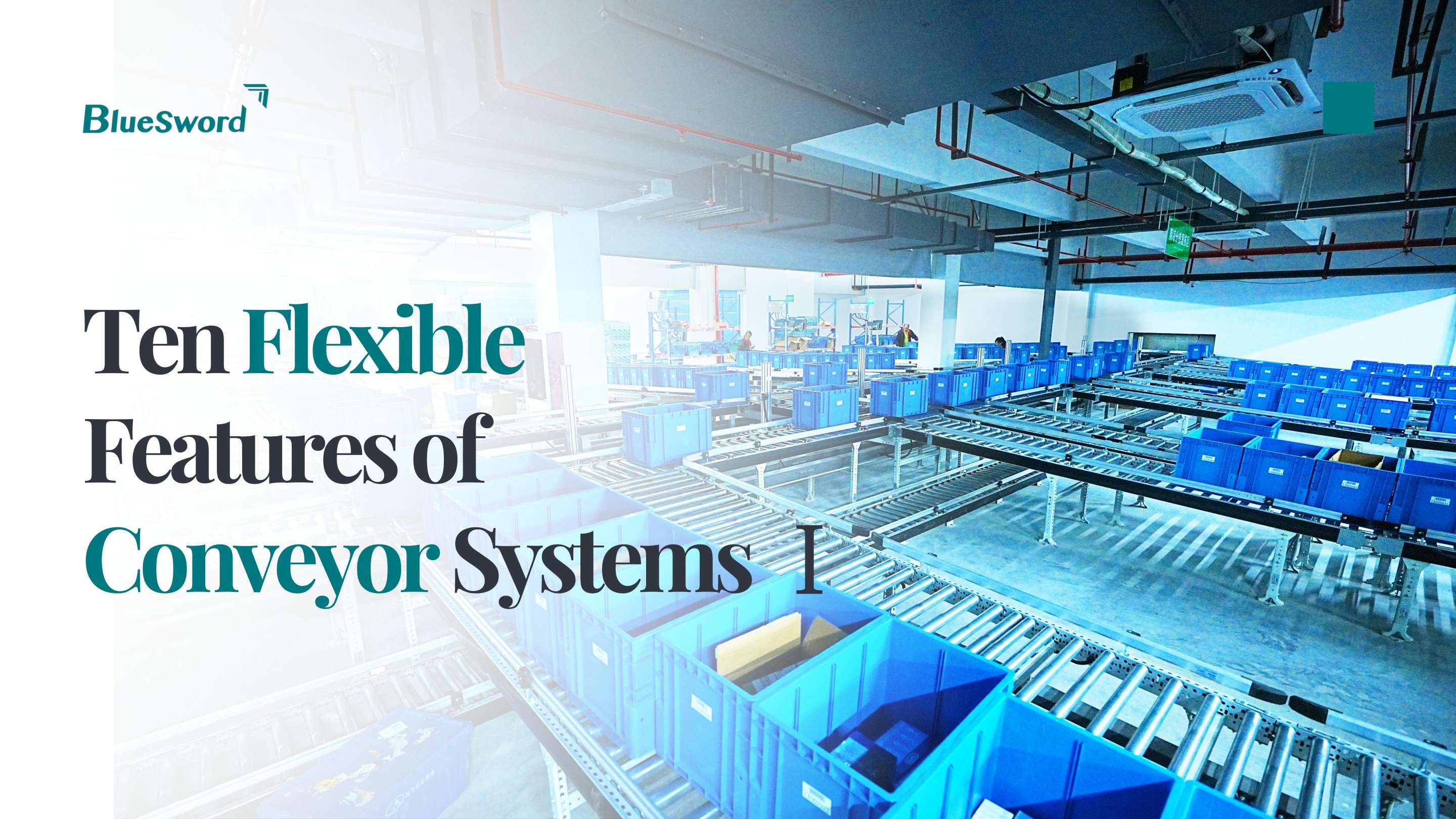
As handling media, load requirements, and environmental constraints keep shifting inside modern warehouses, a conveyor system that can't flex with those changes becomes a bottleneck fast. BlueSword built its conveying systems around ten specific flexibility features. This is the first five.
Stacked Multi-Tote Conveying
A high-precision stacking and unstacking lift module, combined with sensor-based positioning, lets the system automatically stack or separate totes based on instructions, then move full stacks through the conveyor system as stable units. Handling totes as stacked batches improves both space utilization and throughput, while the system's ability to switch between single-tote and full-stack handling lets it absorb order peaks and troughs without manual intervention. Shanghai Pharma West China runs this configuration.
Heavy-Duty 3-Ton Servo-Powered Pallet Conveying
Built on a high-strength, high-rigidity chain or roller structure and powered entirely by high-torque servo motors, this system manages speed, position, and torque in a closed loop for fast, precise start-stop control on pallets up to 3 tons. It's built for heavy industries like photovoltaics and new energy batteries, where automated transport of ultra-heavy materials is otherwise difficult.
Servo motors draw power only as needed, cutting energy use compared with traditional asynchronous motor-and-gearbox setups, especially in high-frequency switching scenarios. Millimeter-level positioning accuracy and smooth acceleration prevent displacement or tipping under heavy loads — a setup currently running at Jinko Solar.
High-Safety Explosion-Proof Applications
For hazardous environments, flameproof motors rated Ex d IIB T4 Ga sit inside housings made of 3mm+ cast aluminum alloy or integrated stainless steel, containing internal sparks and preventing flame propagation even under fault conditions. Electrical components use increased-safety or intrinsic-safety designs, with intrinsically safe circuits capped at 24V and 100mA — low enough that fault-condition sparks can't ignite an explosive atmosphere.
That shifts safety management from reactive incident response to proactive risk prevention, addressing a core concern in explosion-risk industries, while high-reliability design and intelligent maintenance keep downtime low. Dalian Bio-chem, in chemical manufacturing, uses this system.
-16°C Low-Temperature Operation
Ultra-low-temperature-resistant motors and powered rollers, equipped with energy-recovery braking and overload protection, replace pneumatic or conventional drives that struggle in cold storage. Belt conveyor systems and materials stay resistant to cracking, deformation, or embrittlement down to -16°C, with pressure monitoring and emergency shut-off systems built in to catch anomalies early. Lingyun, in cold chain logistics, runs this configuration.
Adaptability to Non-Standard Carriers
For irregular totes, custom fixtures, non-uniform pallets, and special-sized workpiece racks, a combination of flexible structures, modular components, and adaptive control breaks the limits of fixed-specification conveying — supporting carrier size variation of 80% or more and weight variation of 90% or more without needing custom chain conveyor systems for each carrier type. Flexible protection and adaptive speed control also keep damage rates at or below 0.3%, meeting the requirements of precision parts and fragile goods handling. Zhejiang Chuanhua, in chemical manufacturing, uses this setup.
Together, these five features — and the five covered in Part 2 — reflect a conveying system built to absorb whatever a warehouse's operating conditions throw at it, rather than requiring the warehouse to adapt to the equipment.
Read More
-

 September 29 / 2026Beyond the Quote: What an Automated Warehouse Costs Over Its Working Life
The real cost of warehouse automation goes far beyond the initial quote. Discover the hidden costs of installation, downtime, maintenance, energy, upgrades, and expansion—and how smarter system design can keep them under control.
READ MORE
-
 June 29 / 2026Inside the Electronics Factory: What Changed in Material Handling This YearREAD MORE
-
 April 28 / 2026Fixed or Flexible: What Manufacturing Deployments Are Telling Us
Fixed infrastructure once defined manufacturing efficiency. But as production cycles shorten and flexibility becomes critical, mobile automation is changing how factories think about material flow.
READ MORE
-
 March 27 / 2026The Part of Your Warehouse Nobody Wants to Talk About
The warehouse's biggest bottleneck may not be where you think. BlueSword looks at why the dock is becoming the next frontier of automation.
READ MORE
-
 January 28 / 20262026 Manufacturing Upgrade and Industry Trends
As manufacturers plan toward 2026, automation, smart manufacturing, and integrated material flow are becoming central to capacity and resilience. This article explores industry trends, labor constraints, and how integrated warehouse and production automation help reduce internal logistics losses and support phased manufacturing upgrades.
READ MORE
-
 September 24 / 2025Why Automated Warehousing Matters
Global supply chains face constant disruption. Automation is redefining warehouses as resilient hubs that keep goods moving no matter the challenge.
READ MORE
-
 August 27 / 2025How Automation Changes the Nature of Frontline Work: Confidence, Retention, and Workforce Value
Automation is no longer just about efficiency—it’s transforming warehouses and factories into safer, smarter, and more rewarding places to work.
READ MORE
-
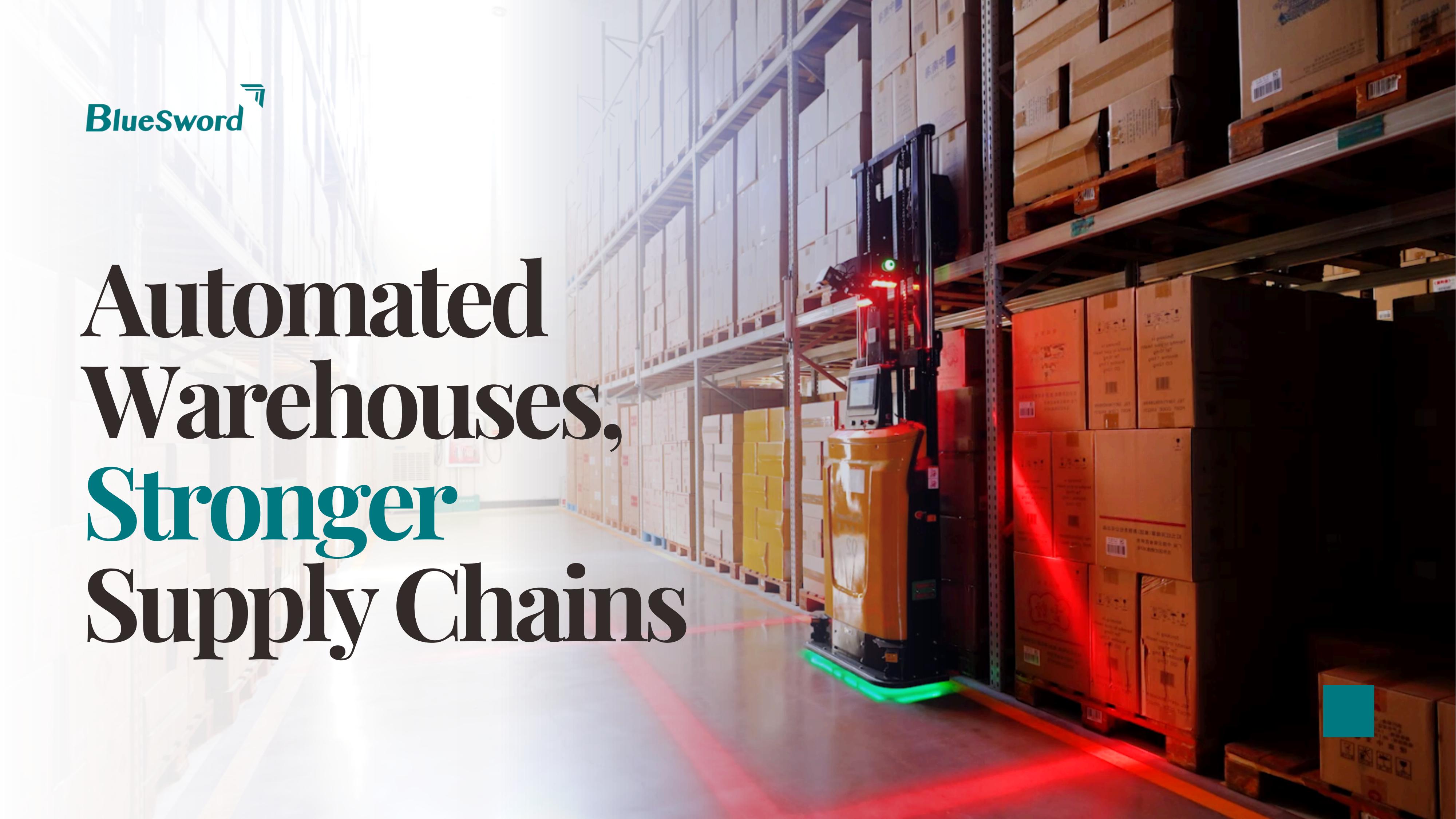 August 19 / 2025Automation in Logistics: Solving Workforce Challenges with Smart Systems
Discover smart logistics solutions with AMRs, shuttle systems, and automated warehouses. Future-proof your supply chain with intelligent intralogistics systems.
READ MORE
-
 July 25 / 2025Robotics Driving Real Safety Transformation in Factories and Warehouses
Safety in factories and warehouses is often discussed in terms of compliance and injury rates. But true safety goes beyond meeting standards. It requires addressing the root causes of risks and understanding how automation reshapes the daily reality for frontline workers—physically and mentally.
READ MORE
-
 May 25 / 2025Are Warehouse Robots Here to Replace Workers—Or to Back Them Where It Counts?
Automation is advancing fast—but where does that leave the people on the ground? This article explores why the future of warehousing isn't a story of replacement, but one of smart collaboration. With real-world cases from BlueSword and global data, we dive into what human-machine partnerships really look like on the warehouse floor.
READ MORE
-
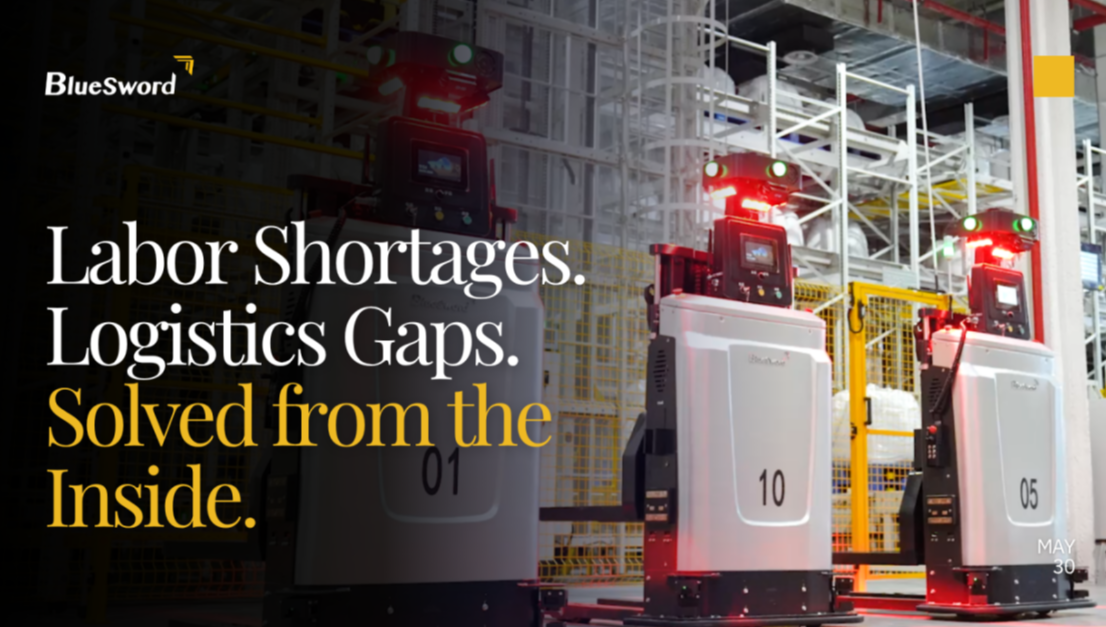 March 30 / 2025What’s Slowing Down Manufacturing—and What Leading Factories Are Doing About It
While automation continues to gain attention across the production line, internal logistics often remains untouched in traditional manufacturing plants.
READ MORE
-
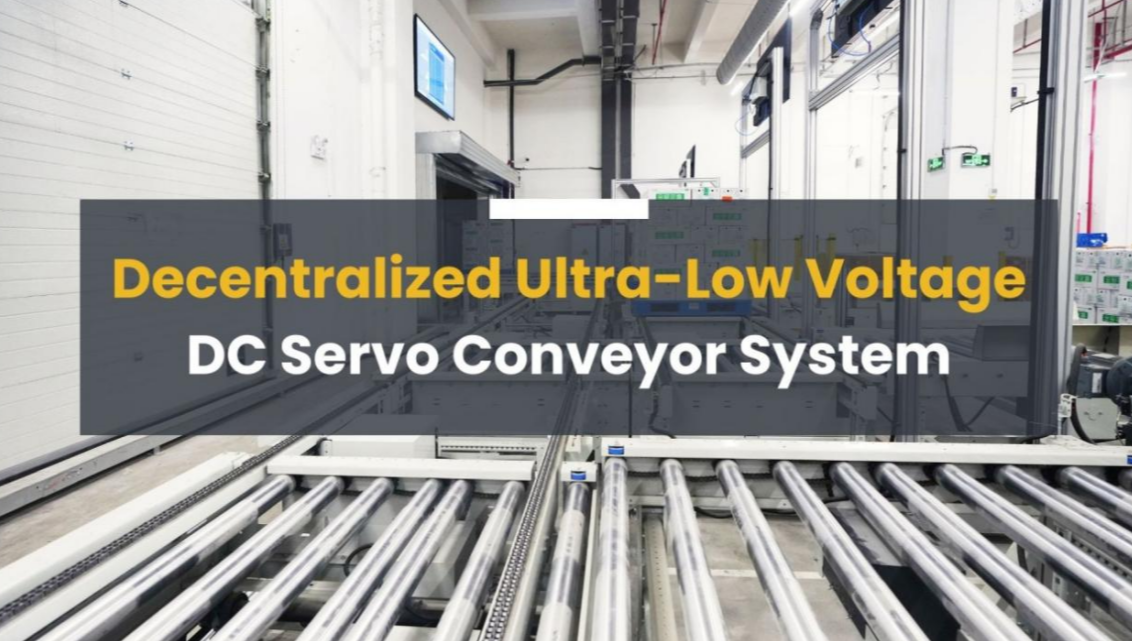 January 2 / 2025Building a Green Logistics Ecosystem with Servo Technology
The conveyor system is essential in modern production and logistics, facilitating the efficient storage, sorting, handling, and distribution of materials. By automating transport processes, it enhances efficiency, accuracy, and safety while effectively reducing labor costs.
READ MORE
-
 September 29 / 2024Logistics Transformation: Navigating Challenges in the FMCG Industry
Fast-moving consumer goods (FMCG) are an essential part of our everyday lives. With their large market size and ongoing growth, the FMCG industry plays an important role in the global economy.
READ MORE


