








UPDATES

China's petrochemical sector is moving into a higher-quality growth phase, and that shift is putting new pressure on warehousing and logistics systems. Automated high-bay warehousing in this industry comes with specific operational requirements, and significant technical challenges still lie ahead.
Scale, Stability, and End-to-End Integration
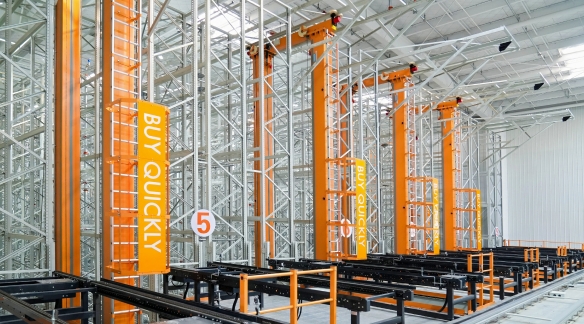
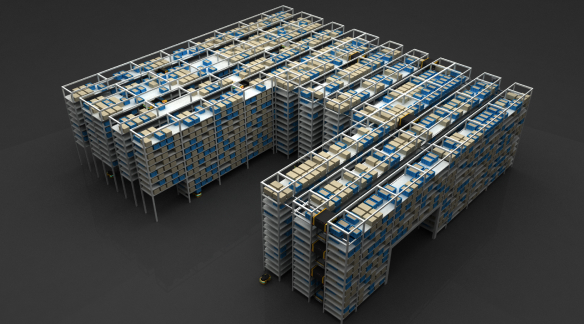
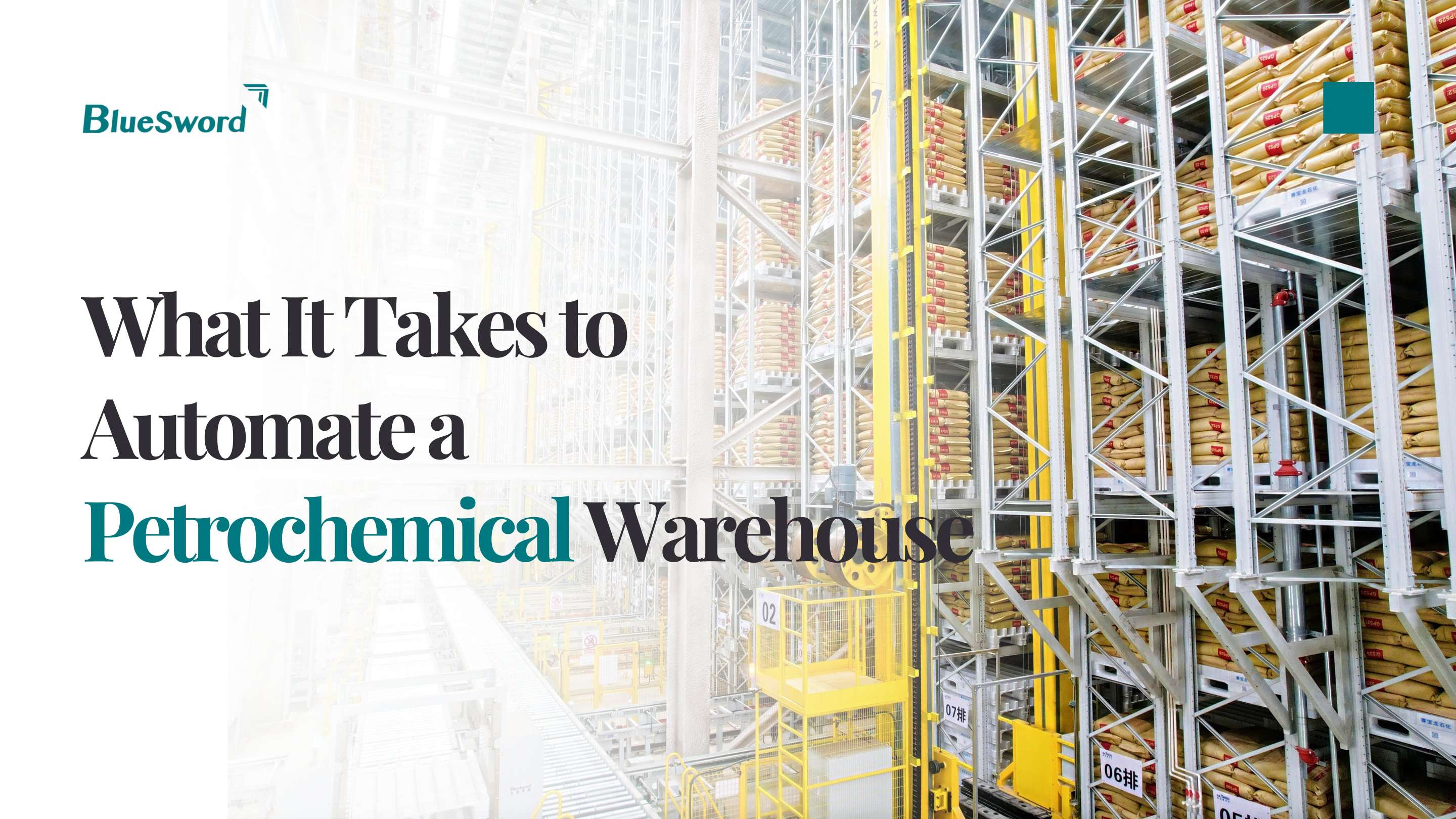
Petrochemical warehouses operate at a different scale than most manufacturing sectors. Automated high-bay facilities in this industry typically run more than 20,000 storage locations across 20-plus aisles, with inbound and outbound throughput exceeding 1,000 pallets per hour — among the most demanding requirements anywhere in manufacturing.
Most petrochemical goods are bagged and heavily film-wrapped, which means storage, handling, and transfer equipment must operate with a higher degree of stability and safety than standard systems, backed by robust motion control and flexible scheduling. And because the process runs from automatic palletizing on the production line through warehousing, sorting, and outbound rail or truck shipment, the systems involved — both physical and informational — need to function as one connected chain rather than a series of separate steps.
Heavy-Duty Precision Automated Guided Forklifts
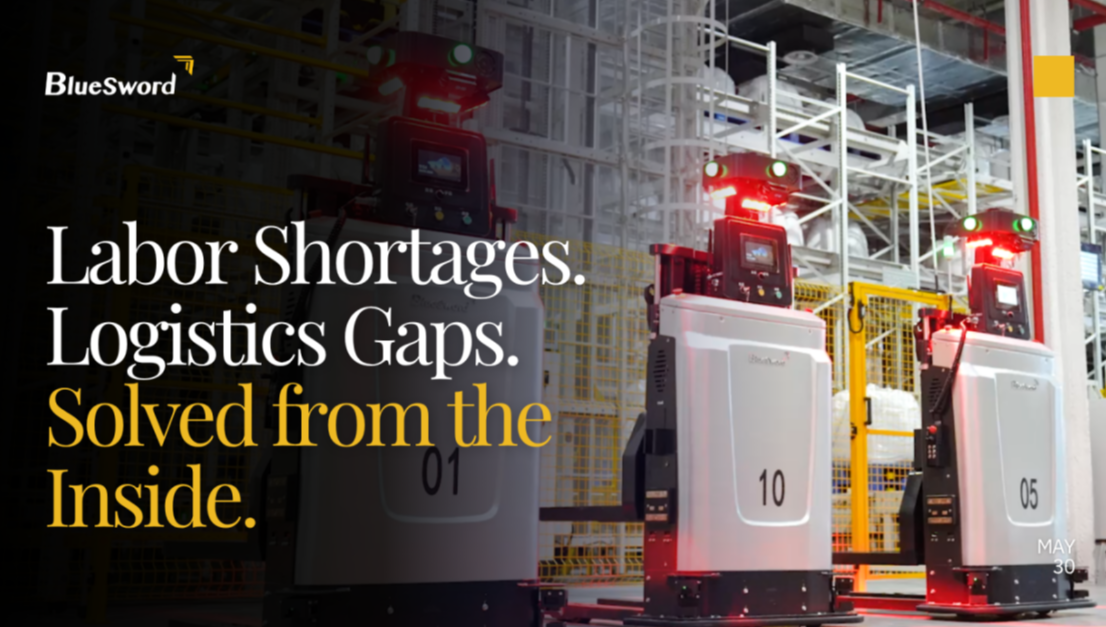
Automated guided forklifts are already well established elsewhere — BlueSword has deployed high-reach AGVs at lifting heights of 11.45 meters for global home furnishings brands, and automated systems handling two-ton transformers in the power sector. Petrochemical facilities introduce a different set of constraints.
Floor conditions are one: given the weight of the goods involved, facilities typically need floor reinforcement before any forklift — driverless or otherwise — can operate reliably. High and sometimes double-pallet stacking is another, requiring precise positioning and reliable pallet slot recognition. BlueSword addresses this by carrying over technologies proven in other industries — laser SLAM navigation, high-order S-curve motion control, and vision-based slot recognition — into petrochemical deployments.
Connecting Systems That Were Never Designed to Talk
Most petrochemical operators already run separate systems for packaging, production lines, warehousing, dispatch, and vehicle scheduling — the challenge is that these systems were rarely built to communicate with each other. Any meaningful upgrade starts with giving every material and carrier a digital identity, typically through RFID or barcode labeling, and then connecting the previously isolated systems into a single data chain.
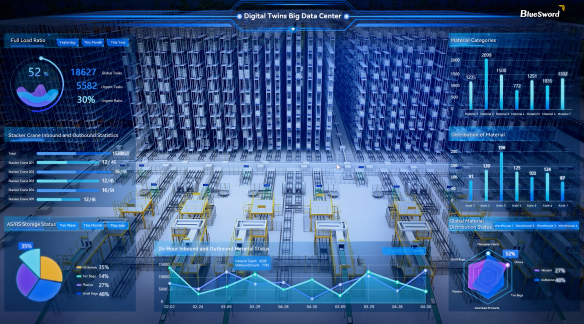
From there, two capabilities matter most: an end-to-end scheduling algorithm that coordinates people, equipment, materials, and vehicles together, and digital twin technology that renders the entire operation in 3D in real time. That visualization lets maintenance teams find problems faster and gives managers a live view of overall operations from any device.
Where the Industry Is Headed
More petrochemical enterprises are now building high-bay automated warehouses exceeding 24 meters, and throughput requirements are pushing equipment specifications higher — automated pallet stacker cranes now need horizontal speeds above 180 m/min to keep pace with demand.
Because many customers avoid stretch-wrapping their bagged, film-covered goods for cost reasons, automated stacker cranes and shuttle systems need advanced S-curve control to keep handling safe and stable without it.
Tighter project timelines are raising the bar further, favoring providers with true end-to-end capability — design, R&D, manufacturing, and implementation under one roof — since that integration is what allows a provider to get full value out of both the hardware and the software it delivers.
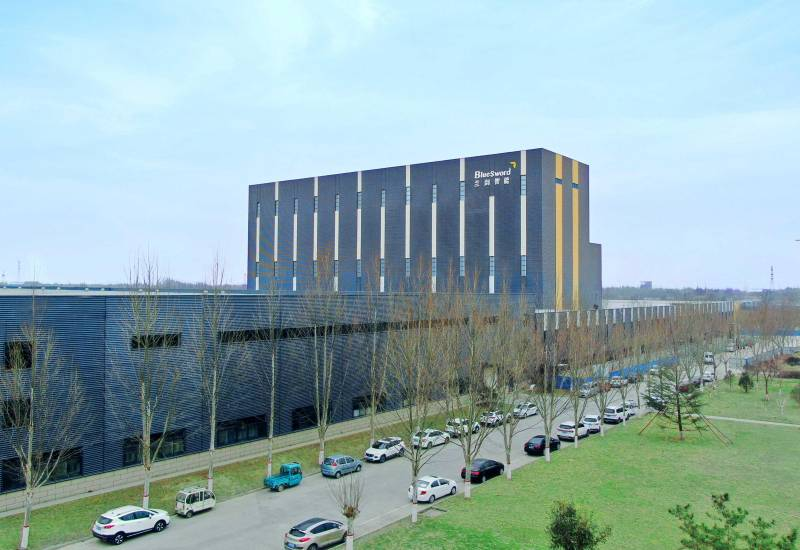
BlueSword traces its roots to WMS development in 1993 and has spent nearly three decades building on that foundation. Its 200,000-m² manufacturing base — where robots are used to build robots — is set for full completion in 2022 . Combining that hardware and software capability, the company sees a clear role to play in helping petrochemical enterprises build more resilient, efficient, and intelligent supply chains.
Read More
-

 June 29 / 2026Inside the Electronics Factory: What Changed in Material Handling This YearREAD MORE
-
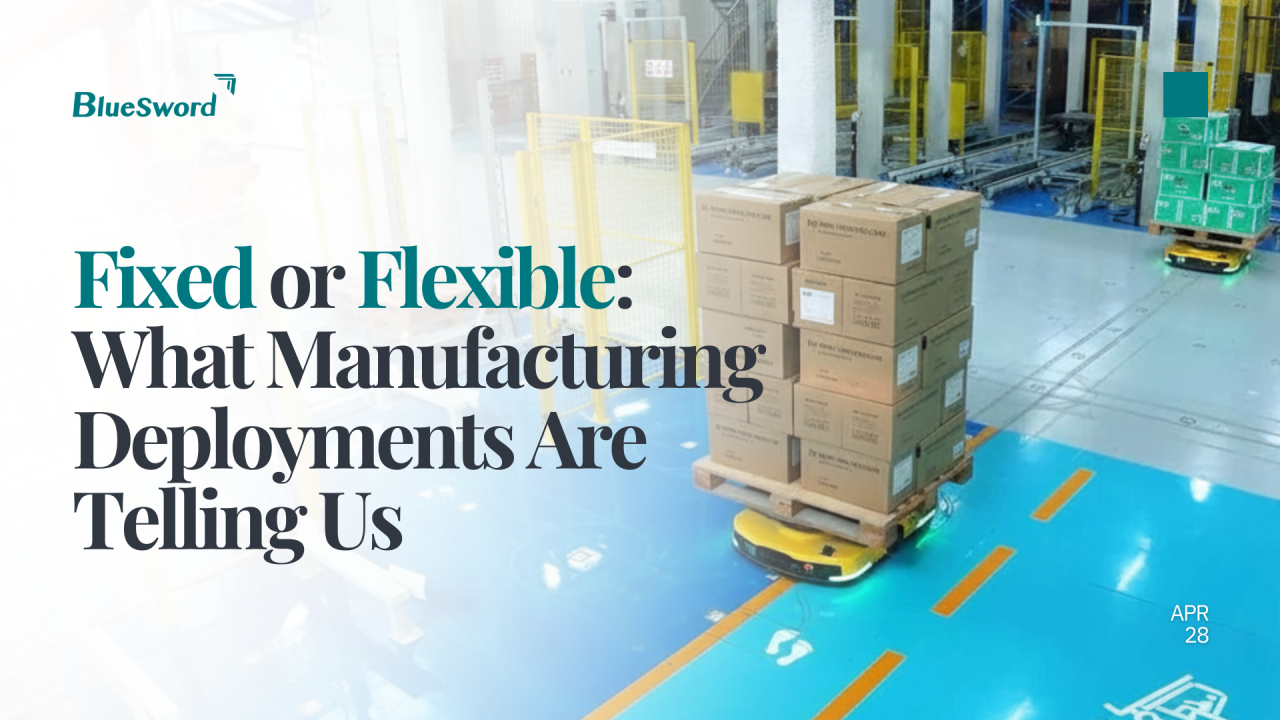 April 28 / 2026Fixed or Flexible: What Manufacturing Deployments Are Telling Us
Fixed infrastructure once defined manufacturing efficiency. But as production cycles shorten and flexibility becomes critical, mobile automation is changing how factories think about material flow.
READ MORE
-
 March 27 / 2026The Part of Your Warehouse Nobody Wants to Talk About
The warehouse's biggest bottleneck may not be where you think. BlueSword looks at why the dock is becoming the next frontier of automation.
READ MORE
-
 January 28 / 20262026 Manufacturing Upgrade and Industry Trends
As manufacturers plan toward 2026, automation, smart manufacturing, and integrated material flow are becoming central to capacity and resilience. This article explores industry trends, labor constraints, and how integrated warehouse and production automation help reduce internal logistics losses and support phased manufacturing upgrades.
READ MORE
-
 September 24 / 2025Why Automated Warehousing Matters
Global supply chains face constant disruption. Automation is redefining warehouses as resilient hubs that keep goods moving no matter the challenge.
READ MORE
-
 August 27 / 2025How Automation Changes the Nature of Frontline Work: Confidence, Retention, and Workforce Value
Automation is no longer just about efficiency—it’s transforming warehouses and factories into safer, smarter, and more rewarding places to work.
READ MORE
-
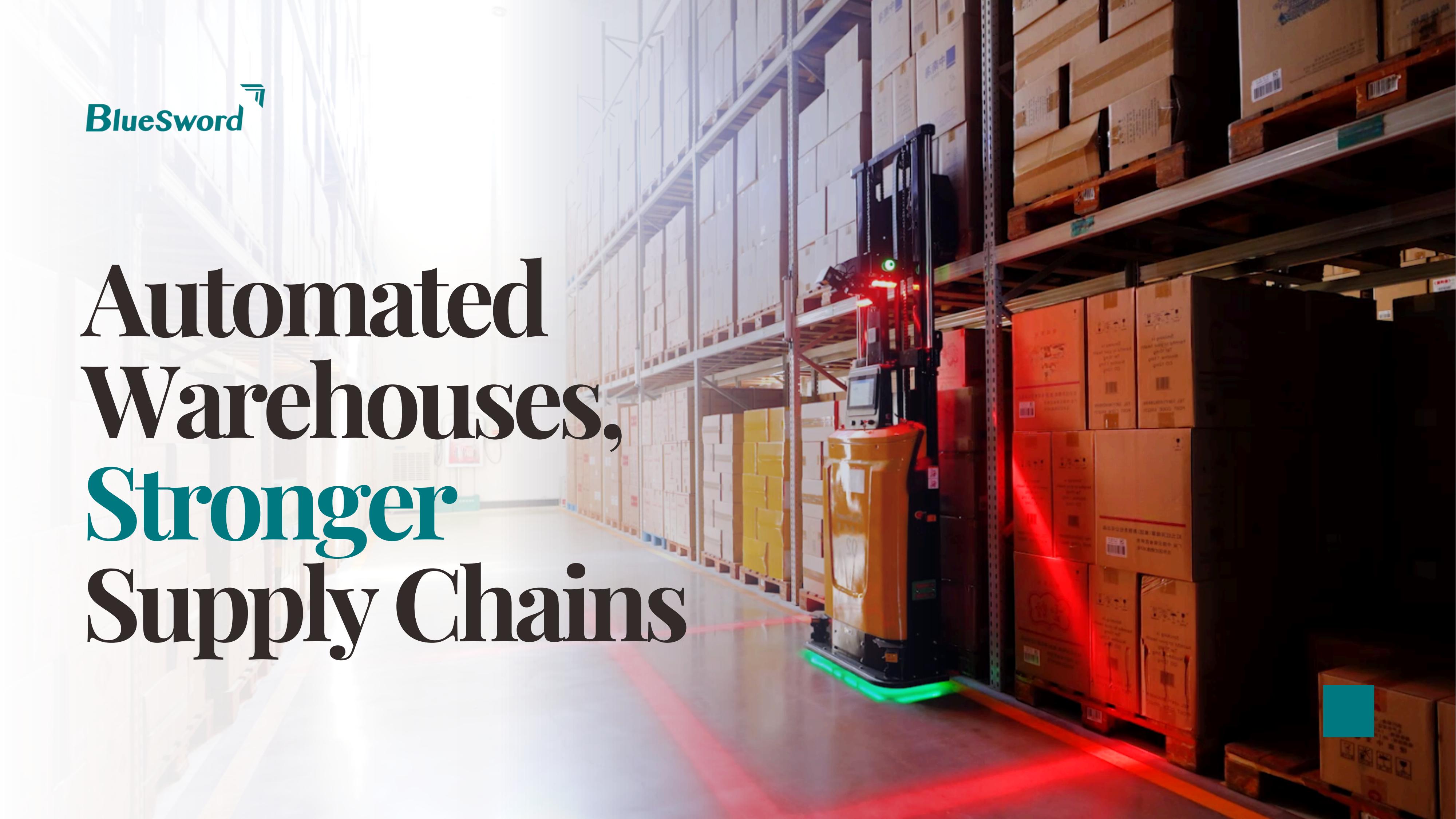 August 19 / 2025Automation in Logistics: Solving Workforce Challenges with Smart Systems
Discover smart logistics solutions with AMRs, shuttle systems, and automated warehouses. Future-proof your supply chain with intelligent intralogistics systems.
READ MORE
-
 July 25 / 2025Robotics Driving Real Safety Transformation in Factories and Warehouses
Safety in factories and warehouses is often discussed in terms of compliance and injury rates. But true safety goes beyond meeting standards. It requires addressing the root causes of risks and understanding how automation reshapes the daily reality for frontline workers—physically and mentally.
READ MORE
-
 May 25 / 2025Are Warehouse Robots Here to Replace Workers—Or to Back Them Where It Counts?
Automation is advancing fast—but where does that leave the people on the ground? This article explores why the future of warehousing isn't a story of replacement, but one of smart collaboration. With real-world cases from BlueSword and global data, we dive into what human-machine partnerships really look like on the warehouse floor.
READ MORE
-
 March 30 / 2025What’s Slowing Down Manufacturing—and What Leading Factories Are Doing About It
While automation continues to gain attention across the production line, internal logistics often remains untouched in traditional manufacturing plants.
READ MORE
-
 January 2 / 2025Building a Green Logistics Ecosystem with Servo Technology
The conveyor system is essential in modern production and logistics, facilitating the efficient storage, sorting, handling, and distribution of materials. By automating transport processes, it enhances efficiency, accuracy, and safety while effectively reducing labor costs.
READ MORE
-
 September 29 / 2024Logistics Transformation: Navigating Challenges in the FMCG Industry
Fast-moving consumer goods (FMCG) are an essential part of our everyday lives. With their large market size and ongoing growth, the FMCG industry plays an important role in the global economy.
READ MORE


