








UPDATES

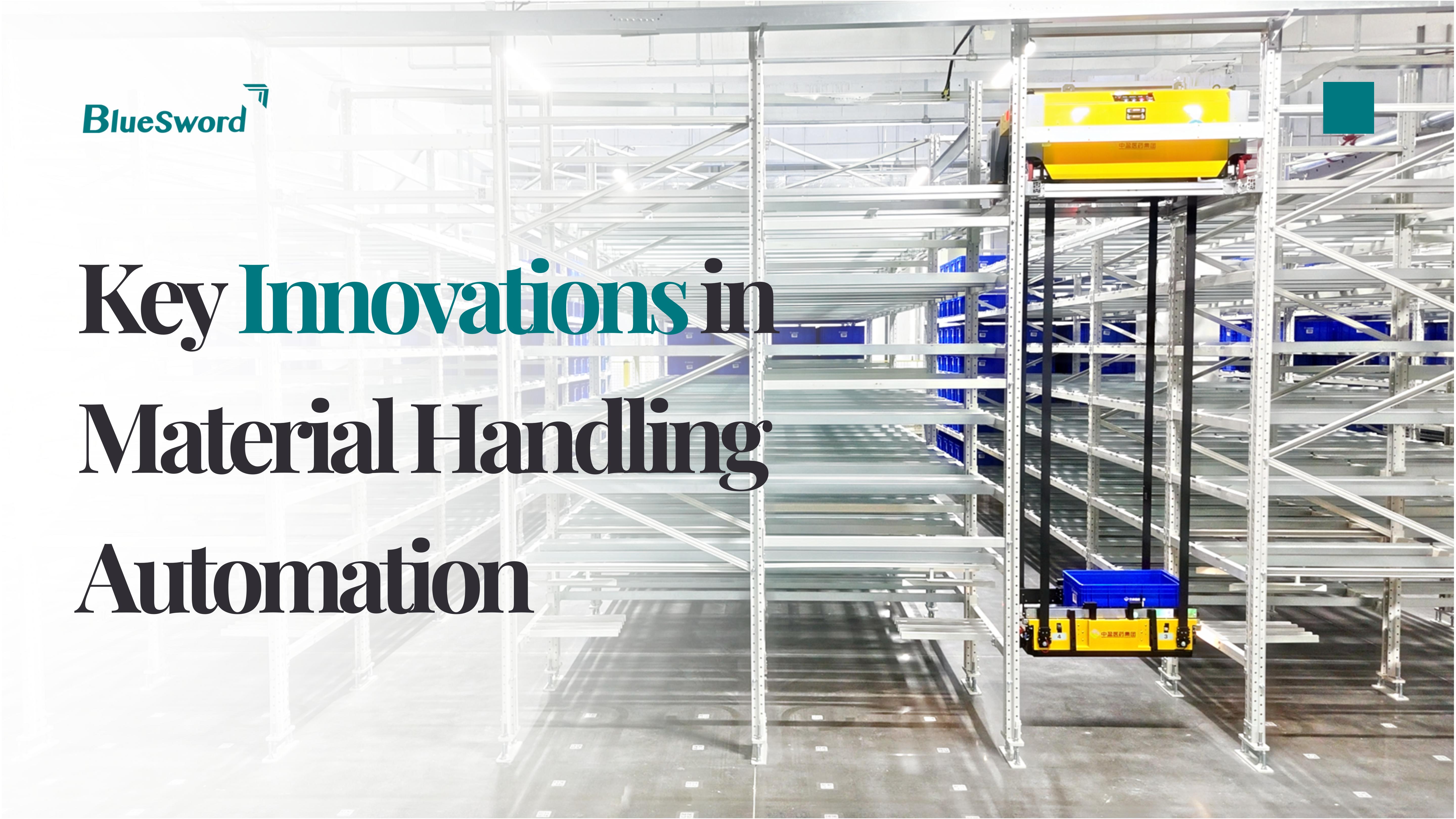
Material handling automation is evolving as warehouses face growing demands for efficiency, flexibility, and space utilization. AI, intelligent storage systems, mobile robots, and integrated software are changing how materials move through modern facilities.
So, which innovations matter most—and where do they create the greatest value? This article explores the key technologies shaping the next generation of material handling automation.
Why Is Material Handling Automation Evolving?
Material handling automation is not new, but the requirements placed on automated systems have changed significantly in recent years. Warehouses now have to handle more product variations, less predictable order patterns, and tighter delivery windows while making better use of existing space. That makes it harder to rely on automation built around a single, fixed process.
Labor shortages and operating costs remain important drivers, but they are only part of the picture. A more recent change is the growing role of AI and software in coordinating physical automation. Instead of simply automating a repetitive movement, modern systems can use operational data to determine task priorities, allocate resources, and adjust workflows as conditions change.
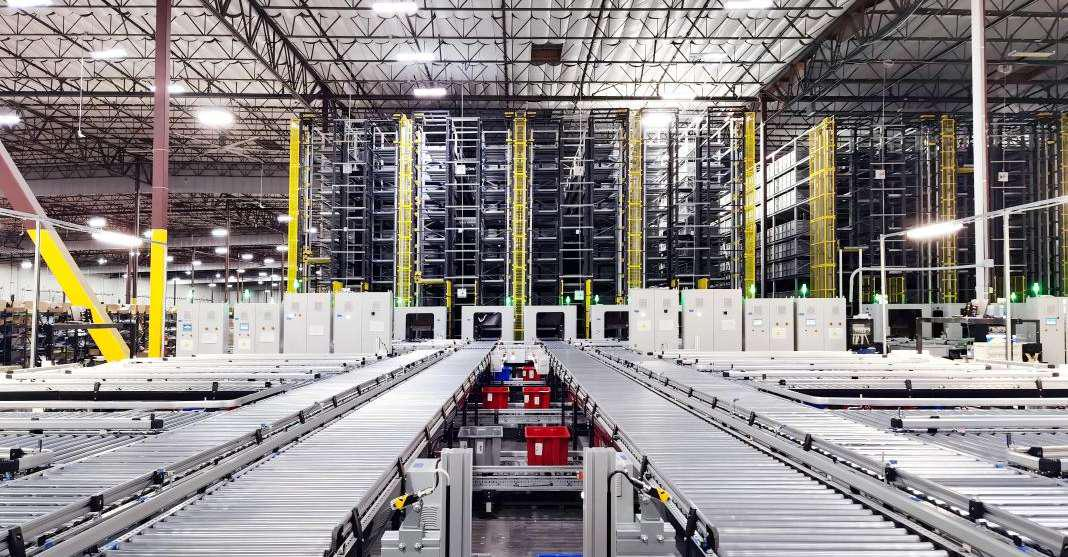
This is also changing how warehouses are designed. Rather than installing an Automated Storage and Retrieval System (AS/RS), conveyor system, or mobile robot as a standalone project, companies are increasingly looking at how storage, transport, picking, and software can work together.
In practice, this means automation is moving beyond individual tasks and toward coordinated material flow across the facility.
Several developments are changing how material handling systems are designed and operated. Three are particularly important: AI-driven decision-making, coordination between different automation technologies, and more flexible approaches to storage and transportation.
AI Is Reshaping Warehouse Decision-Making
AI is increasingly being used to make decisions around physical automation, rather than simply controlling predefined movements.
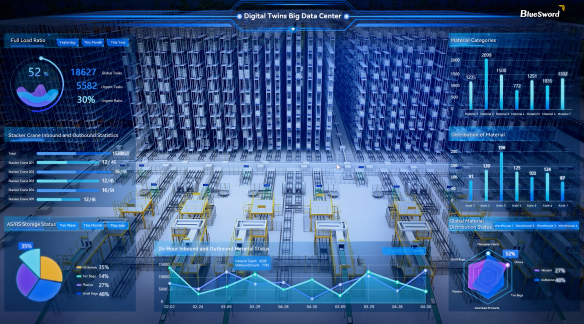
For example, AI can support task allocation, operational analytics, demand forecasting, exception handling, and resource coordination. BlueSword’s IMHS takes a system-level approach by integrating AI, IoT, WMS, WCS, ROS, and AGV scheduling technologies. This integrated software ecosystem supports system-level coordination across automated equipment and logistics processes.
A robot can execute a movement, but the software behind the system can decide which task should come next and which resource should handle it.
Integrated Automation Connects Storage, Transport, and Picking
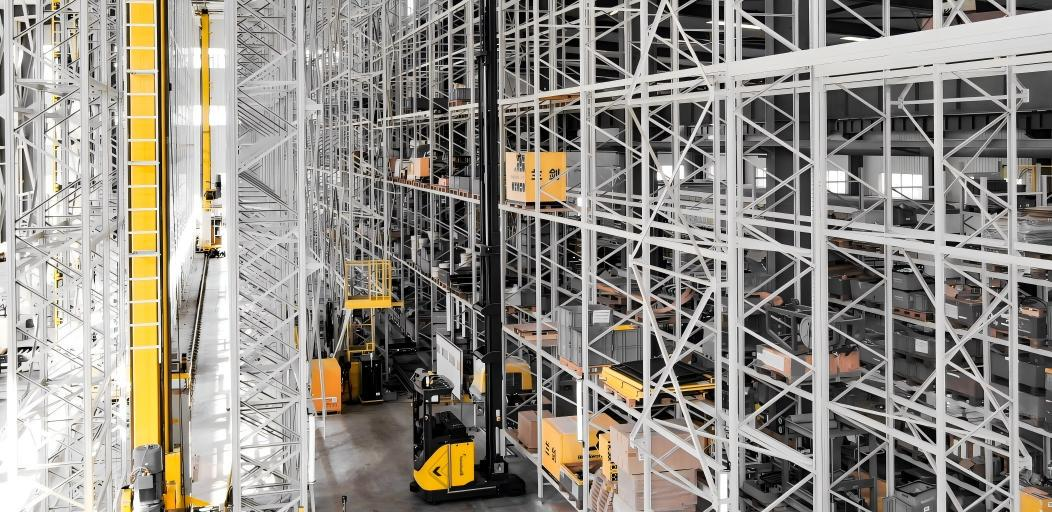
Modern material handling systems increasingly combine fixed and mobile automation because each technology solves a different part of the material-flow problem.
An AS/RS can provide structured, high-density storage, while conveyors create consistent transport routes between fixed workstations. AGVs are well suited to repeatable point-to-point transport, while AMRs are better suited to environments where routes and workflows change more frequently.
In a coordinated system, storage, transport, picking, and shipping can be managed as parts of the same workflow rather than as separate processes.
Which Automation Technologies Work Best for Different Warehouse Challenges?
The right automation technology depends on the physical constraints and operational requirements of the warehouse, so businesses should match equipment to the specific problem rather than selecting technology by popularity.
Warehouse Requirement | Recommended Technology | Why It Fits |
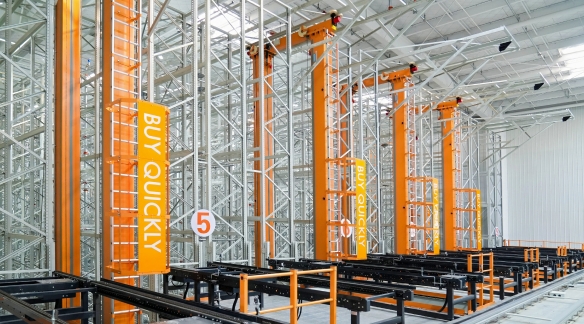
High-bay pallet storage with stable, automated access | Stacker crane AS/RS | Moves pallets horizontally and vertically within tall rack structures, making it suitable for large storage volumes and predictable inbound and outbound flows. |
Maximum pallet density within limited floor space | Four-way pallet shuttle | Supports deep-aisle, high-density pallet storage and reduces the aisle space required for forklifts. |
High-throughput storage and retrieval of cases or totes | Multi-level shuttle system | Uses shuttle robots across multiple rack levels, together with lifts, to retrieve cases or totes and feed goods-to-person picking stations. |
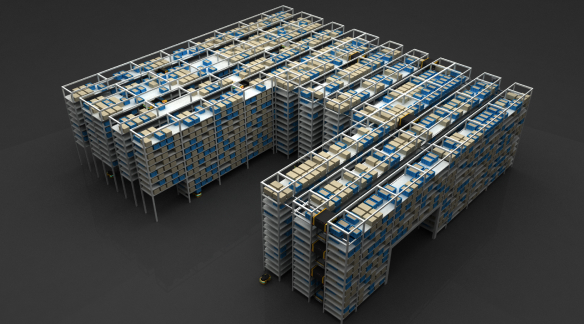
Irregular layouts, structural obstacles, or complex case-storage requirements | BlueSword Spider Sky-Shuttle | Accesses inventory at different heights and can adapt storage layouts around columns, access routes, and non-standard building shapes. |
Frequently changing transport routes or workflows | AMR | Navigate dynamically and can be reassigned as transport requirements or warehouse layouts change |
Repetitive transport along stable, predefined routes | AGV | Provide consistent point-to-point movement where routes and transfer locations remain largely unchanged |
Continuous, high-volume movement between fixed process areas | Conveyor system | Provides a steady flow of goods between receiving, storage, picking, packing, and shipping areas |
Four-Way Pallet Shuttles Enable High-Density Pallet Storage
High-density pallet automation is useful when storage capacity must increase without proportionally increasing the warehouse footprint.
BlueSword's Four-Way Pallet Shuttle is designed for high-density pallet storage and features four-way mobility for flexible movement within the storage system. Its official product information lists a 135 mm ultra-slim body and a standard load capacity of 1.6 tonnes.
This type of system is particularly useful when high-density pallet storage is a priority. Actual pallet accessibility and throughput depend on the rack depth, lane configuration, and overall system design.
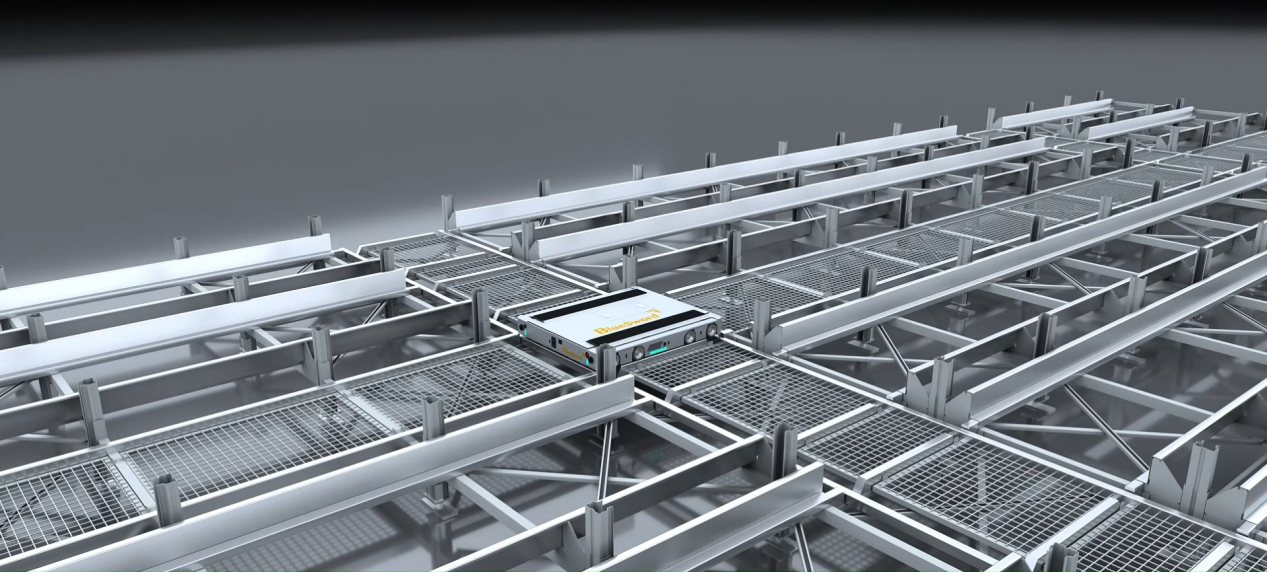
Spider Sky-Shuttle Supports Flexible Storage in Complex Layouts
Flexible shuttle technology is useful when a warehouse cannot be designed around simple, standardized aisles.
BlueSword's Spider (Sky-Shuttle) Case-Handling Robot is designed for irregular warehouse layouts, with flexible deployment to improve storage capacity and space utilization. The system also supports integration with AGVs, AMRs, conveyors, and picking stations, making it part of a wider material-handling workflow.
AGVs and AMRs Provide Flexible Options for Mobile Material Transport
AGVs and AMRs can solve similar horizontal transport problems, but they typically approach navigation differently.
AGVs are generally best suited to stable, repeatable material flows between defined locations. Their predictability can make them highly effective in manufacturing plants and warehouses where transport routes change infrequently.
AMRs generally provide greater routing flexibility. They can use onboard sensing and digital maps to respond to obstacles and adjust their routes dynamically, making them well suited to environments with changing destinations, shared traffic, or frequently changing workflows.
Neither is inherently better. The right choice depends on route stability, traffic conditions, load type, throughput, infrastructure, scalability, and total cost of ownership. Used together with storage and other automation technologies, these solutions can form part of advanced logistics solutions that connect storage, transport, picking, and software around the material-flow requirements of a facility.
How Should You Evaluate an Advanced Material Handling Solution?
An advanced material handling solution should be evaluated on throughput, space utilization, scalability, integration, and ROI—not on equipment specifications alone.
Evaluation factor | Key question |
Throughput | Can the system handle normal and peak demand? |
Space utilization | How effectively does it use floor and vertical space? |
Scalability | Can capacity expand as requirements change? |
Integration | Can different automation technologies exchange data and coordinate tasks? |
ROI | Do labor, capacity, space, and operational benefits justify the investment? |
Throughput should reflect actual operating conditions, including peaks and bottlenecks, rather than a machine's headline capacity.
Space utilization becomes especially important when warehouse expansion is expensive or unavailable. High-density storage can sometimes increase capacity within an existing building.
Scalability matters because demand rarely remains static. Modular automation can allow companies to expand capacity without replacing an entire system.
Integration is critical because modern warehouses often combine multiple automation technologies within the same workflow. Storage systems, conveyors, AGVs, AMRs, picking stations, and warehouse software need to exchange data and coordinate tasks effectively. Strong integration allows these technologies to work as a unified system, improving material flow and reducing bottlenecks across the facility. A fast robot cannot compensate for poor communication between storage, transport, picking, and warehouse management systems.
Finally, ROI should include the complete operating picture: capital expenditure, maintenance, labor requirements, available space, throughput, integration costs, and future expansion.
What Do These Automation Trends Mean for the Future of Material Handling?
Material handling automation is becoming more connected. AI can support task allocation and operational decisions, while AS/RS, shuttles, conveyors, and mobile robots can work together as parts of an integrated material-flow system rather than operating as isolated solutions.
For companies evaluating advanced logistics solutions, the key decision is therefore not simply which robot or storage machine to purchase. It is how the complete system will move, store, retrieve, and prioritize materials as business requirements change.
BlueSword's combination of Spider Sky-Shuttle, Four-Way Pallet Shuttle, AGV/AMR, AS/RS, conveyor, and digital-twin capabilities reflects this system-level approach to warehouse automation.
The practical approach is to start with the material-flow requirements of the facility and then choose the technologies that fit those requirements. The result is a system designed around the operation rather than a collection of machines selected independently.
Read More
-

 September 29 / 2026Beyond the Quote: What an Automated Warehouse Costs Over Its Working Life
The real cost of warehouse automation goes far beyond the initial quote. Discover the hidden costs of installation, downtime, maintenance, energy, upgrades, and expansion—and how smarter system design can keep them under control.
READ MORE
-
 June 29 / 2026Inside the Electronics Factory: What Changed in Material Handling This YearREAD MORE
-
 April 28 / 2026Fixed or Flexible: What Manufacturing Deployments Are Telling Us
Fixed infrastructure once defined manufacturing efficiency. But as production cycles shorten and flexibility becomes critical, mobile automation is changing how factories think about material flow.
READ MORE
-
 March 27 / 2026The Part of Your Warehouse Nobody Wants to Talk About
The warehouse's biggest bottleneck may not be where you think. BlueSword looks at why the dock is becoming the next frontier of automation.
READ MORE
-
 January 28 / 20262026 Manufacturing Upgrade and Industry Trends
As manufacturers plan toward 2026, automation, smart manufacturing, and integrated material flow are becoming central to capacity and resilience. This article explores industry trends, labor constraints, and how integrated warehouse and production automation help reduce internal logistics losses and support phased manufacturing upgrades.
READ MORE
-
 September 24 / 2025Why Automated Warehousing Matters
Global supply chains face constant disruption. Automation is redefining warehouses as resilient hubs that keep goods moving no matter the challenge.
READ MORE
-
 August 27 / 2025How Automation Changes the Nature of Frontline Work: Confidence, Retention, and Workforce Value
Automation is no longer just about efficiency—it’s transforming warehouses and factories into safer, smarter, and more rewarding places to work.
READ MORE
-
 August 19 / 2025Automation in Logistics: Solving Workforce Challenges with Smart Systems
Discover smart logistics solutions with AMRs, shuttle systems, and automated warehouses. Future-proof your supply chain with intelligent intralogistics systems.
READ MORE
-
 July 25 / 2025Robotics Driving Real Safety Transformation in Factories and Warehouses
Safety in factories and warehouses is often discussed in terms of compliance and injury rates. But true safety goes beyond meeting standards. It requires addressing the root causes of risks and understanding how automation reshapes the daily reality for frontline workers—physically and mentally.
READ MORE
-
 May 25 / 2025Are Warehouse Robots Here to Replace Workers—Or to Back Them Where It Counts?
Automation is advancing fast—but where does that leave the people on the ground? This article explores why the future of warehousing isn't a story of replacement, but one of smart collaboration. With real-world cases from BlueSword and global data, we dive into what human-machine partnerships really look like on the warehouse floor.
READ MORE
-
 March 30 / 2025What’s Slowing Down Manufacturing—and What Leading Factories Are Doing About It
While automation continues to gain attention across the production line, internal logistics often remains untouched in traditional manufacturing plants.
READ MORE
-
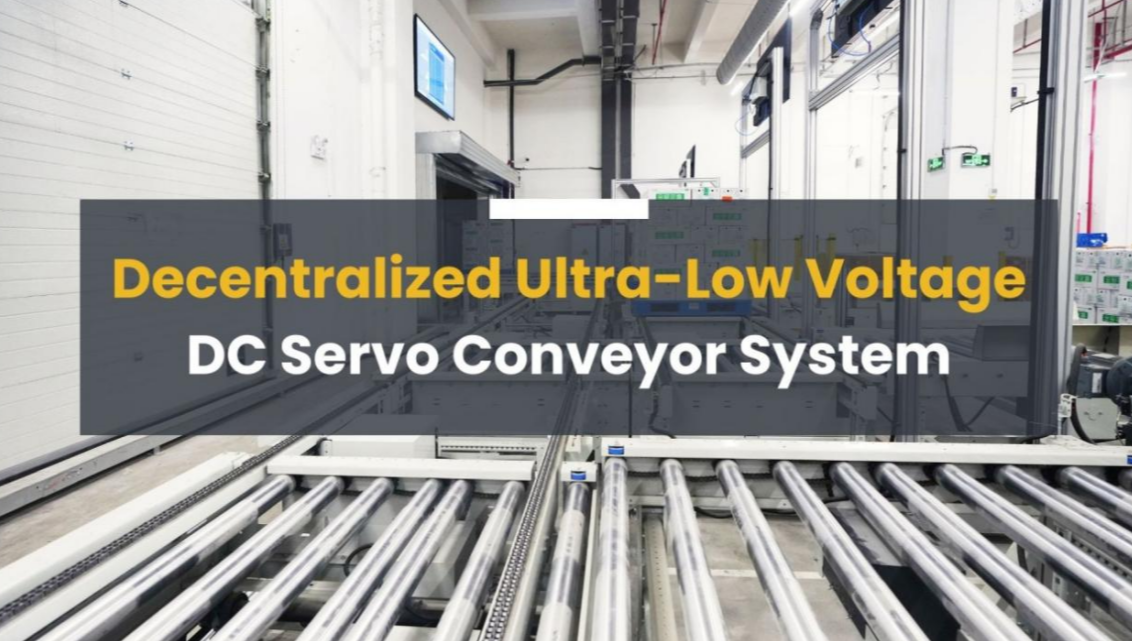 January 2 / 2025Building a Green Logistics Ecosystem with Servo Technology
The conveyor system is essential in modern production and logistics, facilitating the efficient storage, sorting, handling, and distribution of materials. By automating transport processes, it enhances efficiency, accuracy, and safety while effectively reducing labor costs.
READ MORE
-
 September 29 / 2024Logistics Transformation: Navigating Challenges in the FMCG Industry
Fast-moving consumer goods (FMCG) are an essential part of our everyday lives. With their large market size and ongoing growth, the FMCG industry plays an important role in the global economy.
READ MORE


