









UPDATES

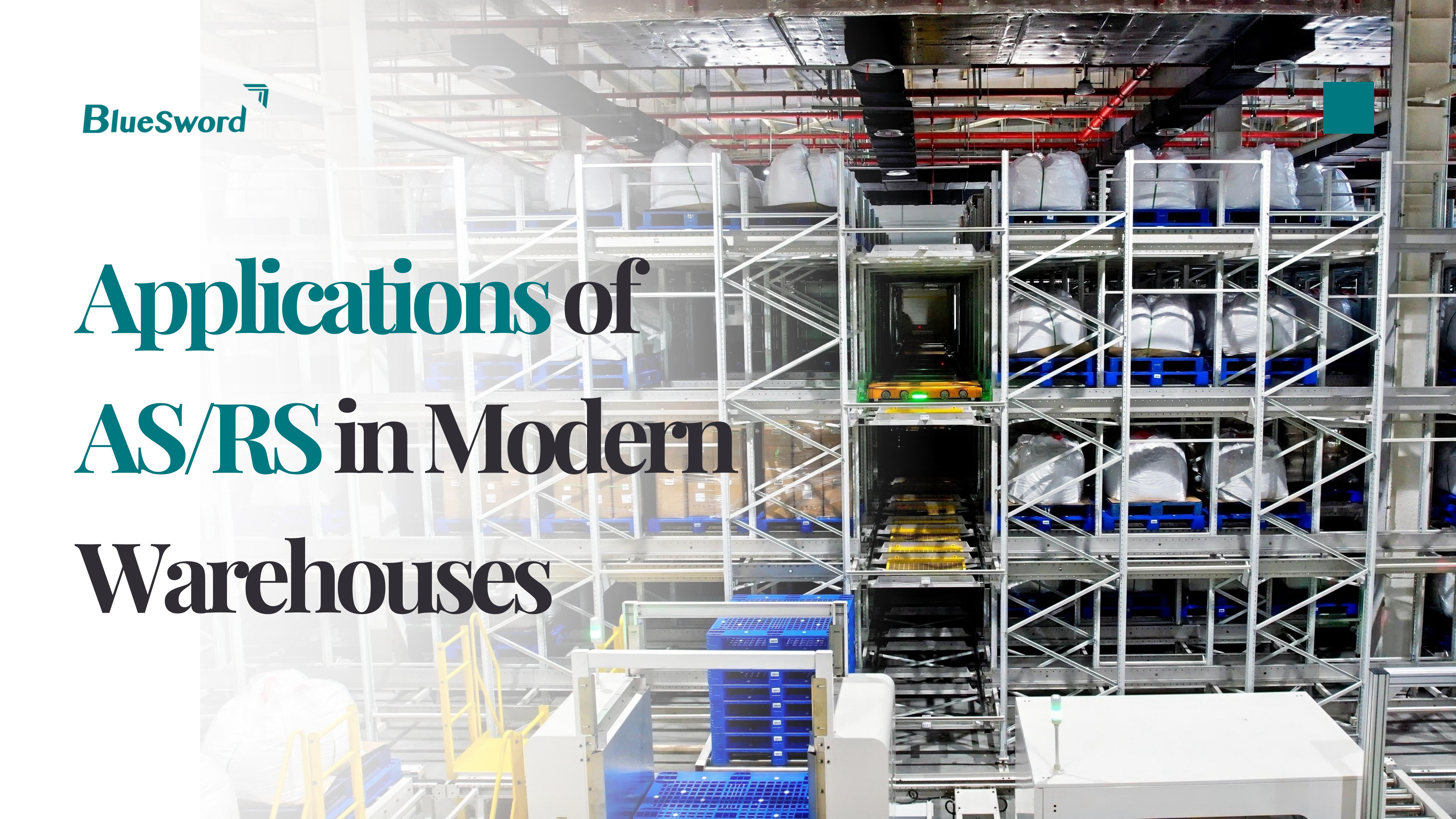
As warehouses handle more inventory, SKUs, and order activity, traditional storage and retrieval methods can become increasingly difficult to manage. Automated Storage and Retrieval Systems (AS/RS) provide an automated approach to storing and retrieving goods across different warehouse environments.
What Is an AS/RS System and How Does It Work?
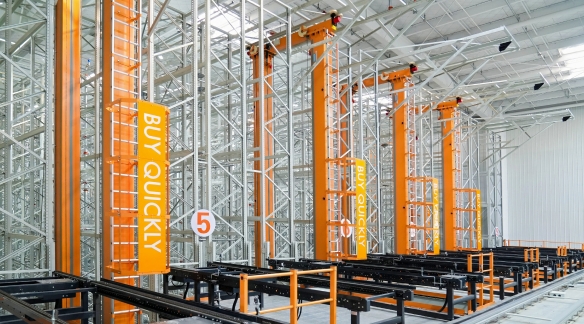
An Automated Storage and Retrieval System (AS/RS) is a warehouse automation solution that automatically stores, locates, and retrieves goods with minimal manual handling. Depending on the application, an AS/RS can handle pallets, totes, cartons, parts, and other load types.
A typical system combines storage racks, automated handling equipment, and warehouse software to manage both inventory and material movement.
How Automated Storage and Retrieval Works
When goods enter the system, warehouse software identifies the load and assigns an appropriate storage location. Automated equipment—such as stacker cranes, shuttles, lifts, or conveyors—then transports the load to that location.
When the goods are needed, the system retrieves them automatically and transfers them to the next destination, such as a picking station, production line, or shipping area. This allows storage, retrieval, and inventory tracking to operate as one coordinated process.
AS/RS vs. Traditional Material Handling
Traditional warehouse operations rely more heavily on operators, forklifts, and manual searching to move and retrieve goods. This can require wider aisles, more labor, and more manual coordination. AS/RS replaces many of these repetitive movements with automated equipment and software-controlled workflows. This can improve storage density, inventory accuracy, operational consistency, and material-flow efficiency.
The key distinction lies in how goods are stored, accessed, and moved, as summarized below.
Factor | Traditional Racking + Forklifts | AS/RS |
Storage access | Operator and forklift driven | Automated |
Aisle requirements | Often wider for vehicle movement | Can support high-density configurations |
Inventory control | More dependent on manual scanning and handling | Real-time location tracking through software |
Material movement | Primarily manual | Automated equipment |
Space utilization | Dependent on aisle and rack design | Can make greater use of vertical space |
AS/RS is not simply a replacement for manual labor. Its main advantage is the ability to integrate storage and retrieval into a more controlled and predictable warehouse process.
What Are the Main Applications of AS/RS in Modern Warehouses?
Depending on the system configuration, AS/RS can handle different load formats, including pallets, totes, cartons and more. The inventory stored may include raw materials, components, work-in-process, and finished goods. By making this inventory available when and where it is needed, AS/RS can support downstream processes such as order fulfillment and material supply to production.
High-Density Pallet Storage
Pallet-level AS/RS is a good fit when a warehouse needs to store large quantities of palletized goods without continually expanding its footprint.
Instead of planning every storage position around forklift access, an automated pallet system can make better use of available rack height and organize storage locations around automated movements. The result is a more compact storage layout while keeping pallets accessible for inbound and outbound operations.
Case Storage and Order Fulfillment
Case-level AS/RS is useful when a warehouse handles many SKUs and needs frequent access to cartons, totes, or individual cases. This type of storage is common in e-commerce, retail, FMCG, pharmaceutical, and other high-turnover operations where inventory needs to move frequently rather than simply remain in storage.
In a goods-to-person workflow, automation brings required inventory to a picking station rather than requiring workers to walk to every storage location.
Manufacturing and Line-Side Material Storage
Manufacturers can use AS/RS for raw materials, components, work-in-process inventory, and finished goods. Smaller components may use case- or tote-based systems, while larger or heavier loads may require pallet-level solutions such as stacker cranes or pallet shuttles.
The key benefit is controlled material availability. Instead of relying on workers to search storage areas for components, an automated system can retrieve the required material and deliver it to a designated production or handling point.
Cold Storage and Special Environments
Cold-storage facilities need to maintain low temperatures while making efficient use of refrigerated space. AS/RS reduces the need for workers and forklifts to enter these areas by automatically storing and retrieving goods. Its high-density, vertical configuration also allows more inventory to be stored within the available cooled space.
AS/RS designed for cold environments can use temperature-rated motors, sensors, control equipment, lubricants, and other components to operate reliably under low-temperature conditions. The system can also incorporate measures for managing condensation and frost, while providing appropriate maintenance access, fire protection, and recovery procedures. These features make AS/RS suitable for frozen-food warehouses, chilled distribution centers, and pharmaceutical facilities handling temperature-sensitive products.
How Does AS/RS Improve Warehouse Operations?
AS/RS improves warehouse operations primarily by combining higher-density storage, automated material movement, and system-controlled inventory management.
Maximize Space Utilization
AS/RS can make greater use of vertical warehouse space and reduce the floor area dedicated to manual travel and equipment movement. This is especially useful when a company needs additional capacity but cannot easily increase its building footprint.
The exact space savings depend on building height, rack configuration, load characteristics, equipment, and required throughput. Therefore, warehouse design should be evaluated before assuming a specific capacity improvement.
Enhance Labor Productivity
AS/RS reduces repetitive manual handling by automating tasks such as transporting goods between storage locations and workstations. Employees can consequently spend more time on activities that require judgment, exception handling, or quality control.
This does not mean that every warehouse becomes completely labor-free. Instead, material handling automation changes where people add value by reducing routine travel and movement.
Improve Inventory Accuracy and Traceability
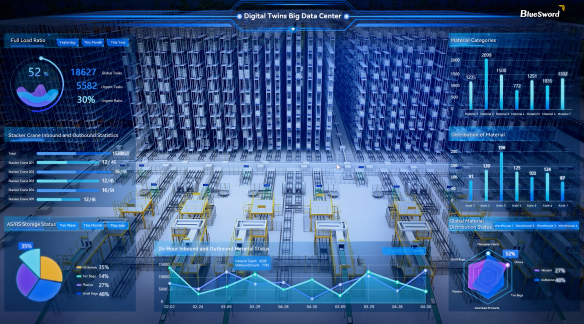
Because storage and retrieval activities are controlled through software and predefined locations, AS/RS can reduce dependence on manual inventory-location decisions. Whenever goods are stored, relocated, or retrieved, the transaction is automatically updated in the warehouse management system. This keeps digital records aligned with physical inventory and allows operators to quickly check where each load is stored and how it has moved through the warehouse. For products managed by batch, lot, or expiration date, the system can also support FIFO or FEFO rules, making replenishment, quality checks, and product recalls easier to manage.
How Do You Choose the Right AS/RS System for Your Warehouse?
The right AS/RS should be selected according to load type, storage density, throughput requirements, and warehouse layout, rather than choosing equipment based on automation level alone.
Load Type and Unit Size
Start by identifying exactly what the system must handle. Pallets, cartons, cases, totes, and individual items have different dimensions, weights, and handling requirements.
For example, pallet-focused operations may require a different AS/RS architecture from a fulfillment center handling thousands of individual cases and SKUs.
Storage Density and Available Space
Calculate current storage requirements and expected future demand before selecting equipment. Building height, aisle width, rack configuration, and available floor space all influence achievable density.
The goal should be to match storage density with operational requirements rather than maximizing density at the expense of accessibility or throughput.
Throughput and Peak Demand
Throughput determines how frequently the system must store and retrieve goods. A warehouse with relatively stable inventory may prioritize capacity, while an e-commerce fulfillment operation may require substantially more frequent retrieval.
Peak-period demand should also be considered. A system that meets average demand but creates bottlenecks during seasonal peaks may not provide the required operational performance.
Warehouse Layout and Building Constraints
Warehouse geometry can strongly influence system selection. Columns, ceiling height, existing racks, narrow aisles, irregular floor plans, and picking areas all need to be considered during system design. In an existing warehouse, these constraints can make a highly standardized automation layout difficult to implement.
When Is Flexible AS/RS a Better Choice for Complex Warehouse Layouts?
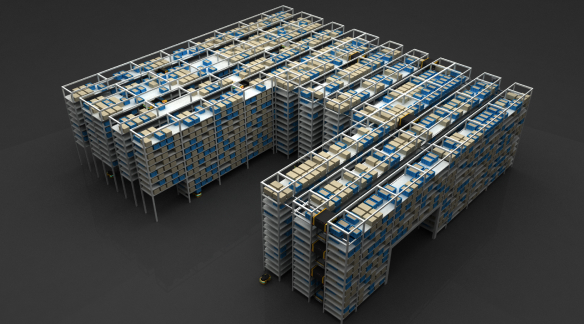
Flexible AS/RS can be particularly useful for warehouses with irregular layouts, structural constraints, or limited space for conventional configurations.
Innovative case-handling robots combine horizontal travel with a lifting mechanism to access inventory at different rack heights. The robot moves through an aisle, raises or lowers its loading platform to the required storage level, retrieves a case or tote, and carries it to a transfer point connected to a picking station or other downstream equipment. Robots with aisle-switching capability can also move between aisles, allowing the storage layout to adapt more easily around columns, access routes, and other structural obstacles.
BlueSword's Spider (Sky-Shuttle) case-handling robot is designed for goods-to-person fulfillment in irregular warehouse layouts. It supports flexible storage configurations, including N-, L-, and T-shaped layouts, helping improve space utilization.
Spider can integrate with AGVs, AMRs, conveyor systems, and picking stations. According to BlueSword, it supports storage heights of up to 20 meters, a minimum aisle width of 1,000 mm, and storage density of up to 3x that of conventional solutions.
These capabilities make the Spider system suitable for high-density case storage, e-commerce fulfillment, and existing warehouses where columns, irregular floor plans, or other structural constraints make a standard automation layout difficult to apply. Even so, the system still needs to be matched to the actual load profile, throughput target, and available space.
Conclusion
AS/RS is fundamentally a technology for automating inventory storage and retrieval. By controlling and recording these movements through software, AS/RS can increase storage capacity, create a more predictable material flow, improve inventory traceability, and reduce unnecessary travel and forklift traffic. These improvements allow it to support order fulfillment, production supply, and temperature-controlled storage.
Achieving these benefits depends on matching the system to the load characteristics, required capacity and throughput, warehouse geometry, operating environment, and existing software and handling equipment. For facilities with columns, irregular floor plans, or other structural constraints, flexible case-handling systems such as BlueSword’s Spider Sky-Shuttle can provide a more adaptable approach. The objective is not simply to introduce more automation, but to create a storage and retrieval process that fits the warehouse’s actual operating requirements.
Read More
-

 September 29 / 2026Beyond the Quote: What an Automated Warehouse Costs Over Its Working Life
The real cost of warehouse automation goes far beyond the initial quote. Discover the hidden costs of installation, downtime, maintenance, energy, upgrades, and expansion—and how smarter system design can keep them under control.
READ MORE
-
 June 29 / 2026Inside the Electronics Factory: What Changed in Material Handling This YearREAD MORE
-
 April 28 / 2026Fixed or Flexible: What Manufacturing Deployments Are Telling Us
Fixed infrastructure once defined manufacturing efficiency. But as production cycles shorten and flexibility becomes critical, mobile automation is changing how factories think about material flow.
READ MORE
-
 March 27 / 2026The Part of Your Warehouse Nobody Wants to Talk About
The warehouse's biggest bottleneck may not be where you think. BlueSword looks at why the dock is becoming the next frontier of automation.
READ MORE
-
 January 28 / 20262026 Manufacturing Upgrade and Industry Trends
As manufacturers plan toward 2026, automation, smart manufacturing, and integrated material flow are becoming central to capacity and resilience. This article explores industry trends, labor constraints, and how integrated warehouse and production automation help reduce internal logistics losses and support phased manufacturing upgrades.
READ MORE
-
 September 24 / 2025Why Automated Warehousing Matters
Global supply chains face constant disruption. Automation is redefining warehouses as resilient hubs that keep goods moving no matter the challenge.
READ MORE
-
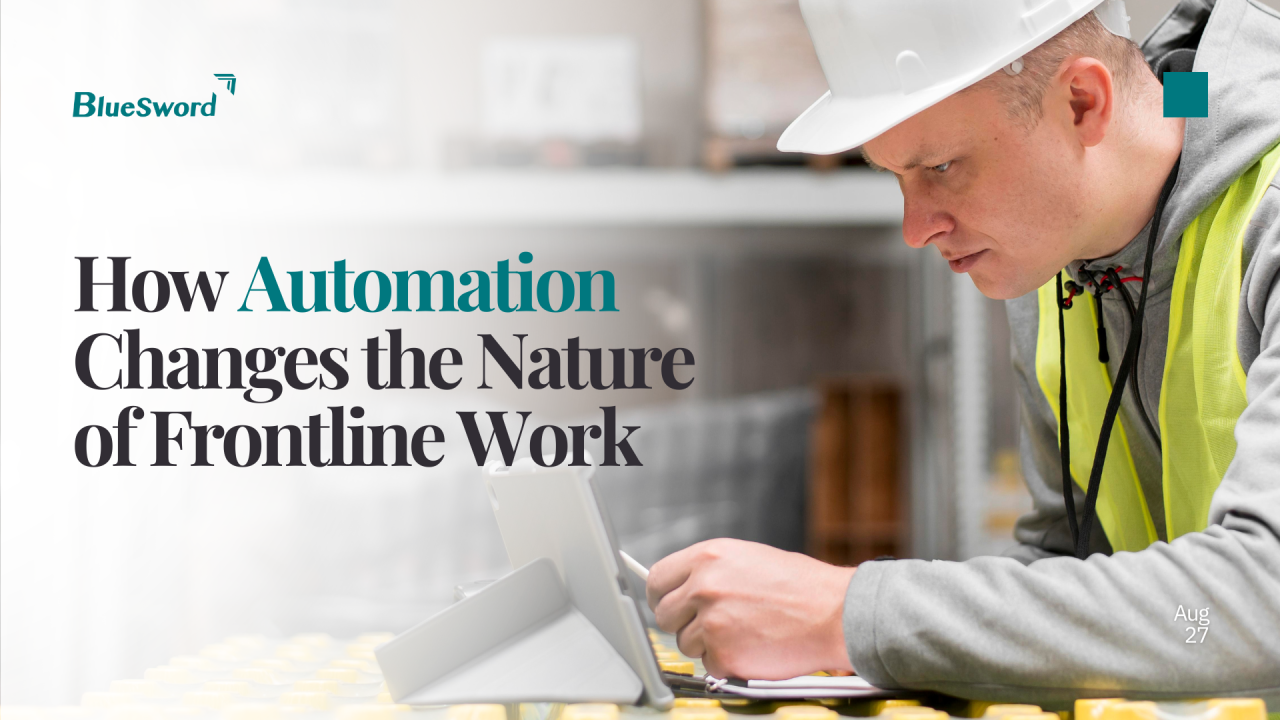 August 27 / 2025How Automation Changes the Nature of Frontline Work: Confidence, Retention, and Workforce Value
Automation is no longer just about efficiency—it’s transforming warehouses and factories into safer, smarter, and more rewarding places to work.
READ MORE
-
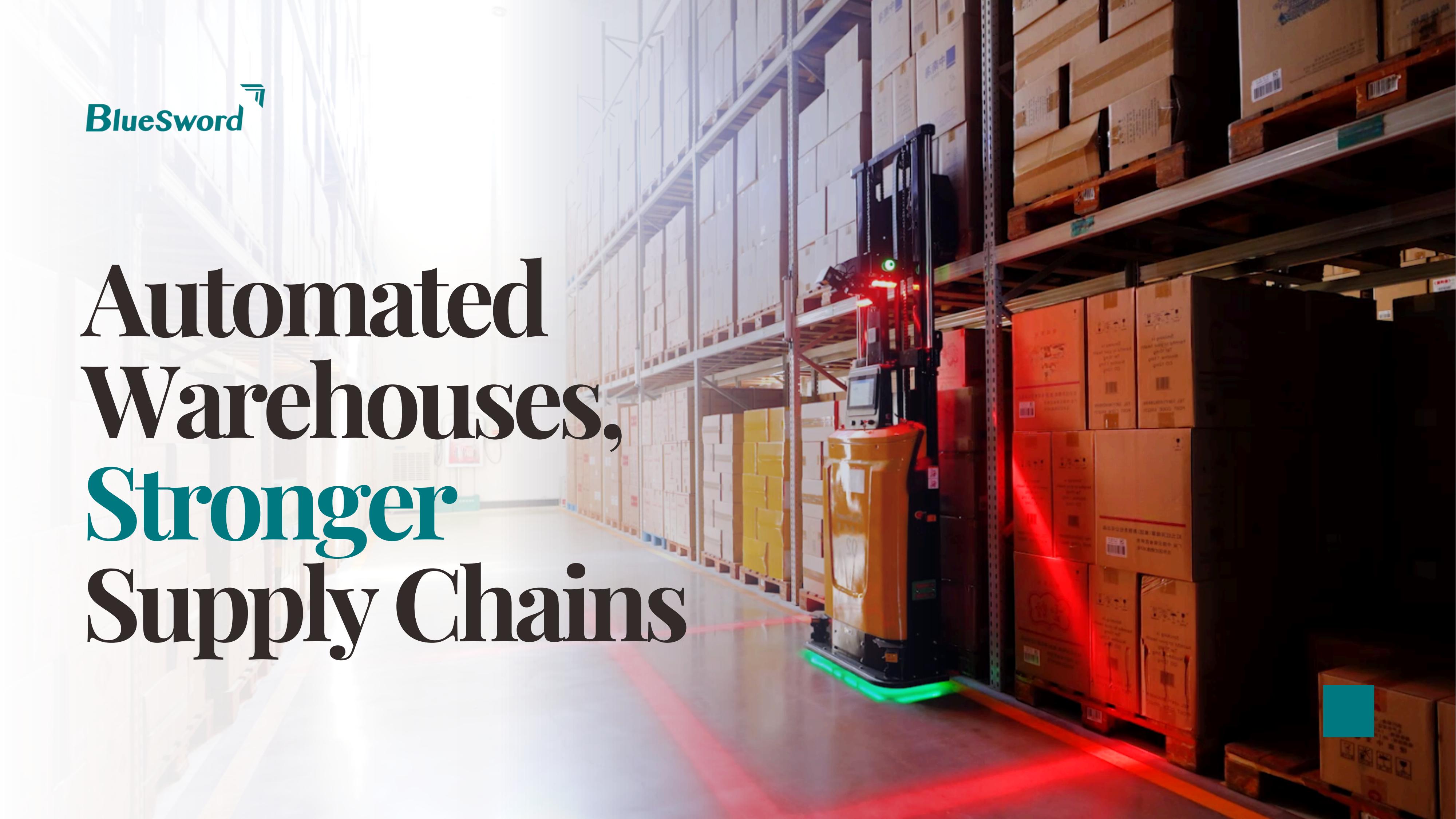 August 19 / 2025Automation in Logistics: Solving Workforce Challenges with Smart Systems
Discover smart logistics solutions with AMRs, shuttle systems, and automated warehouses. Future-proof your supply chain with intelligent intralogistics systems.
READ MORE
-
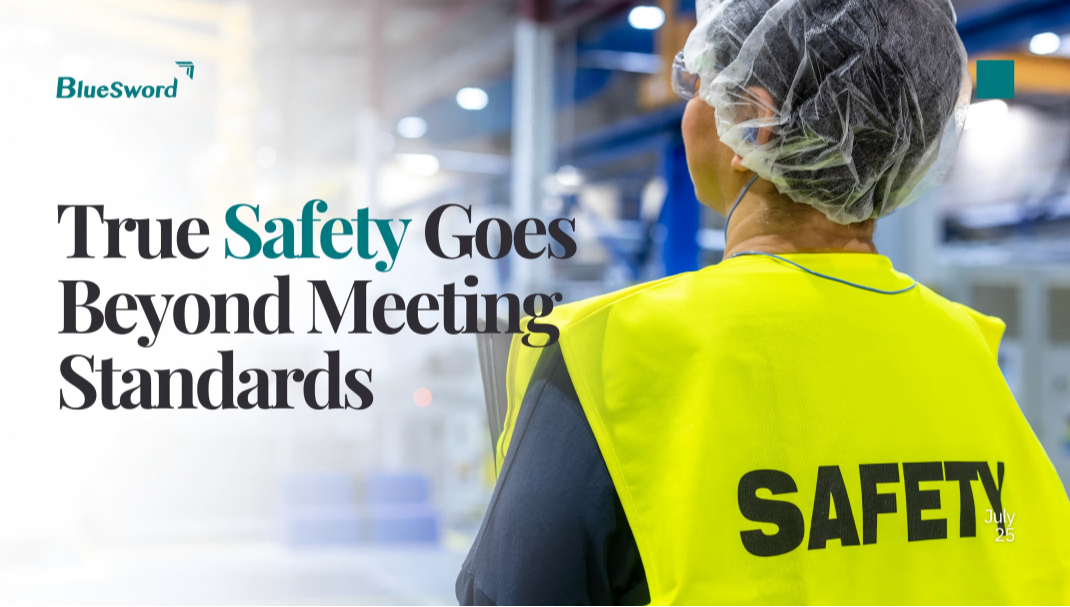 July 25 / 2025Robotics Driving Real Safety Transformation in Factories and Warehouses
Safety in factories and warehouses is often discussed in terms of compliance and injury rates. But true safety goes beyond meeting standards. It requires addressing the root causes of risks and understanding how automation reshapes the daily reality for frontline workers—physically and mentally.
READ MORE
-
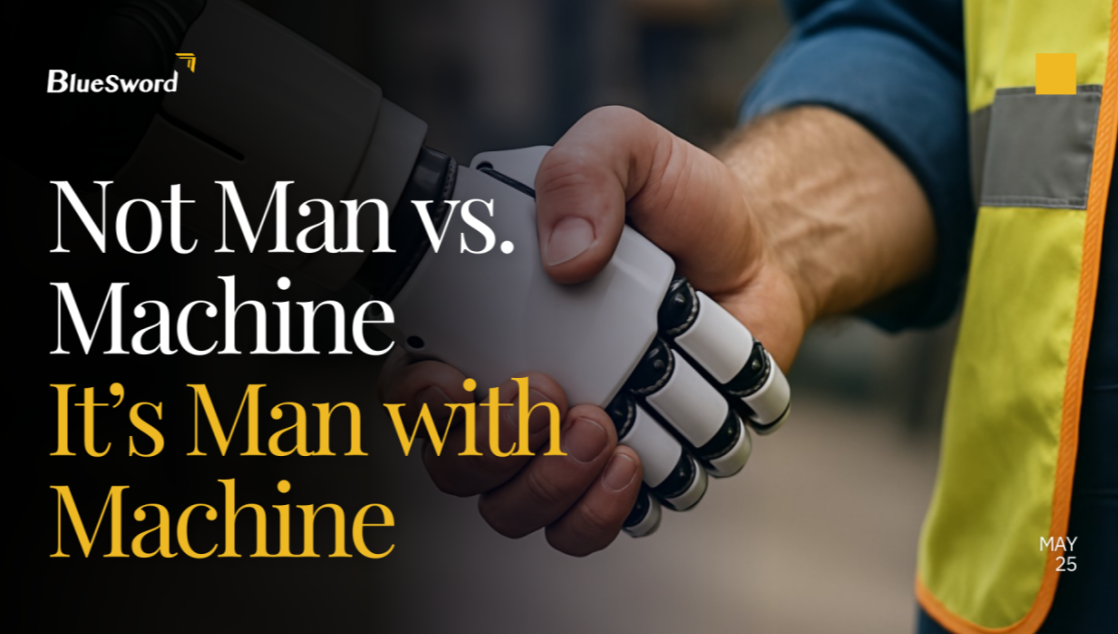 May 25 / 2025Are Warehouse Robots Here to Replace Workers—Or to Back Them Where It Counts?
Automation is advancing fast—but where does that leave the people on the ground? This article explores why the future of warehousing isn't a story of replacement, but one of smart collaboration. With real-world cases from BlueSword and global data, we dive into what human-machine partnerships really look like on the warehouse floor.
READ MORE
-
 March 30 / 2025What’s Slowing Down Manufacturing—and What Leading Factories Are Doing About It
While automation continues to gain attention across the production line, internal logistics often remains untouched in traditional manufacturing plants.
READ MORE
-
 January 2 / 2025Building a Green Logistics Ecosystem with Servo Technology
The conveyor system is essential in modern production and logistics, facilitating the efficient storage, sorting, handling, and distribution of materials. By automating transport processes, it enhances efficiency, accuracy, and safety while effectively reducing labor costs.
READ MORE
-
 September 29 / 2024Logistics Transformation: Navigating Challenges in the FMCG Industry
Fast-moving consumer goods (FMCG) are an essential part of our everyday lives. With their large market size and ongoing growth, the FMCG industry plays an important role in the global economy.
READ MORE


