








UPDATES

Following the first five flexibility features covered in Part 1, here are five more ways BlueSword's intelligent conveying systems are engineered to fit constraints that standard conveyor designs typically can't handle — a capability that sets it apart from most automated conveyor systems manufacturers, from cleanroom manufacturing to multi-floor facilities.
Distributed Frequency Control
Installing distributed frequency converter modules near each motor along the conveyor system, connected through a ProfiNet fieldbus, allows each conveying unit to be controlled independently with real-time monitoring — replacing the traditional centralized control cabinet architecture.
The soft-start and intelligent speed regulation this enables can cut energy use by 20–30%, while also reducing the cabling needed between a central cabinet and individual motors, which lowers both material cost and installation time. Speed, start/stop, and buffering can be tuned at the millisecond level, and each converter's independent diagnostics support hot-swapping, simplifying maintenance and cutting downtime. Derom Medical, in the medical device sector, is one example of this configuration in use.
Ultra-Clean Environments (Class 10,000 Cleanroom)
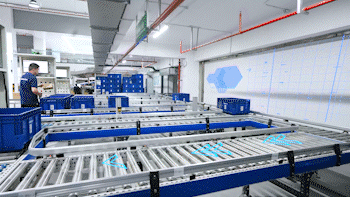
For cleanroom applications, higher-cleanliness conveyor materials combined with a fully enclosed structure eliminate the gaps and recesses where contaminants typically collect. Fully sealed direct-drive mechanisms replace chain and gear systems prone to dust accumulation, addressing a known failure point in traditional belt conveyors — metal debris and belt-wear particles that can cause chip short circuits or photoresist contamination in electronics manufacturing. The design also supports full lifecycle cleanability, reducing the equipment failures that come from delayed cleaning. Tianma, in 3C electronics, runs this configuration.
Dual-Pallet Stacking Up to 5 Tons
Heavy-duty conveyor structures — thickened profiles, reinforced legs, high-strength large-pitch chains — combined with specialized lifting-transfer equipment allow two fully loaded pallets to be stacked and conveyed stably, up to 5 tons combined. That doubles single-pallet throughput for high-volume, low-frequency logistics, and meets the load demands of industries like food and beverage and building materials, while also supporting denser floor storage layouts. By-health, in food manufacturing, uses this setup.
Overhead Pallet Conveying
A 3D rail network paired with an intelligent traction system moves pallet transport from ground level to overhead space, addressing the congestion that ground-level conveying often creates. This can free up more than 90% of floor space for production stations, storage, or pedestrian aisles, and it lets pallets move directly between workshops or floors without secondary handling — bypassing walls and equipment obstacles that would otherwise block a ground route. FAW-Volkswagen's Foshan plant runs this system.
Cross-Floor Lifting
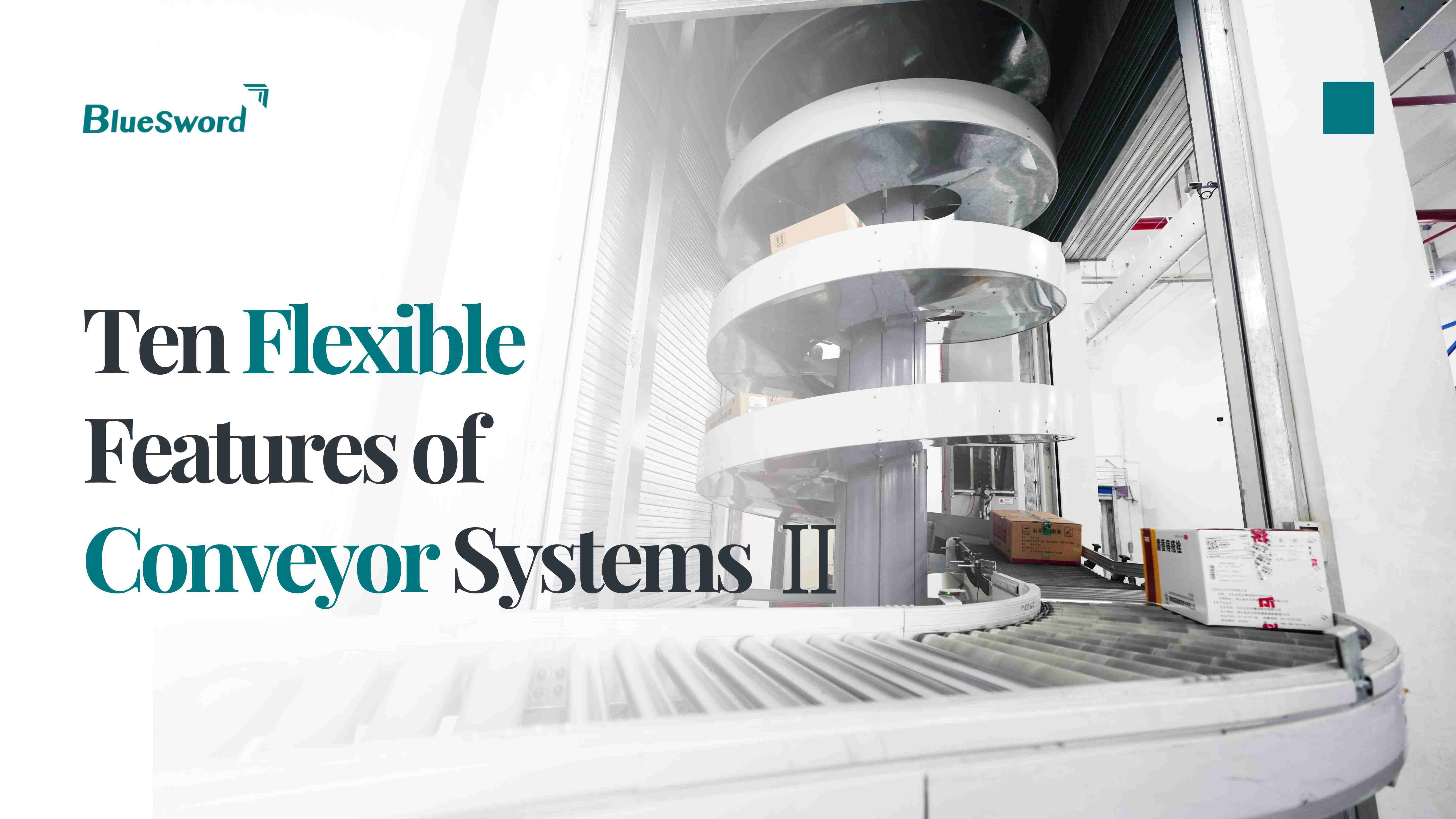
Through spiral lifters or reciprocating vertical lift systems, integrated with a unified WCS, materials move automatically from horizontal lines into lifts and back onto local conveying lines on the target floor. This connects floor-based logistics into a single 3D network with continuous, high-speed cross-floor transport in a smaller footprint than a traditional freight lift setup — a capability that positions BlueSword as a system integrator rather than just an equipment supplier. Youngor, in apparel and footwear, uses this configuration.
Across all 10 features, the pattern holds: conveyor design that starts from a facility's actual constraints — cleanliness, load, floor space, floor count — rather than forcing a standard layout to fit.
Read More
-

 June 29 / 2026Inside the Electronics Factory: What Changed in Material Handling This YearREAD MORE
-
 April 28 / 2026Fixed or Flexible: What Manufacturing Deployments Are Telling Us
Fixed infrastructure once defined manufacturing efficiency. But as production cycles shorten and flexibility becomes critical, mobile automation is changing how factories think about material flow.
READ MORE
-
 March 27 / 2026The Part of Your Warehouse Nobody Wants to Talk About
The warehouse's biggest bottleneck may not be where you think. BlueSword looks at why the dock is becoming the next frontier of automation.
READ MORE
-
 January 28 / 20262026 Manufacturing Upgrade and Industry Trends
As manufacturers plan toward 2026, automation, smart manufacturing, and integrated material flow are becoming central to capacity and resilience. This article explores industry trends, labor constraints, and how integrated warehouse and production automation help reduce internal logistics losses and support phased manufacturing upgrades.
READ MORE
-
 September 24 / 2025Why Automated Warehousing Matters
Global supply chains face constant disruption. Automation is redefining warehouses as resilient hubs that keep goods moving no matter the challenge.
READ MORE
-
 August 27 / 2025How Automation Changes the Nature of Frontline Work: Confidence, Retention, and Workforce Value
Automation is no longer just about efficiency—it’s transforming warehouses and factories into safer, smarter, and more rewarding places to work.
READ MORE
-
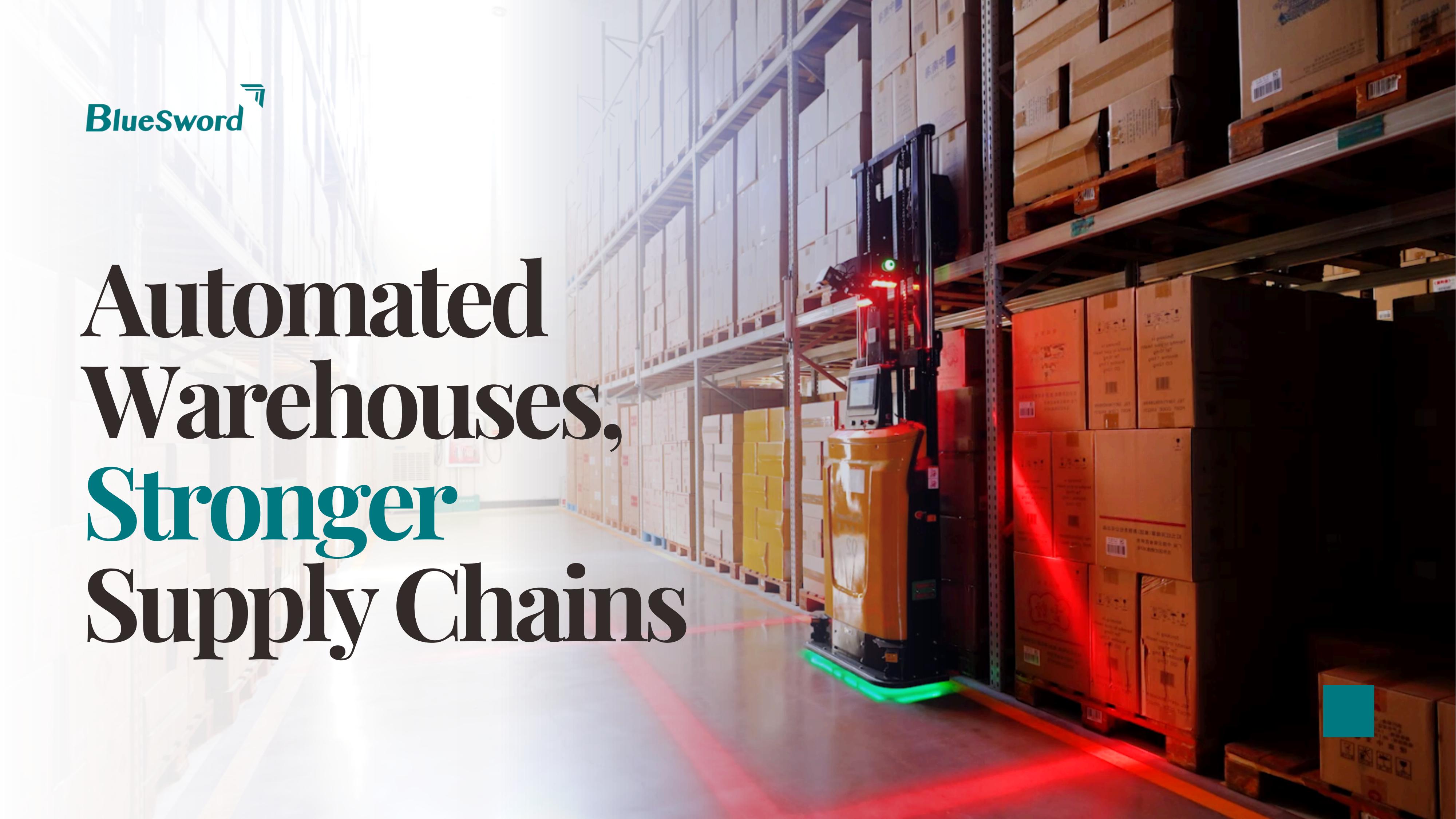 August 19 / 2025Automation in Logistics: Solving Workforce Challenges with Smart Systems
Discover smart logistics solutions with AMRs, shuttle systems, and automated warehouses. Future-proof your supply chain with intelligent intralogistics systems.
READ MORE
-
 July 25 / 2025Robotics Driving Real Safety Transformation in Factories and Warehouses
Safety in factories and warehouses is often discussed in terms of compliance and injury rates. But true safety goes beyond meeting standards. It requires addressing the root causes of risks and understanding how automation reshapes the daily reality for frontline workers—physically and mentally.
READ MORE
-
 May 25 / 2025Are Warehouse Robots Here to Replace Workers—Or to Back Them Where It Counts?
Automation is advancing fast—but where does that leave the people on the ground? This article explores why the future of warehousing isn't a story of replacement, but one of smart collaboration. With real-world cases from BlueSword and global data, we dive into what human-machine partnerships really look like on the warehouse floor.
READ MORE
-
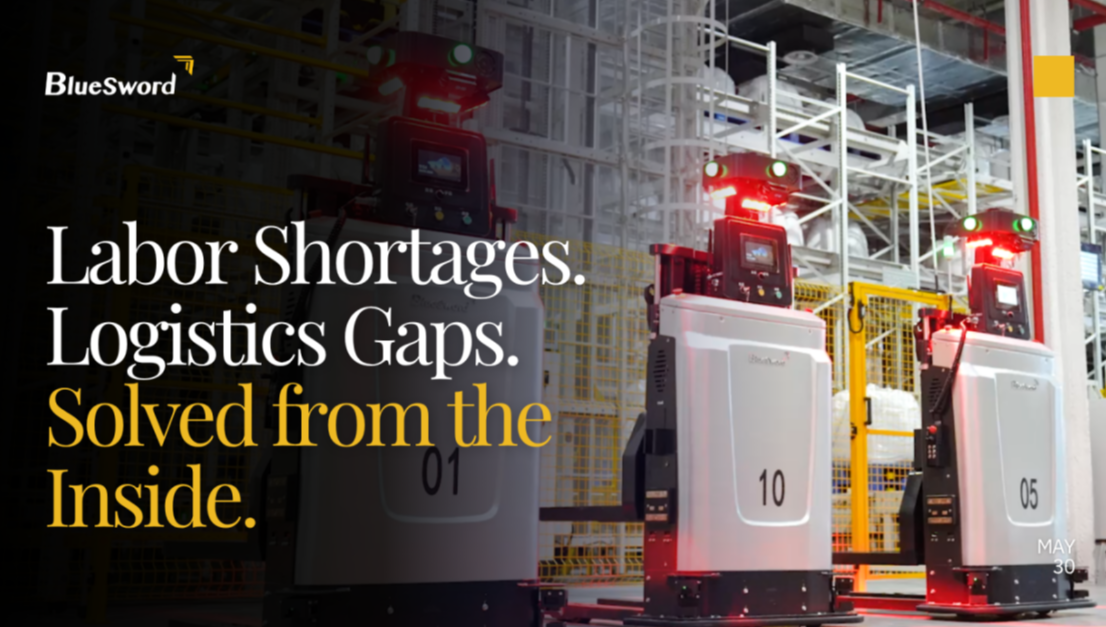 March 30 / 2025What’s Slowing Down Manufacturing—and What Leading Factories Are Doing About It
While automation continues to gain attention across the production line, internal logistics often remains untouched in traditional manufacturing plants.
READ MORE
-
 January 2 / 2025Building a Green Logistics Ecosystem with Servo Technology
The conveyor system is essential in modern production and logistics, facilitating the efficient storage, sorting, handling, and distribution of materials. By automating transport processes, it enhances efficiency, accuracy, and safety while effectively reducing labor costs.
READ MORE
-
 September 29 / 2024Logistics Transformation: Navigating Challenges in the FMCG Industry
Fast-moving consumer goods (FMCG) are an essential part of our everyday lives. With their large market size and ongoing growth, the FMCG industry plays an important role in the global economy.
READ MORE


