









UPDATES

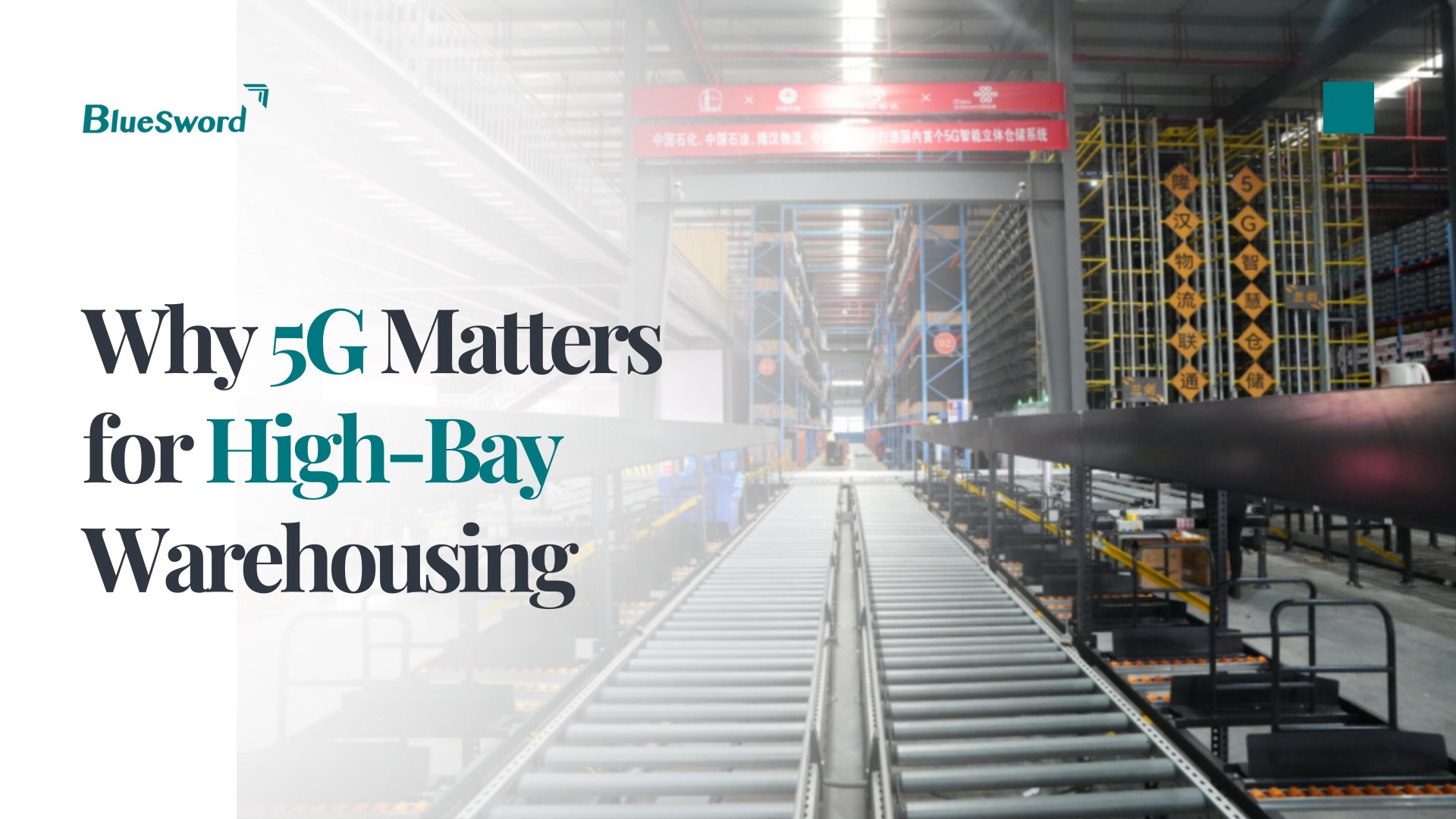
WiFi has real limits in high-bay automated warehouses — dense storage blocks signal, disconnections are common, and the growing number of vision systems and IoT devices on a warehouse floor only adds pressure. BlueSword's 5G smart warehouse deployment for the Sinopec Easy Joy Fujian Central Warehouse shows what a 5G-native design solves that WiFi-based systems can't.
A High-Volume, High-SKU Distribution Hub
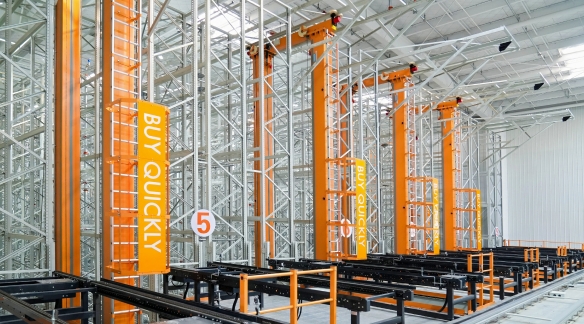
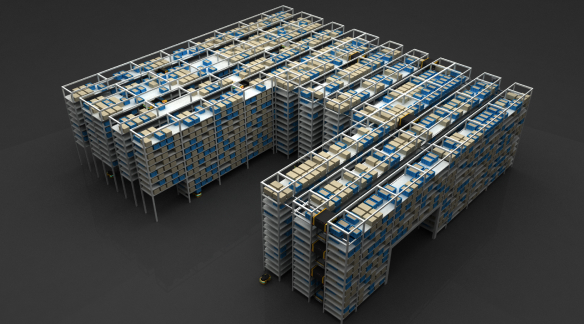
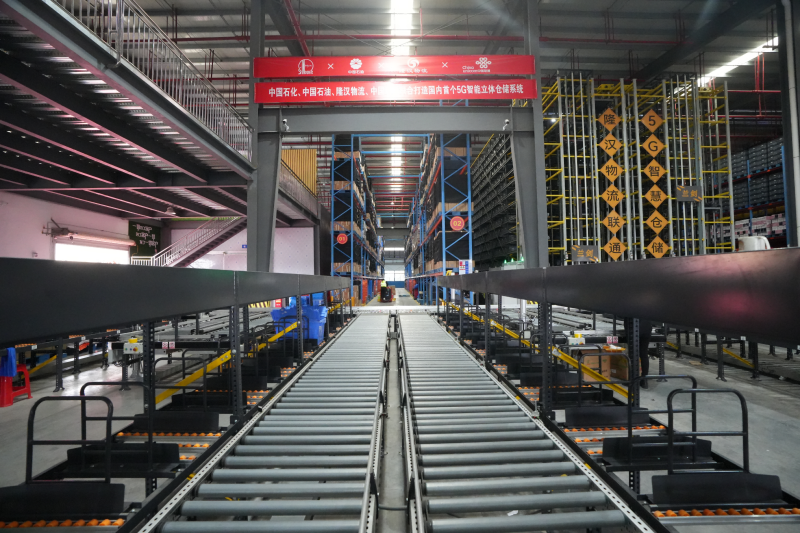
Built by BlueSword, the central warehouse in Quanzhou serves over 2,000 Sinopec and PetroChina convenience stores across Fujian Province. Managing 3,500+ SKUs—spanning essentials like food, beverages, and daily necessities—it supports weekly, high-frequency, and daily distribution.
Supporting hundreds of simultaneous IoT device connections for FMCG warehouse automation required a communication backbone that WiFi couldn't reliably provide at this density, which is what drove the shift to a 5G industrial internet deployment tailored to the specific production processes.
Intelligent Sorting Over a 5G Private Network
5G connectivity gives the system precise shuttle vehicle positioning and accurate order dispatching across the full inbound-to-sales process, with real-time cargo status visible throughout. Shuttle vehicles and mobile PAD devices upload data through the 5G network to the User Plane Function (UPF) at Quanzhou Unicom's data center, which routes it to the customer's Multi-access Edge Computing (MEC) server for processing — with commands following the same path in reverse to execution terminals. Full 5G coverage keeps that connection stable in a way WiFi couldn't at this scale.
Coordinating Equipment Through WCS and 5G+MEC
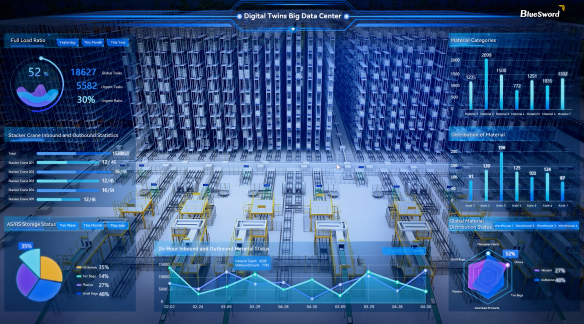
Built on China Unicom's 5G private network, the WCS orchestrates conveyors, stacker cranes, shuttle systems, electronic label pickers, and AGVs connected through the private 5G network., A task engine and message engine decompose and optimize tasks and analyze execution paths, while 3D-SCADA visualization gives operators an intuitive view of system status. A one-item-one-code system lets the cloud platform track inventory in real time, with the 5G+MEC architecture centralizing that data for management decisions and oversight.
Keeping Data On-Site
The WMS layer handles unified data entry, storage, and visualization through standardized logistics information interfaces built to customers' integration requirements. With 5G+MEC edge computing, warehouse data processes and stores locally in real time — keeping central warehouse data within the facility itself while still providing real-time visibility.
What the Deployment Delivered
The upgrade improved split-case storage capacity and inbound/outbound handling while reducing space consumption, meaningfully improving consumer goods logistics performance across the facility. Projected results include doubling total SKU capacity and quadrupling annual storage and distribution value, alongside delivery timeliness above 99%, delivery accuracy above 99.98%, return processing timeliness above 99%, inventory accuracy above 99.99%, and inbound timeliness above 99.5%.
Those figures point toward a warehouse built for scale from the ground up — a foundation for the green, agile supply chain that FMCG distribution increasingly requires.
Read More
-

 June 29 / 2026Inside the Electronics Factory: What Changed in Material Handling This YearREAD MORE
-
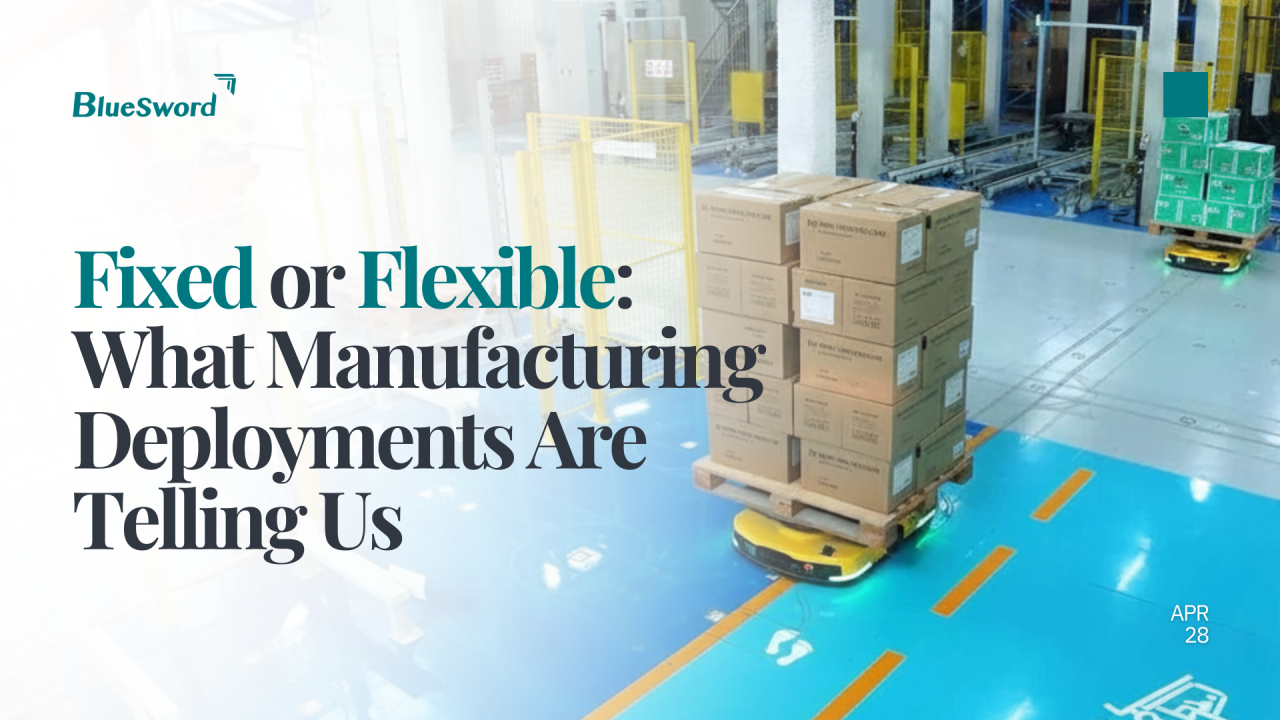 April 28 / 2026Fixed or Flexible: What Manufacturing Deployments Are Telling Us
Fixed infrastructure once defined manufacturing efficiency. But as production cycles shorten and flexibility becomes critical, mobile automation is changing how factories think about material flow.
READ MORE
-
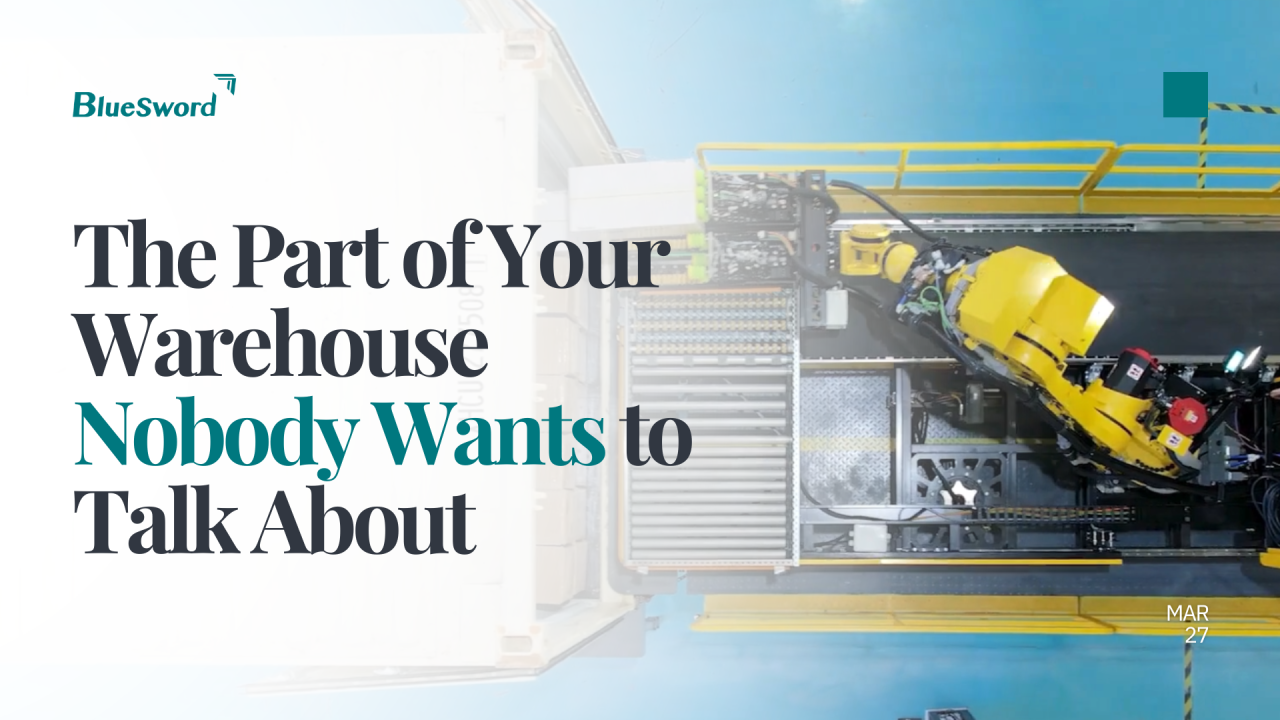 March 27 / 2026The Part of Your Warehouse Nobody Wants to Talk About
The warehouse's biggest bottleneck may not be where you think. BlueSword looks at why the dock is becoming the next frontier of automation.
READ MORE
-
 January 28 / 20262026 Manufacturing Upgrade and Industry Trends
As manufacturers plan toward 2026, automation, smart manufacturing, and integrated material flow are becoming central to capacity and resilience. This article explores industry trends, labor constraints, and how integrated warehouse and production automation help reduce internal logistics losses and support phased manufacturing upgrades.
READ MORE
-
 September 24 / 2025Why Automated Warehousing Matters
Global supply chains face constant disruption. Automation is redefining warehouses as resilient hubs that keep goods moving no matter the challenge.
READ MORE
-
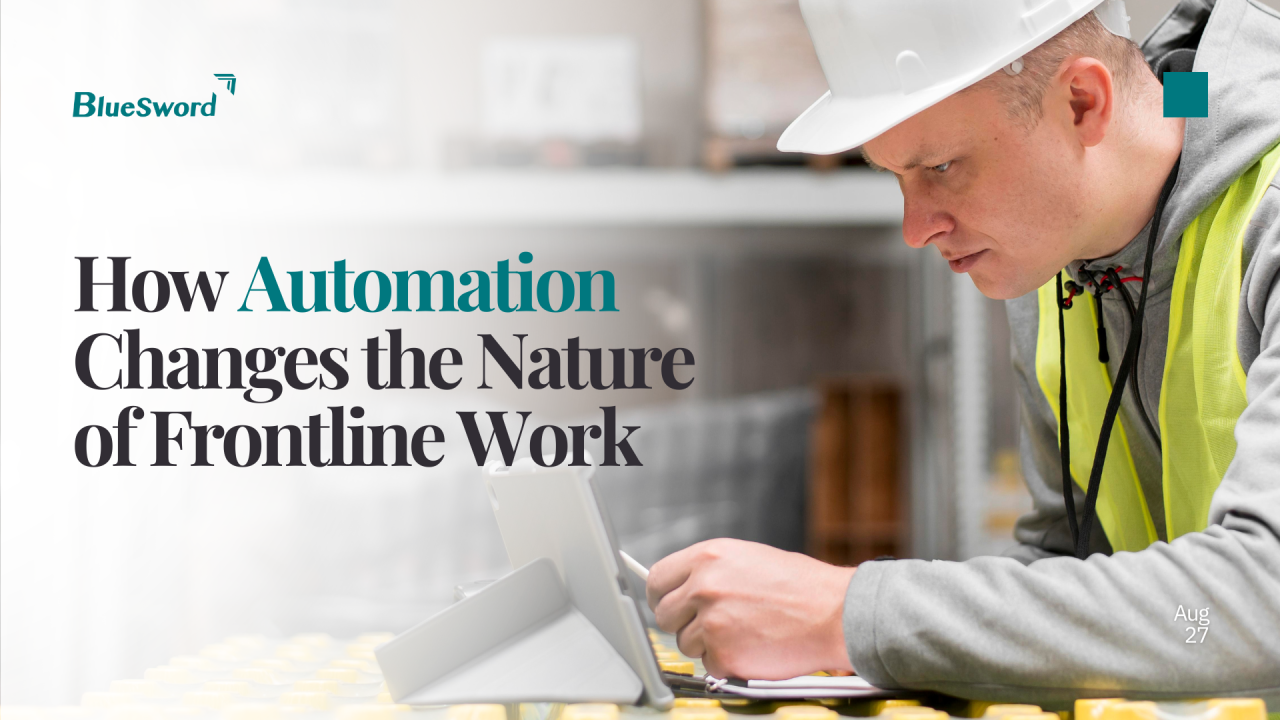 August 27 / 2025How Automation Changes the Nature of Frontline Work: Confidence, Retention, and Workforce Value
Automation is no longer just about efficiency—it’s transforming warehouses and factories into safer, smarter, and more rewarding places to work.
READ MORE
-
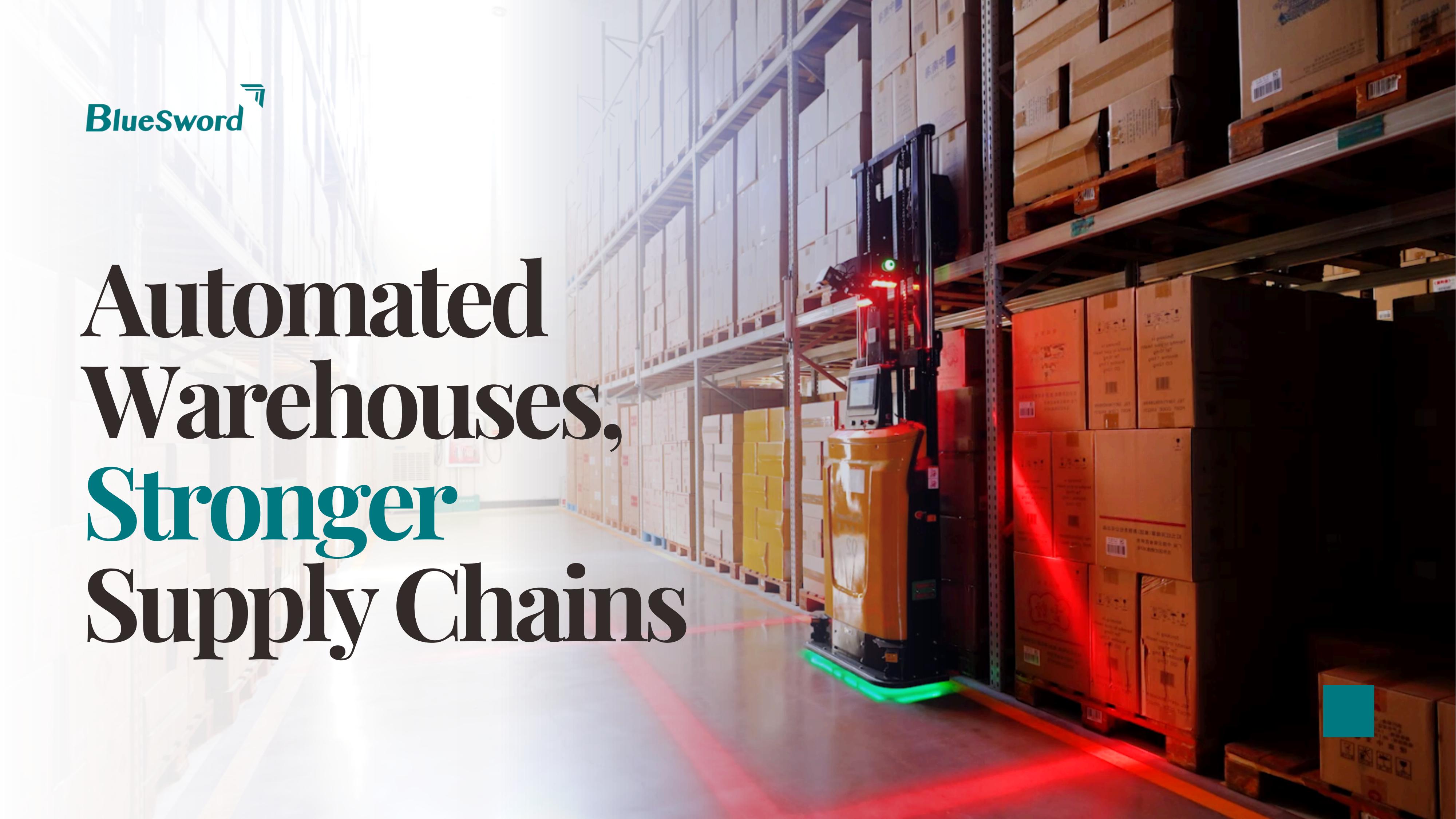 August 19 / 2025Automation in Logistics: Solving Workforce Challenges with Smart Systems
Discover smart logistics solutions with AMRs, shuttle systems, and automated warehouses. Future-proof your supply chain with intelligent intralogistics systems.
READ MORE
-
 July 25 / 2025Robotics Driving Real Safety Transformation in Factories and Warehouses
Safety in factories and warehouses is often discussed in terms of compliance and injury rates. But true safety goes beyond meeting standards. It requires addressing the root causes of risks and understanding how automation reshapes the daily reality for frontline workers—physically and mentally.
READ MORE
-
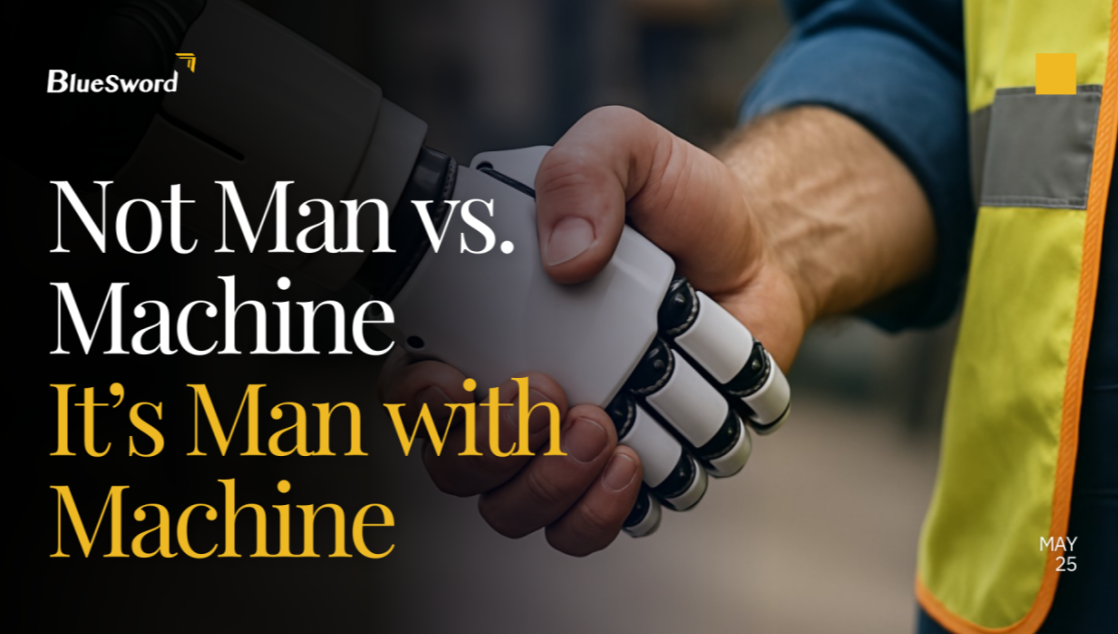 May 25 / 2025Are Warehouse Robots Here to Replace Workers—Or to Back Them Where It Counts?
Automation is advancing fast—but where does that leave the people on the ground? This article explores why the future of warehousing isn't a story of replacement, but one of smart collaboration. With real-world cases from BlueSword and global data, we dive into what human-machine partnerships really look like on the warehouse floor.
READ MORE
-
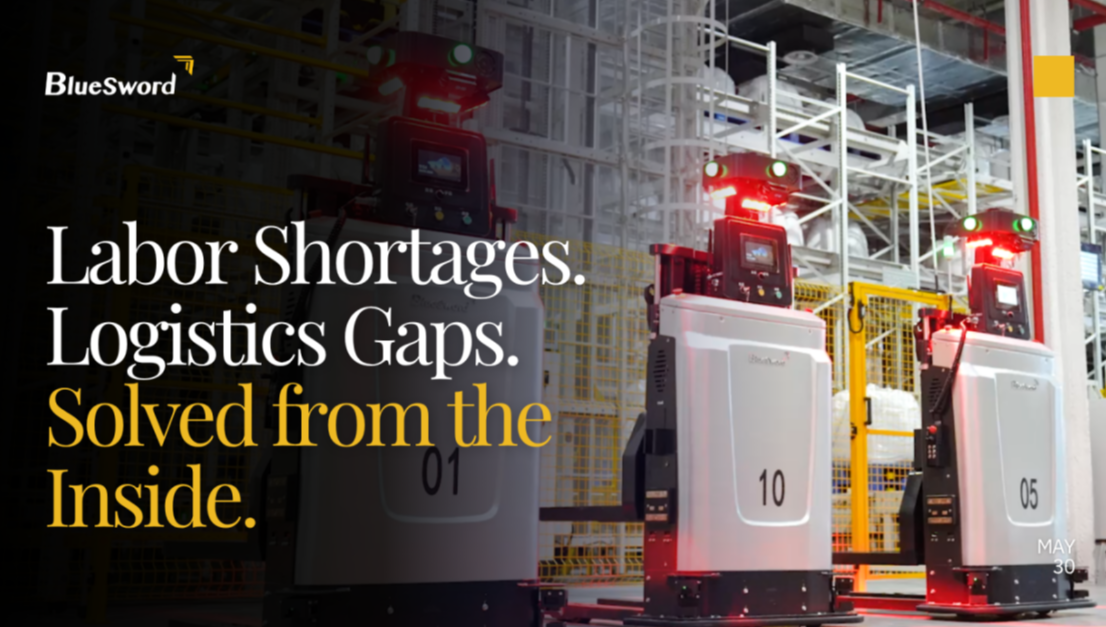 March 30 / 2025What’s Slowing Down Manufacturing—and What Leading Factories Are Doing About It
While automation continues to gain attention across the production line, internal logistics often remains untouched in traditional manufacturing plants.
READ MORE
-
 January 2 / 2025Building a Green Logistics Ecosystem with Servo Technology
The conveyor system is essential in modern production and logistics, facilitating the efficient storage, sorting, handling, and distribution of materials. By automating transport processes, it enhances efficiency, accuracy, and safety while effectively reducing labor costs.
READ MORE
-
 September 29 / 2024Logistics Transformation: Navigating Challenges in the FMCG Industry
Fast-moving consumer goods (FMCG) are an essential part of our everyday lives. With their large market size and ongoing growth, the FMCG industry plays an important role in the global economy.
READ MORE


