








UPDATES

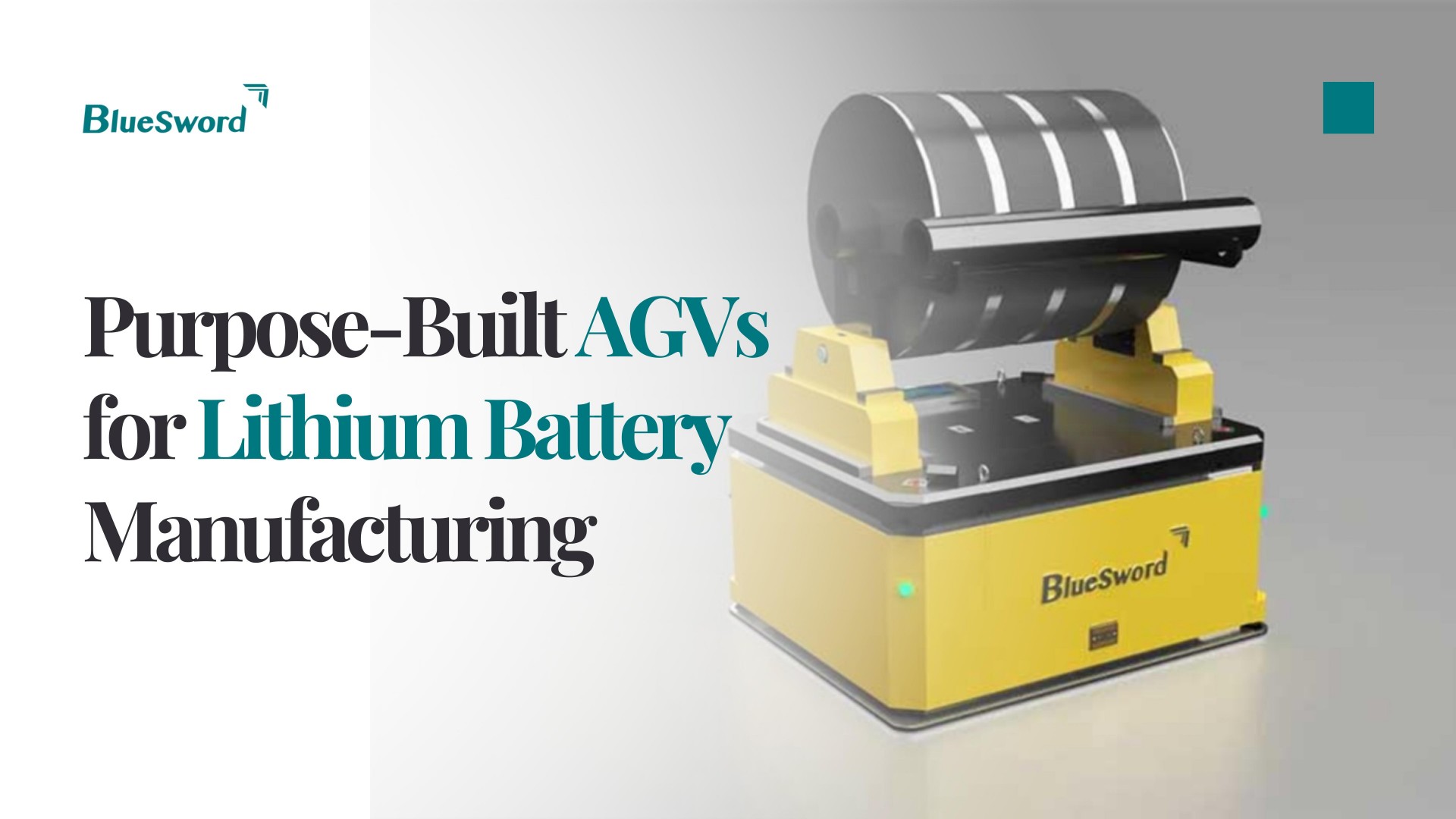
New energy battery production has its own set of handling requirements — heavy roll materials, tight aisle constraints, and safety standards that don't leave much margin for error. BlueSword developed a dedicated AGV lineup for this industry, already deployed across production lines, raw material handling, and finished goods logistics at a lithium battery manufacturer.
Three AGVs, Three Stages of Production
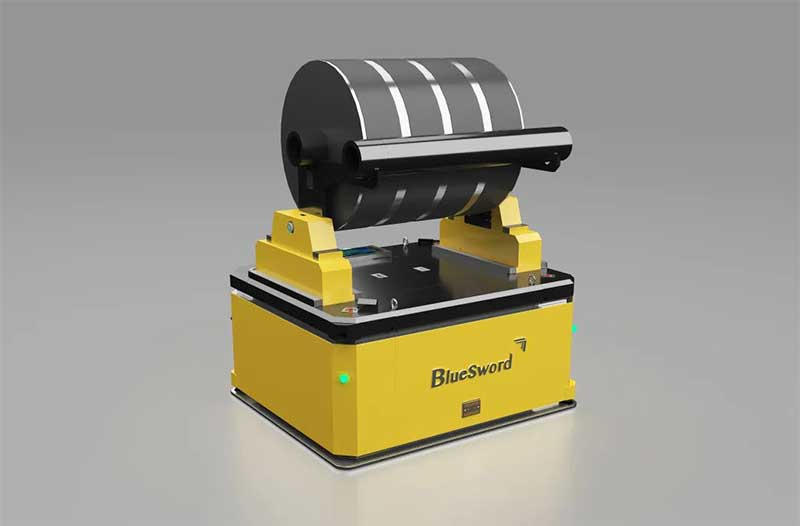
For the pre-process stage, BlueSword built a dual-station roll material lifting AGV AMR rated for up to 3,500 kg, designed to move heavy coil materials between production equipment. Its dual-station design lets it complete both empty and loaded material exchanges in a single docking operation, removing the need to exit the aisle and reposition for a second docking — a detail that adds up to a meaningful throughput gain over a full shift.
For mid- and back-end production, large-scale pallet lifting AGVs and roller conveyor AGVs handle logistics tasks with more flexibility. And for raw material and finished goods warehouses, a second-generation electric stacker forklift AGV automates inbound and outbound pallet handling — compact enough to perform right-angle stacking and retrieval in aisles as narrow as 2,150mm with 1,000 × 1,200 mm pallets.
What Makes the Fleet Reliable at Scale
Navigation runs on a hybrid system centered on laser SLAM, requiring minimal environmental setup and supporting real-time map updates, with positioning accuracy of ±5 mm and angular accuracy of ±1°. A Bézier curve-based motion control algorithm improves operating efficiency, and the system is certified to PLd safety level (TÜV certified), with layered protection for both personnel and cargo.
A 3D vision inspection system detects the spatial position of pallets and adjusts vehicle posture and fork alignment accordingly, working alongside multiple sensors to catch pallet deviation, mast vibration at high lift positions, and potential collisions between forks and goods before they become a problem.
Deployment Speed and Return on Investment
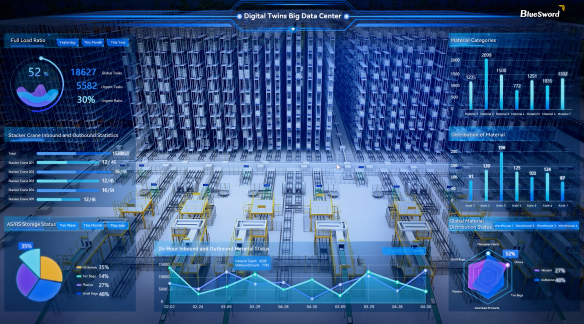
The typical static payback period is under two years. BlueSword's in-house digital twin simulation platform allows realistic pre-deployment testing before any on-site installation, and once deployed, multi-sensor fusion combined with laser-based navigation keeps environmental modification needs low — enabling faster commissioning even in complex production layouts. That combination is what allows BlueSword to deliver pallet handling solutions that hold up in high-density industrial environments without extended setup time.
Fleet-Level Intelligence
BlueSword's in-house AGV scheduling system uses production big data to predict upcoming tasks and allocate vehicles proactively, reducing the empty-run inefficiency that comes from purely reactive dispatch. As AMRs continue to evolve, that system-level coordination is what lets a fleet — not just an individual vehicle — adapt to complex, shifting production environments.
Together, these AGVs give lithium battery manufacturers a way to automate material handling across the full production chain without redesigning their facilities around the equipment.
Read More
-

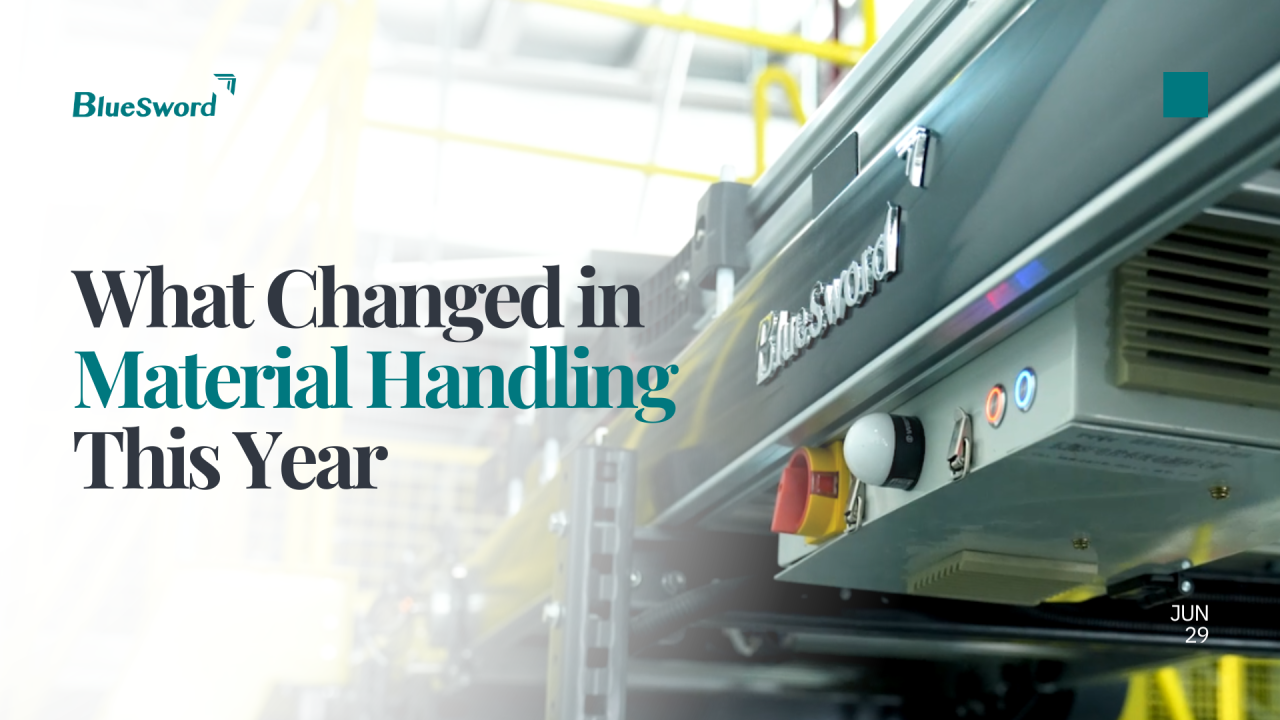 June 29 / 2026Inside the Electronics Factory: What Changed in Material Handling This YearREAD MORE
-
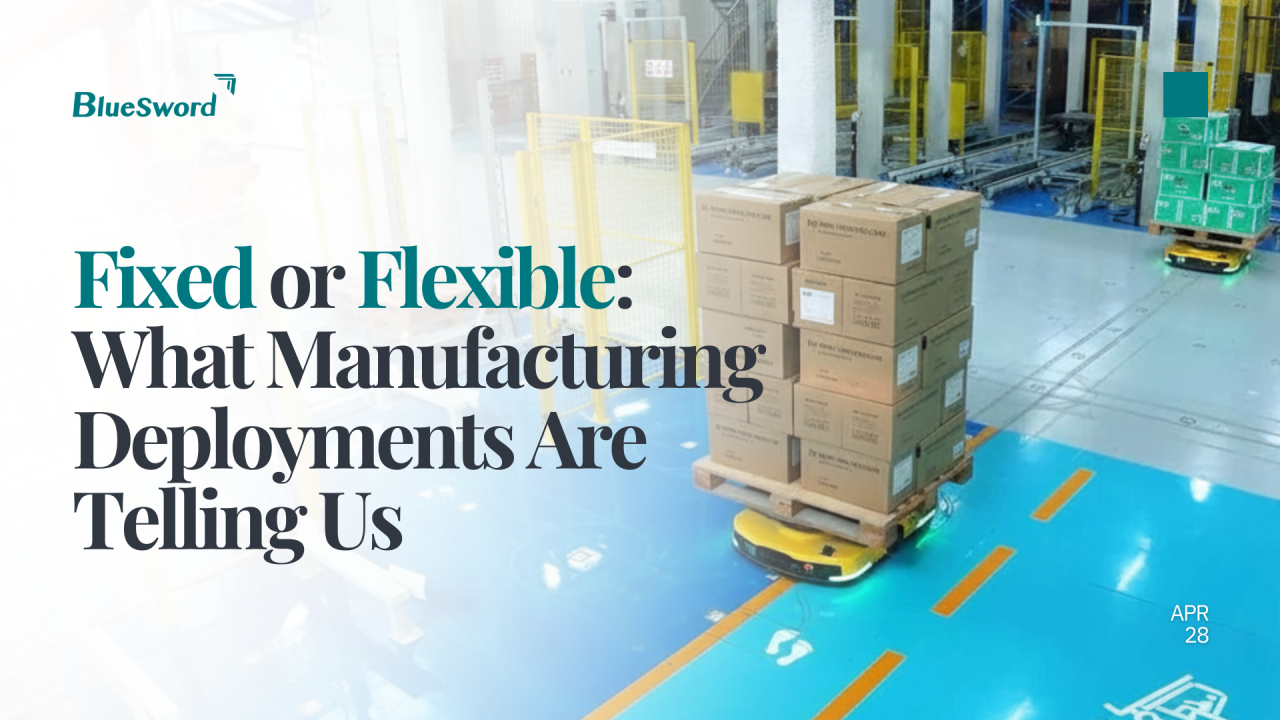 April 28 / 2026Fixed or Flexible: What Manufacturing Deployments Are Telling Us
Fixed infrastructure once defined manufacturing efficiency. But as production cycles shorten and flexibility becomes critical, mobile automation is changing how factories think about material flow.
READ MORE
-
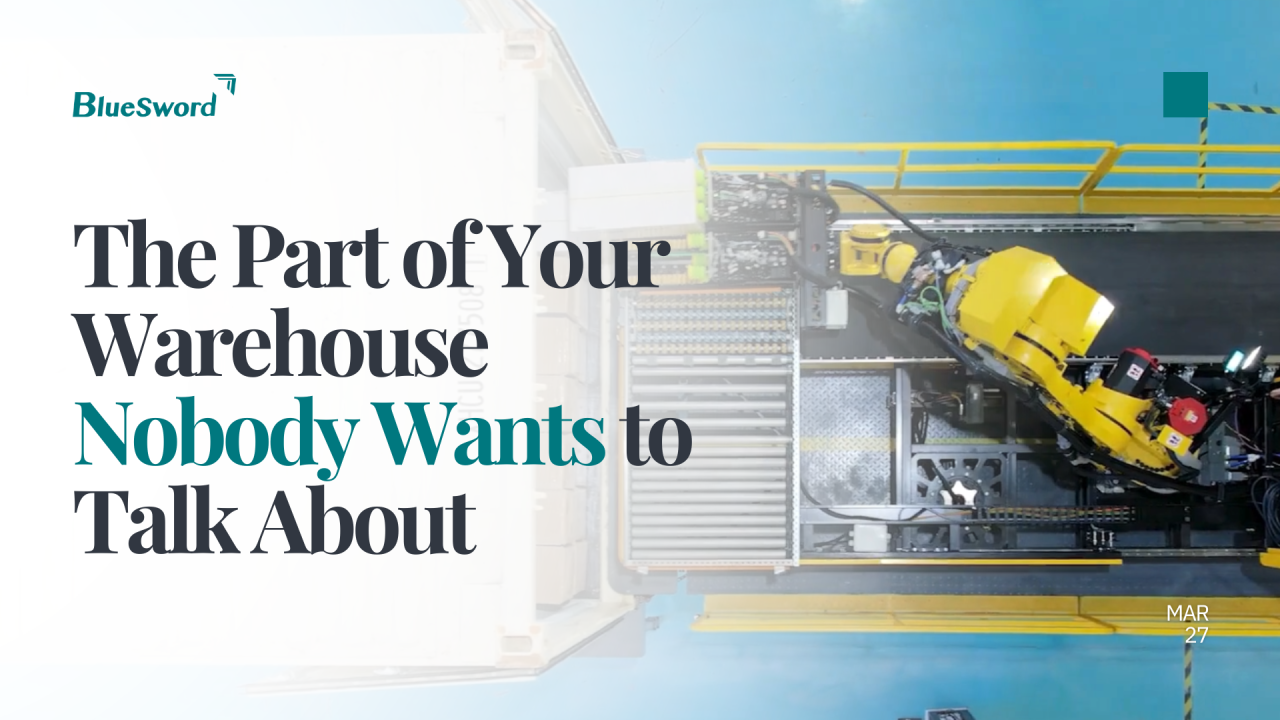 March 27 / 2026The Part of Your Warehouse Nobody Wants to Talk About
The warehouse's biggest bottleneck may not be where you think. BlueSword looks at why the dock is becoming the next frontier of automation.
READ MORE
-
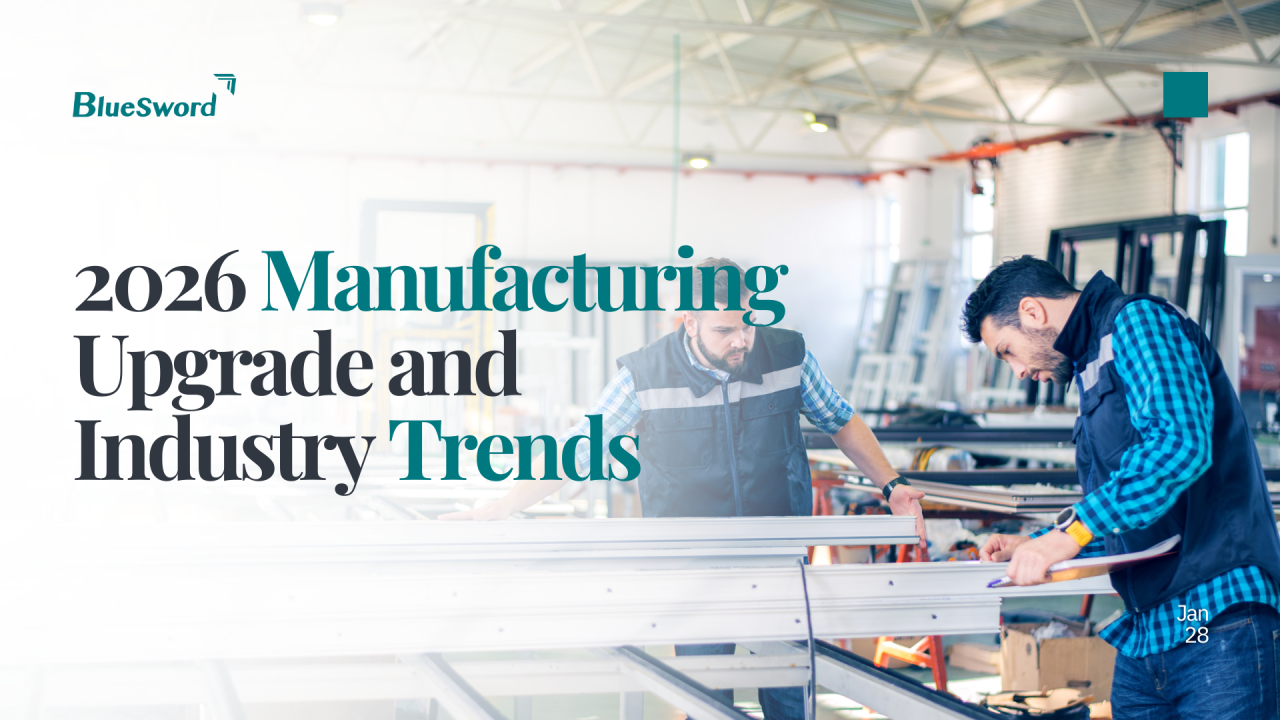 January 28 / 20262026 Manufacturing Upgrade and Industry Trends
As manufacturers plan toward 2026, automation, smart manufacturing, and integrated material flow are becoming central to capacity and resilience. This article explores industry trends, labor constraints, and how integrated warehouse and production automation help reduce internal logistics losses and support phased manufacturing upgrades.
READ MORE
-
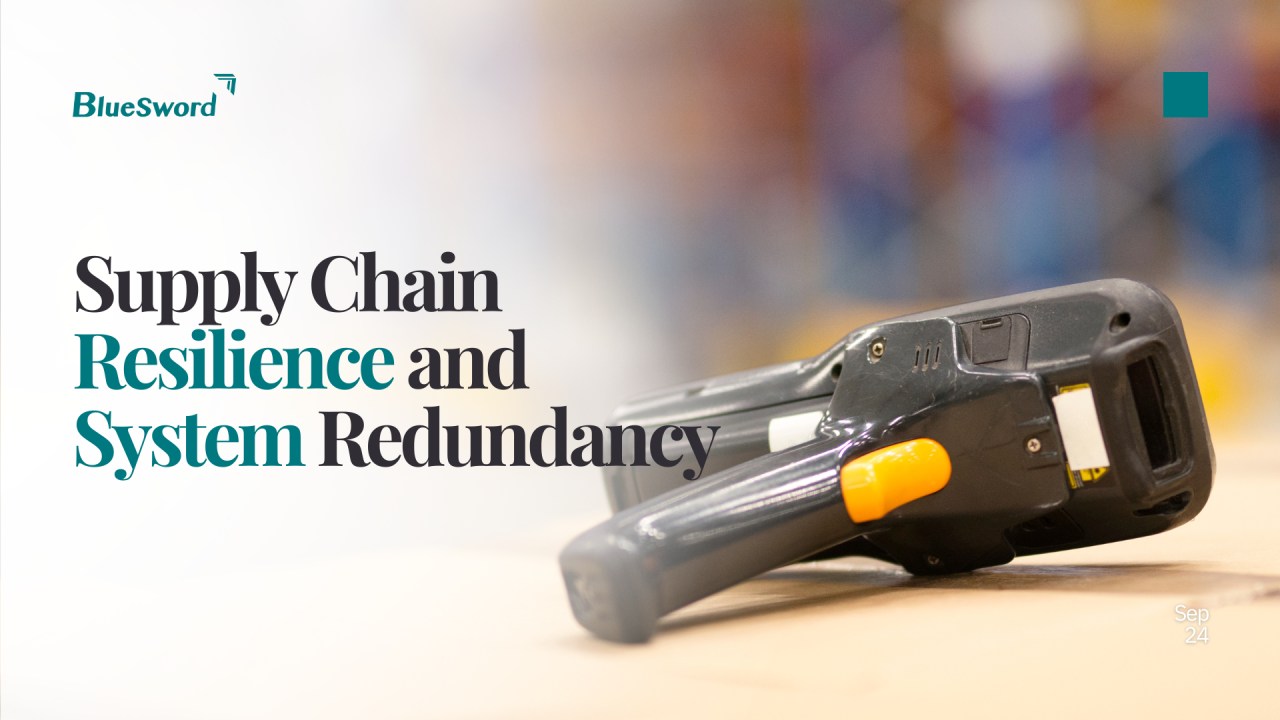 September 24 / 2025Why Automated Warehousing Matters
Global supply chains face constant disruption. Automation is redefining warehouses as resilient hubs that keep goods moving no matter the challenge.
READ MORE
-
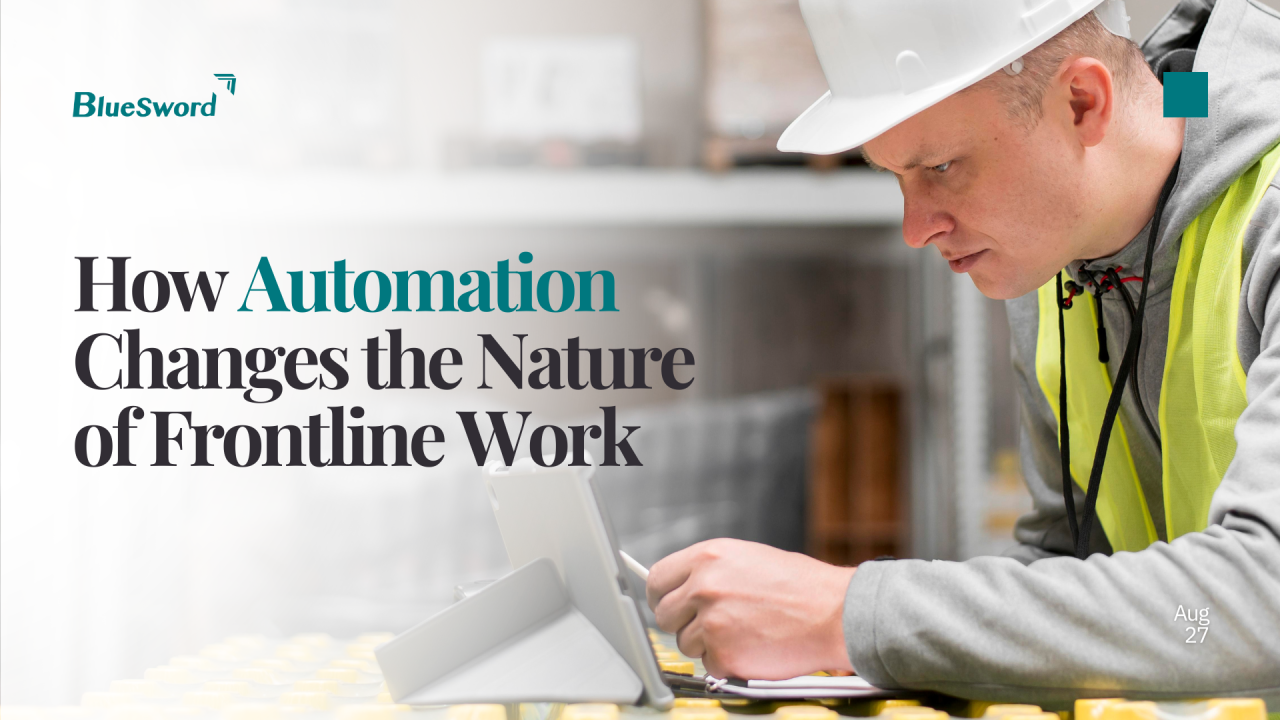 August 27 / 2025How Automation Changes the Nature of Frontline Work: Confidence, Retention, and Workforce Value
Automation is no longer just about efficiency—it’s transforming warehouses and factories into safer, smarter, and more rewarding places to work.
READ MORE
-
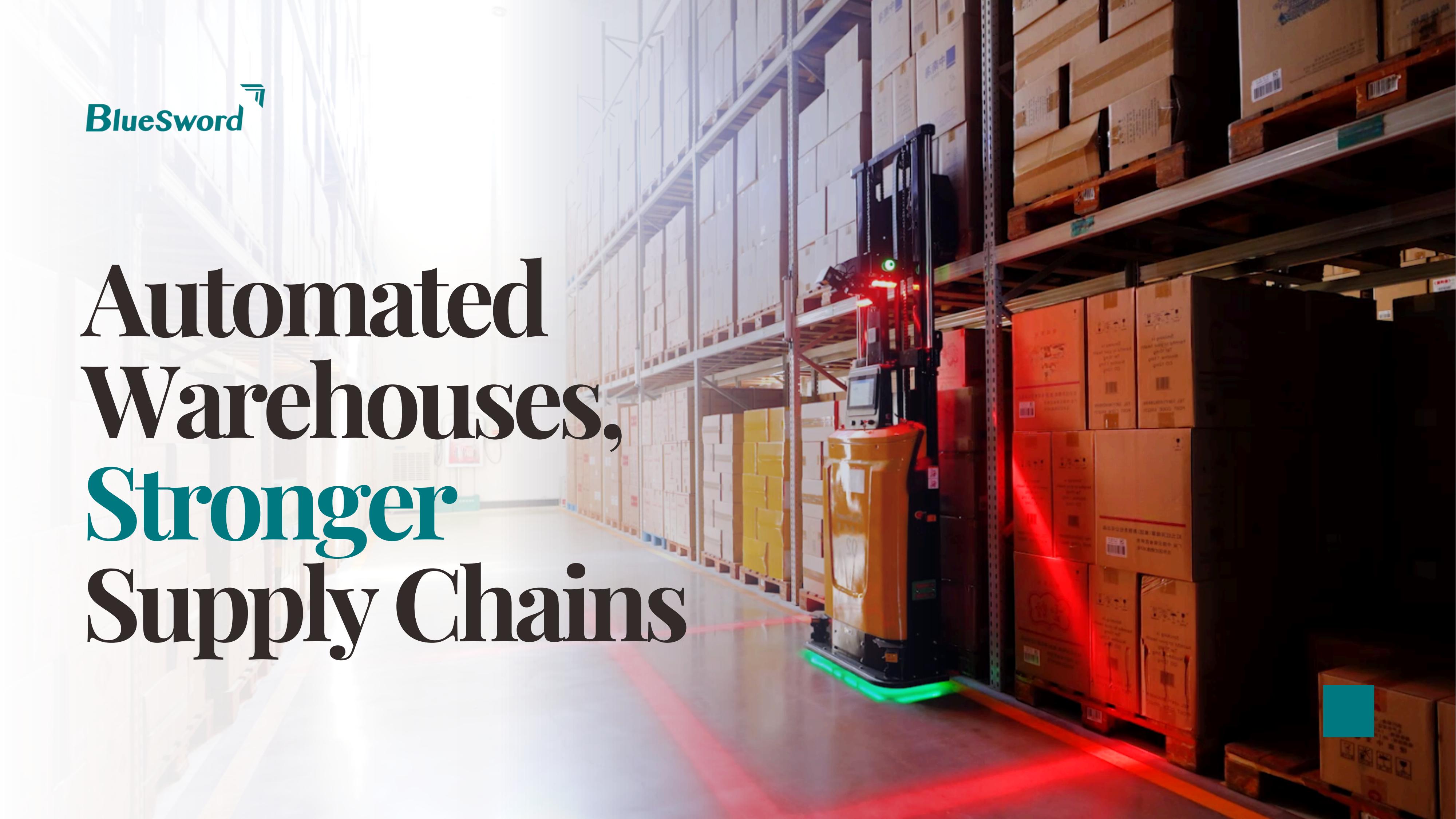 August 19 / 2025Automation in Logistics: Solving Workforce Challenges with Smart Systems
Discover smart logistics solutions with AMRs, shuttle systems, and automated warehouses. Future-proof your supply chain with intelligent intralogistics systems.
READ MORE
-
 July 25 / 2025Robotics Driving Real Safety Transformation in Factories and Warehouses
Safety in factories and warehouses is often discussed in terms of compliance and injury rates. But true safety goes beyond meeting standards. It requires addressing the root causes of risks and understanding how automation reshapes the daily reality for frontline workers—physically and mentally.
READ MORE
-
 May 25 / 2025Are Warehouse Robots Here to Replace Workers—Or to Back Them Where It Counts?
Automation is advancing fast—but where does that leave the people on the ground? This article explores why the future of warehousing isn't a story of replacement, but one of smart collaboration. With real-world cases from BlueSword and global data, we dive into what human-machine partnerships really look like on the warehouse floor.
READ MORE
-
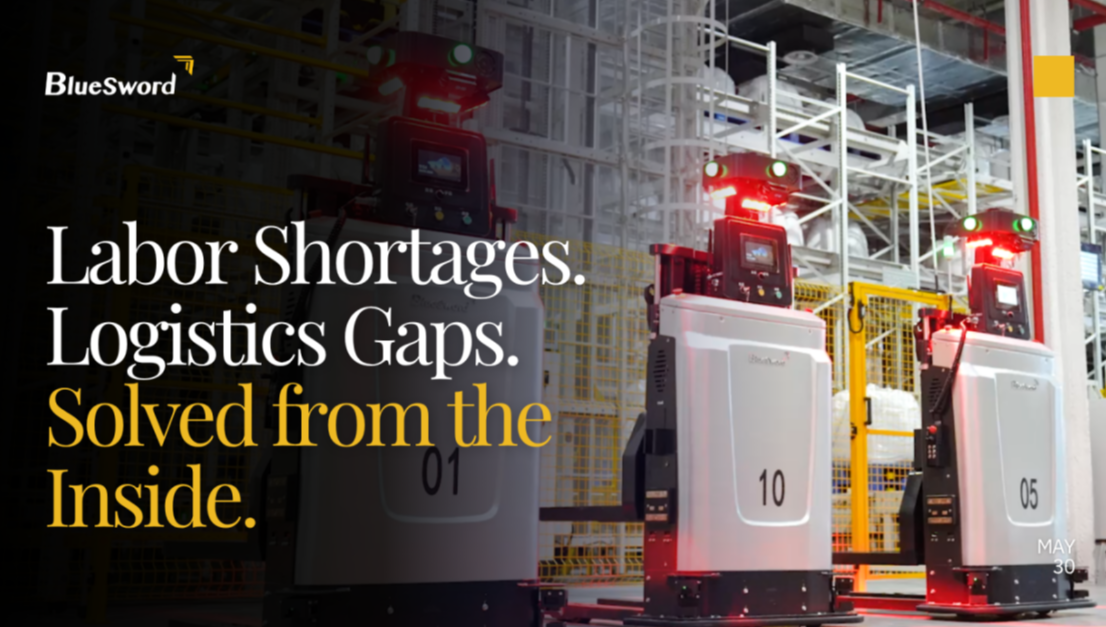 March 30 / 2025What’s Slowing Down Manufacturing—and What Leading Factories Are Doing About It
While automation continues to gain attention across the production line, internal logistics often remains untouched in traditional manufacturing plants.
READ MORE
-
 January 2 / 2025Building a Green Logistics Ecosystem with Servo Technology
The conveyor system is essential in modern production and logistics, facilitating the efficient storage, sorting, handling, and distribution of materials. By automating transport processes, it enhances efficiency, accuracy, and safety while effectively reducing labor costs.
READ MORE
-
 September 29 / 2024Logistics Transformation: Navigating Challenges in the FMCG Industry
Fast-moving consumer goods (FMCG) are an essential part of our everyday lives. With their large market size and ongoing growth, the FMCG industry plays an important role in the global economy.
READ MORE


