








UPDATES

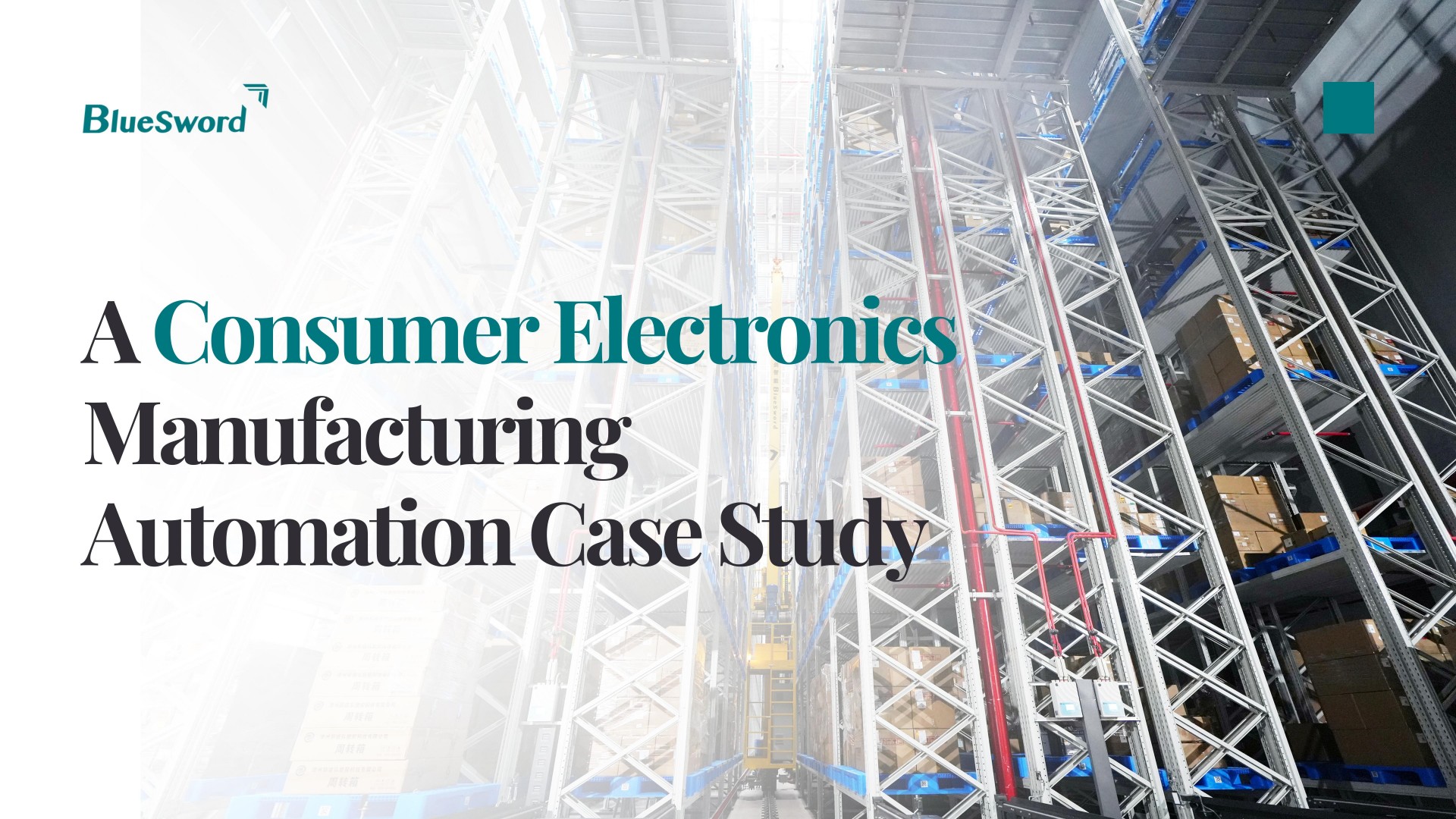
China's consumer electronics manufacturing sector runs on fast product cycles, growing SKU counts, and rising labor costs — a combination that makes manual logistics increasingly hard to sustain. BlueSword's work with Yealink, a global communications and collaboration solutions provider, shows what a full-scale automated logistics system looks like inside a working consumer electronics industrial park.
What Consumer Electronics Manufacturing Logistics Actually Struggles With
Consumer electronics warehouses deal with wide variation in packaging specifications and material quality, which leads to damage and failed inbound handling when done manually. Large numbers of product codes make manual scanning and classification slow, while electronic components often require repackaging and ESD protection during storage, even as other standard materials must stay in their original packaging. That combination of precision and variability is where machine vision and flexible robotics make the most difference.
The BlueSword Technology Driving the Solution
BlueSword's system draws on in-house technologies developed over three decades, including high-precision pattern recognition, intelligent vision recognition, pallet position and shape detection, S-curve motion control, micro-servo gripper control, and hybrid-size robotic palletizing and depalletizing algorithms — applied across stacker cranes, shuttle systems, and palletizing equipment to support end-to-end warehouse and production logistics.
The Yealink Deployment
Yealink's logistics and warehousing center occupies a roughly 220,000-square-meter smart manufacturing industrial park that integrates R&D, production, warehousing, and living facilities. As a warehouse logistics solution company, BlueSword built a unified intelligent high-bay warehouse system across approximately 40,000 square meters, combining raw material and finished goods storage to support supply chain demand at a multi-billion-dollar scale.
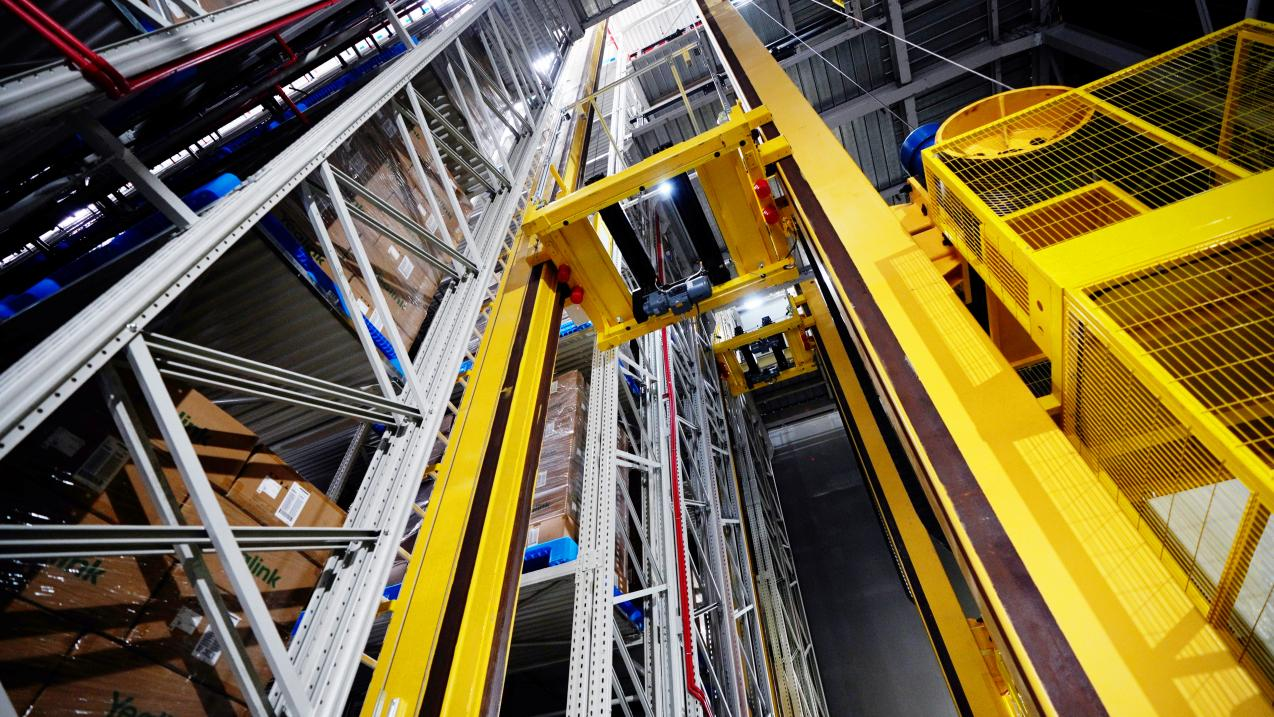
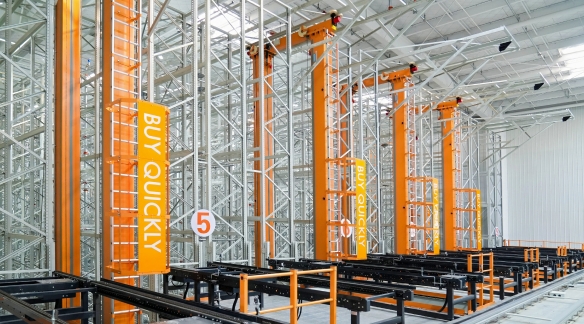
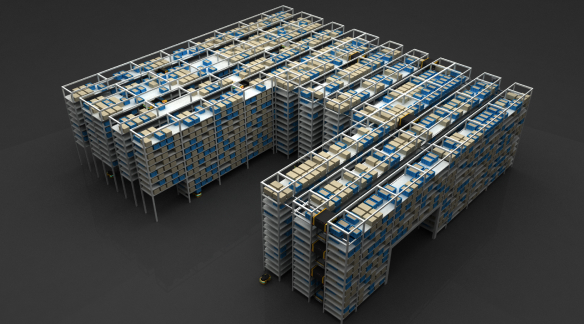
The facility runs a raw material automated pallet high-bay warehouse with four aisles and nearly 5,000 storage locations, a raw material case-level high-bay system with six aisles and over 120,000 positions, and a finished goods pallet high-bay warehouse with eight aisles and over 10,000 locations — together supporting inbound and outbound operations across tens of thousands of SKUs at roughly four times the efficiency of traditional flat storage. An automated stacker crane system serves as the vertical backbone enabling high-speed, fully automated handling across the multi-zone facility.
Seamless Line-Side Delivery and Direct Replenishment
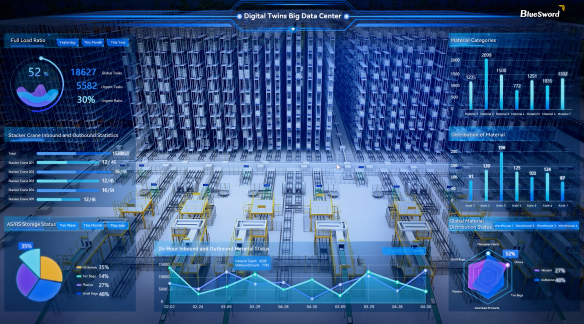
Combining multi-shuttle systems with pallet stacker crane technology maximizes space utilization, while intelligent warehouse robots, shuttle systems, palletizing and depalletizing robots, and a digital twin monitoring layer work together across the facility. An automated conveyor system delivers raw materials to dozens of connection points across production workshops, floors, and assembly lines, supplying required SKUs directly to designated line-side connection points.
Built-in buffering capacity supports a pull-based replenishment strategy that restocks materials automatically as needed, while finished goods move directly into storage after production, meeting FIFO requirements without a separate handoff step. That design removes the need for additional material storage inside production workshops — freeing floor space and letting production run more efficiently.
As Yealink's industrial park continues to scale, the deployment reflects how BlueSword's custom solutions for logistics extend from warehouse design through to intelligent execution — the kind of end-to-end automation that consumer electronics manufacturers increasingly need to keep pace with shorter product cycles and growing SKU complexity.
Read More
-

 June 29 / 2026Inside the Electronics Factory: What Changed in Material Handling This YearREAD MORE
-
 April 28 / 2026Fixed or Flexible: What Manufacturing Deployments Are Telling Us
Fixed infrastructure once defined manufacturing efficiency. But as production cycles shorten and flexibility becomes critical, mobile automation is changing how factories think about material flow.
READ MORE
-
 March 27 / 2026The Part of Your Warehouse Nobody Wants to Talk About
The warehouse's biggest bottleneck may not be where you think. BlueSword looks at why the dock is becoming the next frontier of automation.
READ MORE
-
 January 28 / 20262026 Manufacturing Upgrade and Industry Trends
As manufacturers plan toward 2026, automation, smart manufacturing, and integrated material flow are becoming central to capacity and resilience. This article explores industry trends, labor constraints, and how integrated warehouse and production automation help reduce internal logistics losses and support phased manufacturing upgrades.
READ MORE
-
 September 24 / 2025Why Automated Warehousing Matters
Global supply chains face constant disruption. Automation is redefining warehouses as resilient hubs that keep goods moving no matter the challenge.
READ MORE
-
 August 27 / 2025How Automation Changes the Nature of Frontline Work: Confidence, Retention, and Workforce Value
Automation is no longer just about efficiency—it’s transforming warehouses and factories into safer, smarter, and more rewarding places to work.
READ MORE
-
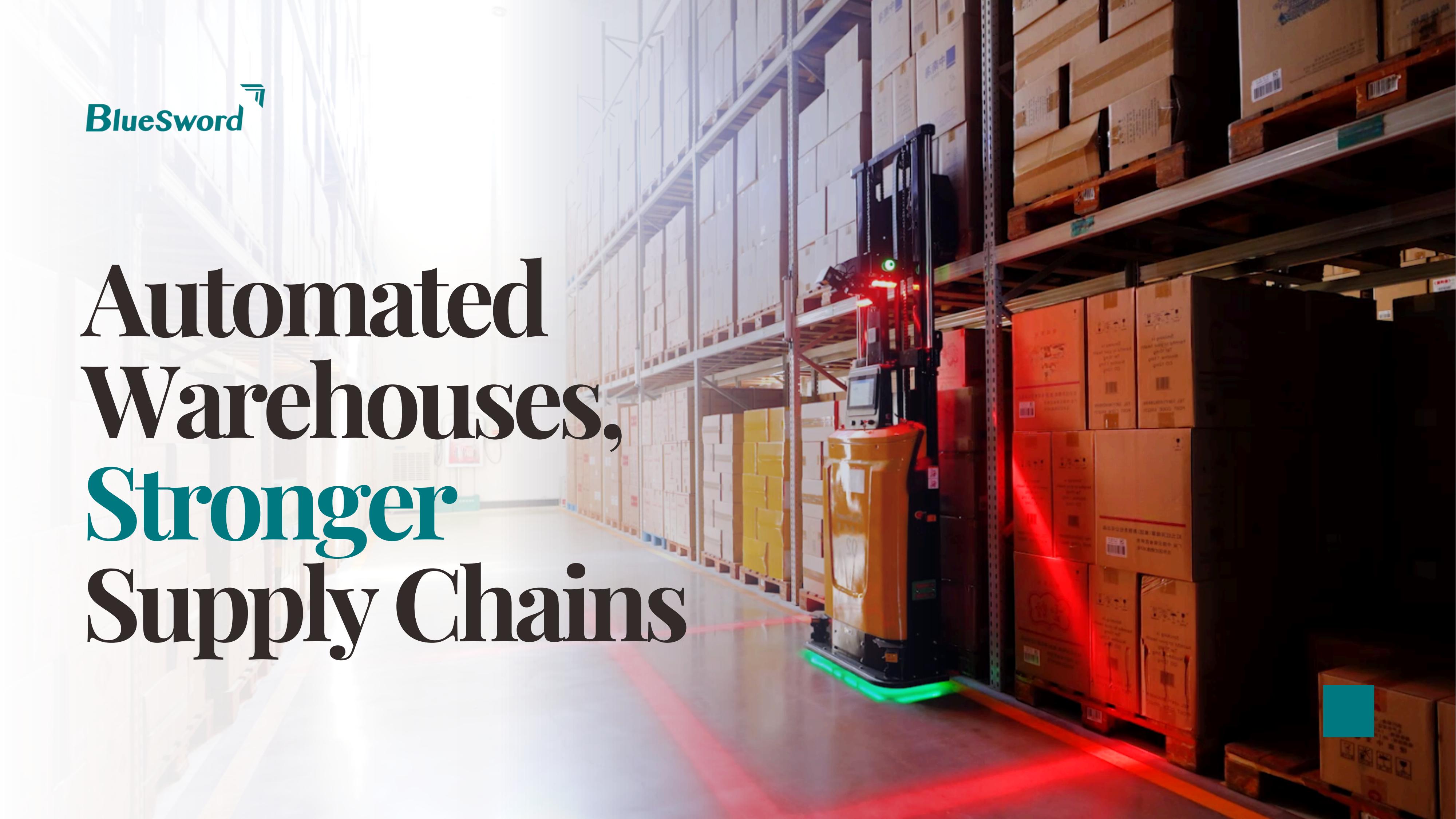 August 19 / 2025Automation in Logistics: Solving Workforce Challenges with Smart Systems
Discover smart logistics solutions with AMRs, shuttle systems, and automated warehouses. Future-proof your supply chain with intelligent intralogistics systems.
READ MORE
-
 July 25 / 2025Robotics Driving Real Safety Transformation in Factories and Warehouses
Safety in factories and warehouses is often discussed in terms of compliance and injury rates. But true safety goes beyond meeting standards. It requires addressing the root causes of risks and understanding how automation reshapes the daily reality for frontline workers—physically and mentally.
READ MORE
-
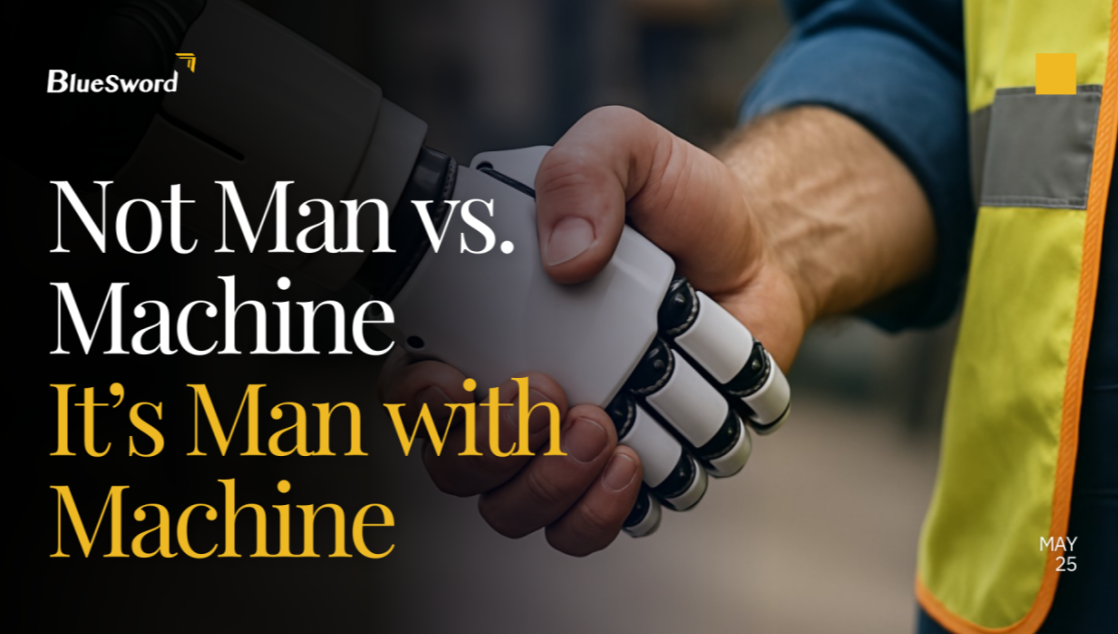 May 25 / 2025Are Warehouse Robots Here to Replace Workers—Or to Back Them Where It Counts?
Automation is advancing fast—but where does that leave the people on the ground? This article explores why the future of warehousing isn't a story of replacement, but one of smart collaboration. With real-world cases from BlueSword and global data, we dive into what human-machine partnerships really look like on the warehouse floor.
READ MORE
-
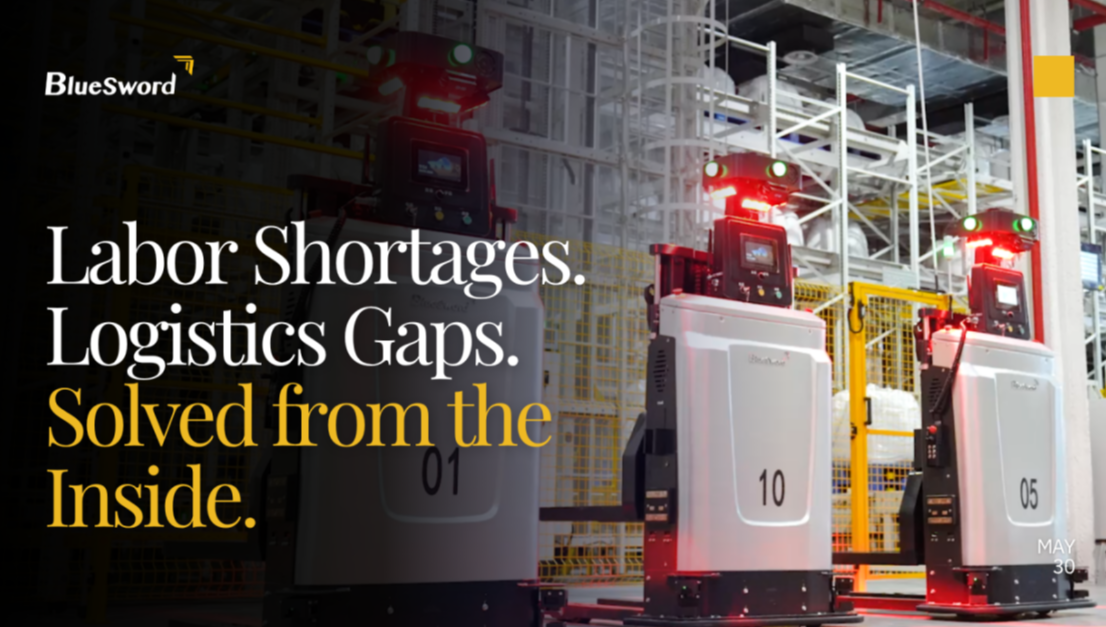 March 30 / 2025What’s Slowing Down Manufacturing—and What Leading Factories Are Doing About It
While automation continues to gain attention across the production line, internal logistics often remains untouched in traditional manufacturing plants.
READ MORE
-
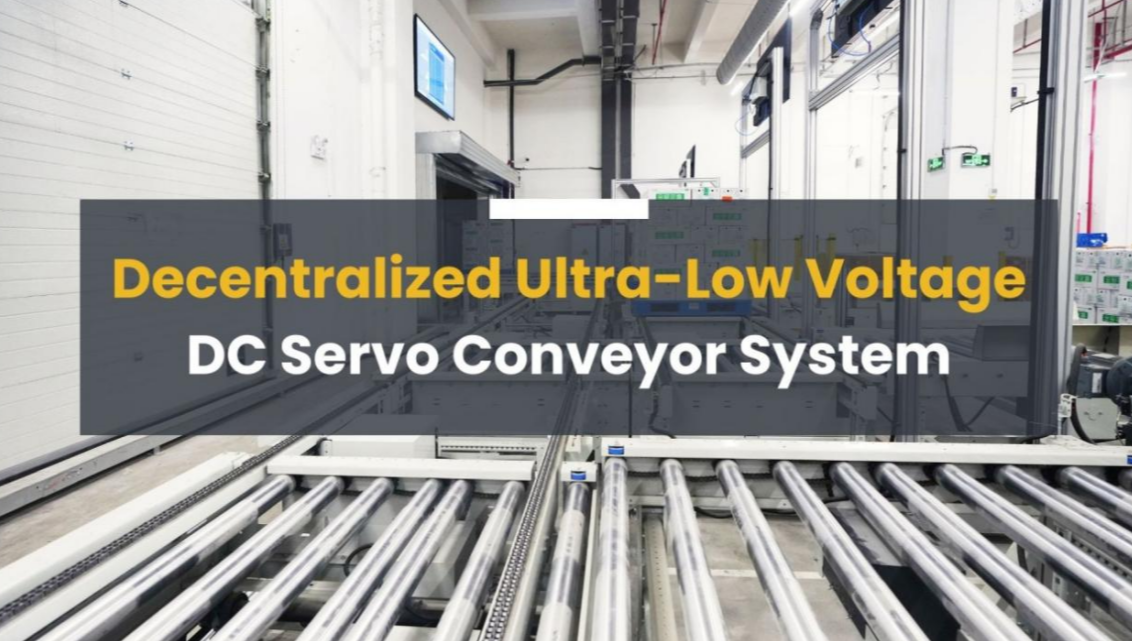 January 2 / 2025Building a Green Logistics Ecosystem with Servo Technology
The conveyor system is essential in modern production and logistics, facilitating the efficient storage, sorting, handling, and distribution of materials. By automating transport processes, it enhances efficiency, accuracy, and safety while effectively reducing labor costs.
READ MORE
-
 September 29 / 2024Logistics Transformation: Navigating Challenges in the FMCG Industry
Fast-moving consumer goods (FMCG) are an essential part of our everyday lives. With their large market size and ongoing growth, the FMCG industry plays an important role in the global economy.
READ MORE


