








UPDATES

Awarded the 2025 Wu Qingyi Logistics Innovation Award from the University of Science and Technology Beijing, BlueSword's Spider Case-Handling Robot System represents a key milestone in logistics design. Its distinctive architecture combines aerial mobility, high-density storage, and scalable operating height, addressing engineering challenges that conventional case-handling systems often struggle to solve.
A Structural Hybrid, Not an Incremental Upgrade
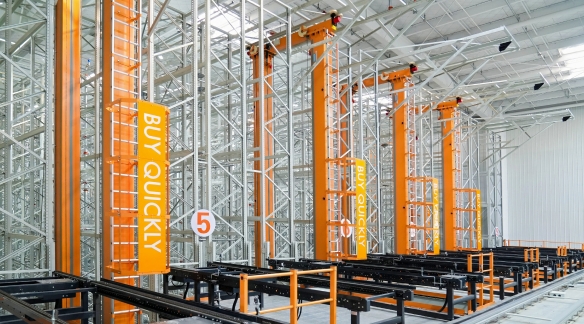
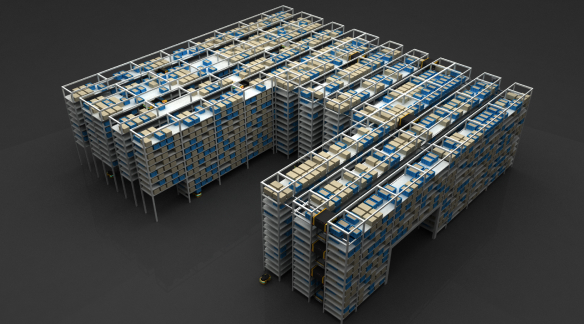
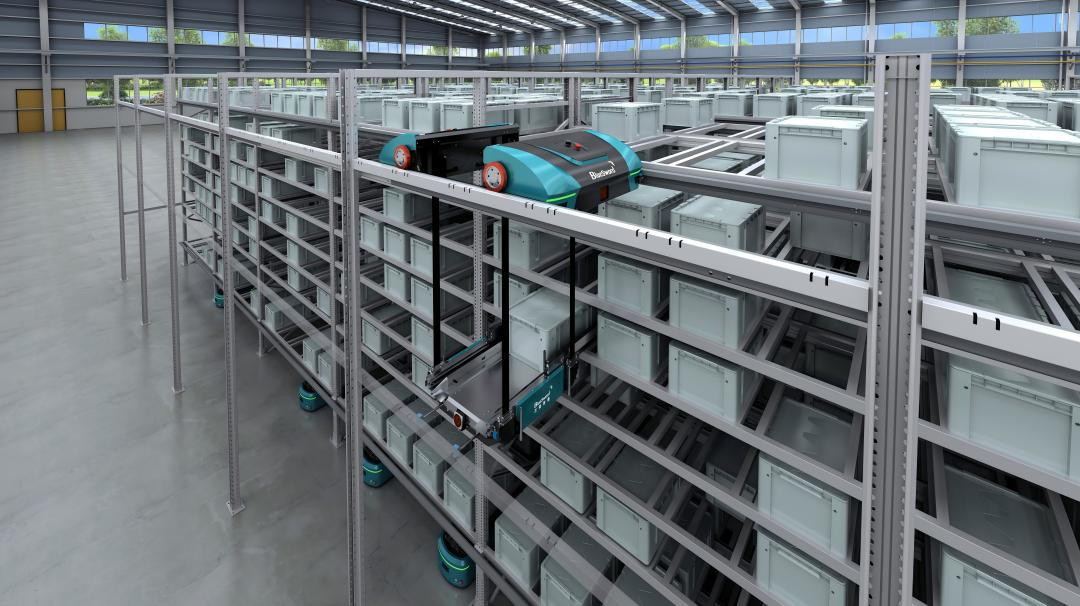
The Spider sky-shuttle robot is best described as a new type of aerial multi-level shuttle, built by combining the strengths of traditional shuttle systems with Overhead Hoist Transport (OHT). That structural choice gives it 3D aerial operation within the rack along with scalable robot height — a combination that lets one goods-to-person system meet several requirements that usually force a trade-off.
In practice, that means rack heights of 20 meters or more, well above the roughly 12-meter ceiling of most bin robot systems; higher inventory density, since it can store above the front-operation area; denser robot deployment per aisle for higher throughput; and no dependency on lifts or power stations, which simplifies both installation and site requirements. It also tolerates uneven floors and irregular layouts better than shuttle-based alternatives, and supports aerial operation both inside and outside the warehouse from a single platform.
The Hardest Problem: Stability Above 20 Meters
The core engineering challenge was reliable picking and placement across beam-type racking above 20 meters. Most OHT hoisting systems top out around 6 meters of stable working height — beyond that, small differences between the four hoisting belts compound into platform imbalance. Beam-type racks also lack the guide rails that stabilize lifting in other rack systems, and adding rails would have solved stability at the cost of higher expense, harder installation, and lower storage density.
The team's solution combines four independently servo-driven hoisting systems on each vehicle with a gyroscope mounted on the load platform, controlled by real-time algorithms that synchronize lifting speed, balance posture, and torque simultaneously. An added beam-top support mechanism stabilizes the platform further during loading and unloading, keeping operation stable well above the 20-meter mark.
What the Breakthrough Solves in Practice
Once warehouse height exceeds 12 meters or aisle throughput needs exceed 500 bins per hour, most existing case robot systems fall short, pushing customers toward costlier and less flexible shuttle systems. Combining aerial 3D operation with scalable height lets Spider hit both high efficiency and high flexibility without that cost jump, while also using space above the front-operation area to increase density without disrupting ground-level activity.
For customers needing operations that extend outside the warehouse, conventional OHT paired with goods to person robots typically require switching mechanisms that add complexity and failure points. Spider's all-in-one design removes that requirement, and its tolerance for uneven floors and mixed human-vehicle traffic makes it viable in facilities that conventional systems struggle to serve.
Where It's Deployed Today
First unveiled at CeMAT Asia 2024, the system has since gone into more than 10 intelligent logistics projects across agriculture, new energy, electronics, pharmaceuticals, petrochemicals, retail, and aerospace. Two deployments illustrate the range: a two-way configuration at a large overseas retail logistics center runs more than 50 robots handling inbound, outbound, and returns at roughly 4,000 cases per hour, while a four-way configuration at a domestic UAV manufacturing base delivers materials directly to picking stations without AGVs, conveyors, or lifts — simplifying the line-side workflow considerably.
What Comes Next
The award is an important validation for a new category of logistics equipment, helping build confidence in the technology and potentially shorten its adoption cycle. Yet the Spider system is better understood as a step forward than a finished endpoint. Case-level logistics still has considerable room to improve in storage density, operational flexibility, deployment speed, and ease of maintenance.
Future iterations are expected to extend the platform toward more integrated robotic solutions spanning storage, sorting, palletizing, and packaging. The engineering principles behind Spider also point to a broader lesson: meaningful logistics innovation begins with real operational needs.
Read More
-

 June 29 / 2026Inside the Electronics Factory: What Changed in Material Handling This YearREAD MORE
-
 April 28 / 2026Fixed or Flexible: What Manufacturing Deployments Are Telling Us
Fixed infrastructure once defined manufacturing efficiency. But as production cycles shorten and flexibility becomes critical, mobile automation is changing how factories think about material flow.
READ MORE
-
 March 27 / 2026The Part of Your Warehouse Nobody Wants to Talk About
The warehouse's biggest bottleneck may not be where you think. BlueSword looks at why the dock is becoming the next frontier of automation.
READ MORE
-
 January 28 / 20262026 Manufacturing Upgrade and Industry Trends
As manufacturers plan toward 2026, automation, smart manufacturing, and integrated material flow are becoming central to capacity and resilience. This article explores industry trends, labor constraints, and how integrated warehouse and production automation help reduce internal logistics losses and support phased manufacturing upgrades.
READ MORE
-
 September 24 / 2025Why Automated Warehousing Matters
Global supply chains face constant disruption. Automation is redefining warehouses as resilient hubs that keep goods moving no matter the challenge.
READ MORE
-
 August 27 / 2025How Automation Changes the Nature of Frontline Work: Confidence, Retention, and Workforce Value
Automation is no longer just about efficiency—it’s transforming warehouses and factories into safer, smarter, and more rewarding places to work.
READ MORE
-
 August 19 / 2025Automation in Logistics: Solving Workforce Challenges with Smart Systems
Discover smart logistics solutions with AMRs, shuttle systems, and automated warehouses. Future-proof your supply chain with intelligent intralogistics systems.
READ MORE
-
 July 25 / 2025Robotics Driving Real Safety Transformation in Factories and Warehouses
Safety in factories and warehouses is often discussed in terms of compliance and injury rates. But true safety goes beyond meeting standards. It requires addressing the root causes of risks and understanding how automation reshapes the daily reality for frontline workers—physically and mentally.
READ MORE
-
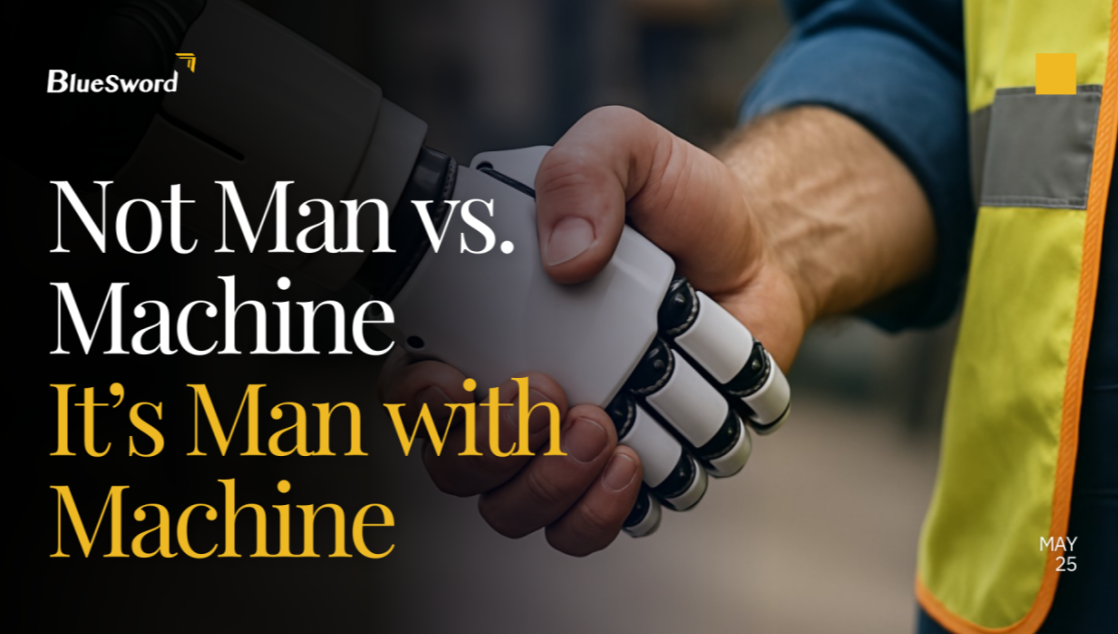 May 25 / 2025Are Warehouse Robots Here to Replace Workers—Or to Back Them Where It Counts?
Automation is advancing fast—but where does that leave the people on the ground? This article explores why the future of warehousing isn't a story of replacement, but one of smart collaboration. With real-world cases from BlueSword and global data, we dive into what human-machine partnerships really look like on the warehouse floor.
READ MORE
-
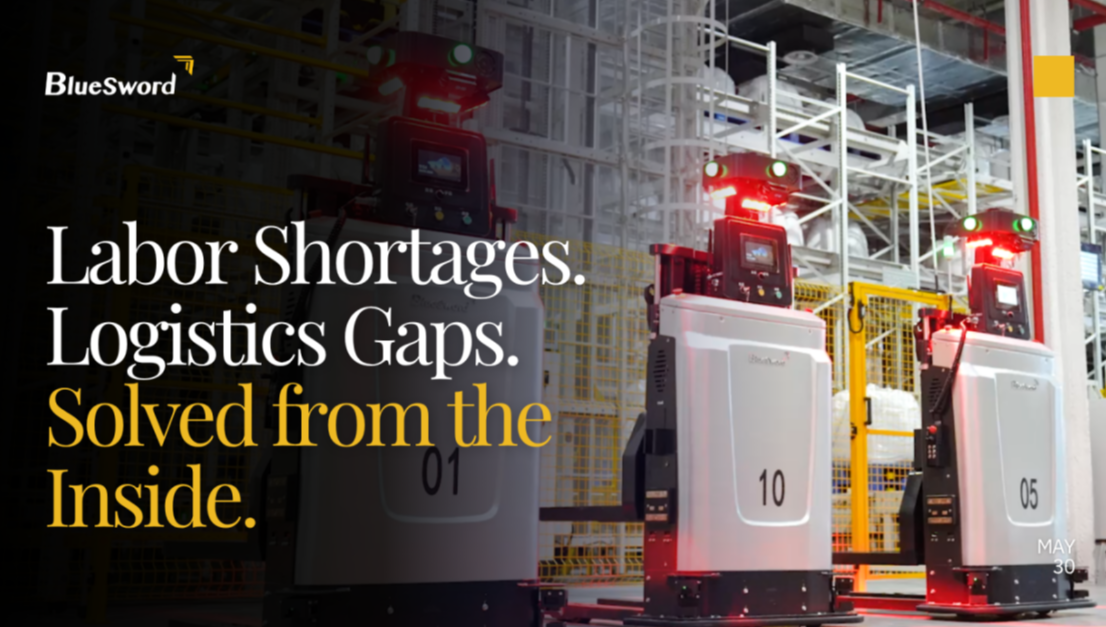 March 30 / 2025What’s Slowing Down Manufacturing—and What Leading Factories Are Doing About It
While automation continues to gain attention across the production line, internal logistics often remains untouched in traditional manufacturing plants.
READ MORE
-
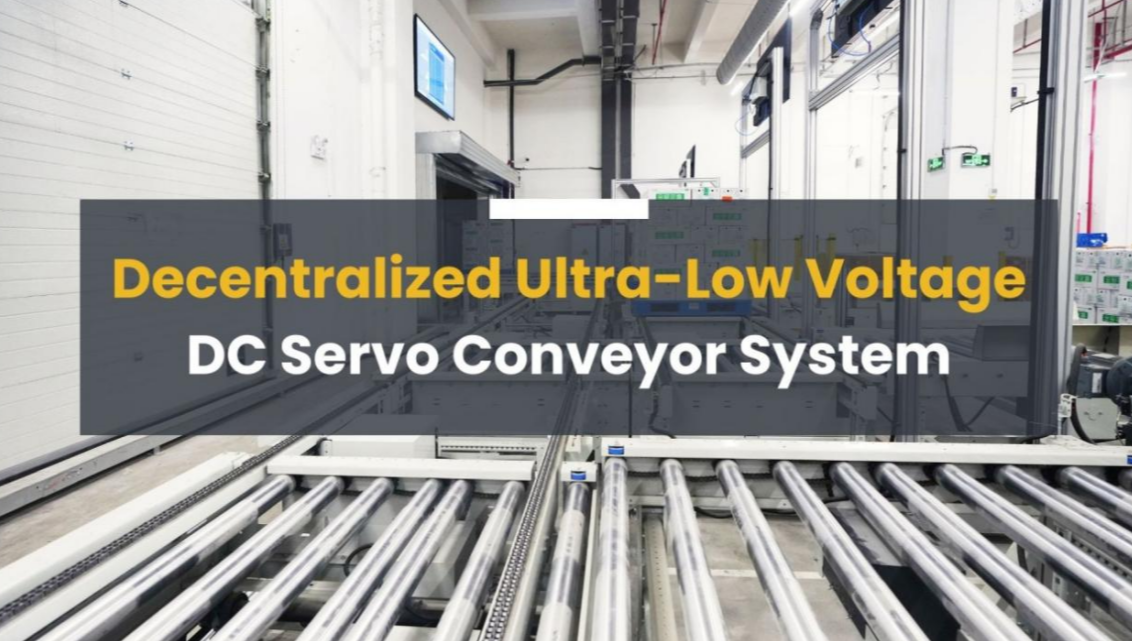 January 2 / 2025Building a Green Logistics Ecosystem with Servo Technology
The conveyor system is essential in modern production and logistics, facilitating the efficient storage, sorting, handling, and distribution of materials. By automating transport processes, it enhances efficiency, accuracy, and safety while effectively reducing labor costs.
READ MORE
-
 September 29 / 2024Logistics Transformation: Navigating Challenges in the FMCG Industry
Fast-moving consumer goods (FMCG) are an essential part of our everyday lives. With their large market size and ongoing growth, the FMCG industry plays an important role in the global economy.
READ MORE


