








UPDATES

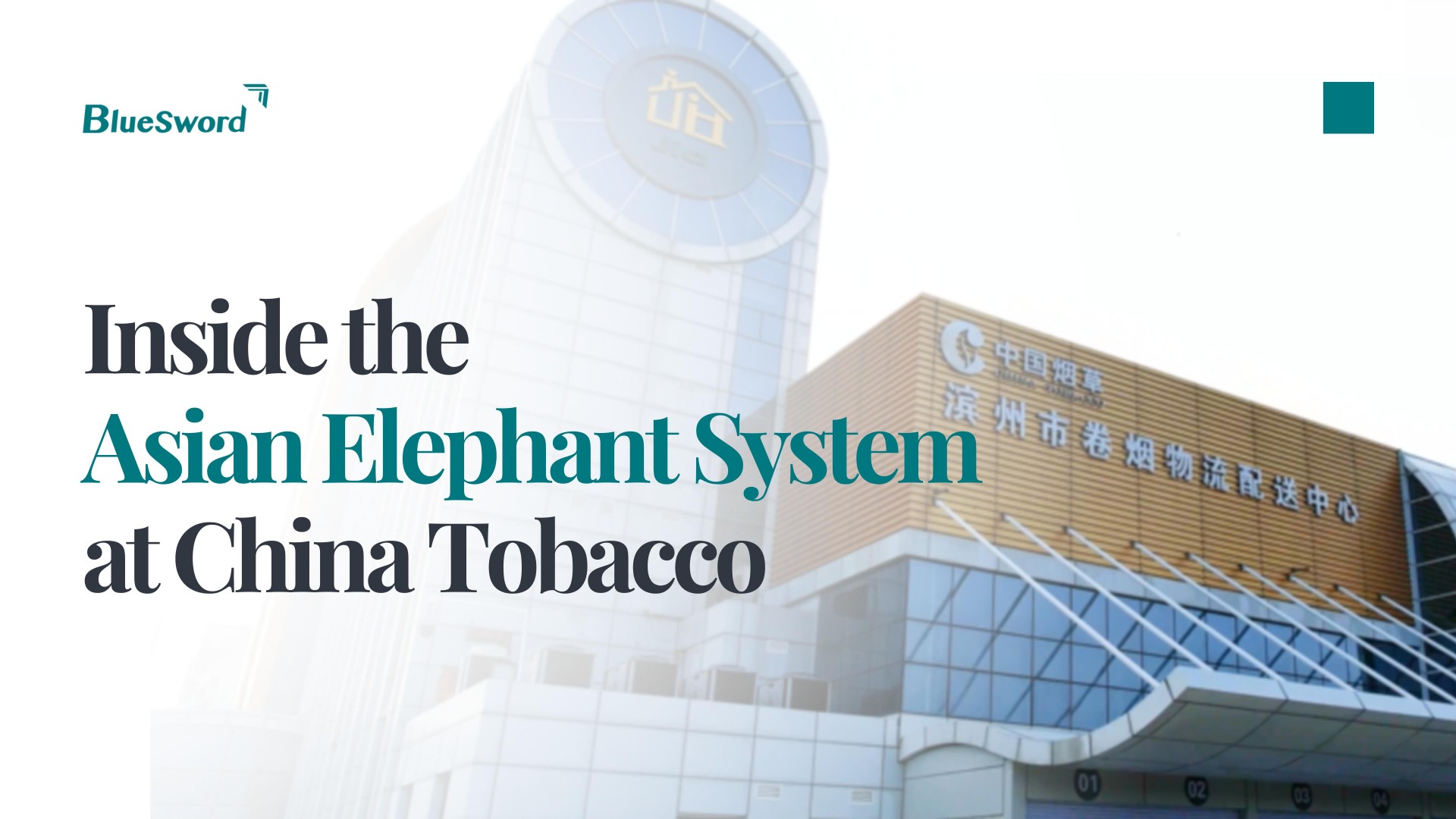
Truck unloading is one of the last manual bottlenecks in many warehouses — irregular stacking, varying carton sizes, and uneven truck floors make it hard to automate reliably. At China Tobacco Binzhou's front storage area, BlueSword deployed a fully unmanned system built around its Asian Elephant intelligent loading and unloading robot, running end-to-end from truck to shelf.
From Truck to Storage, One Connected System
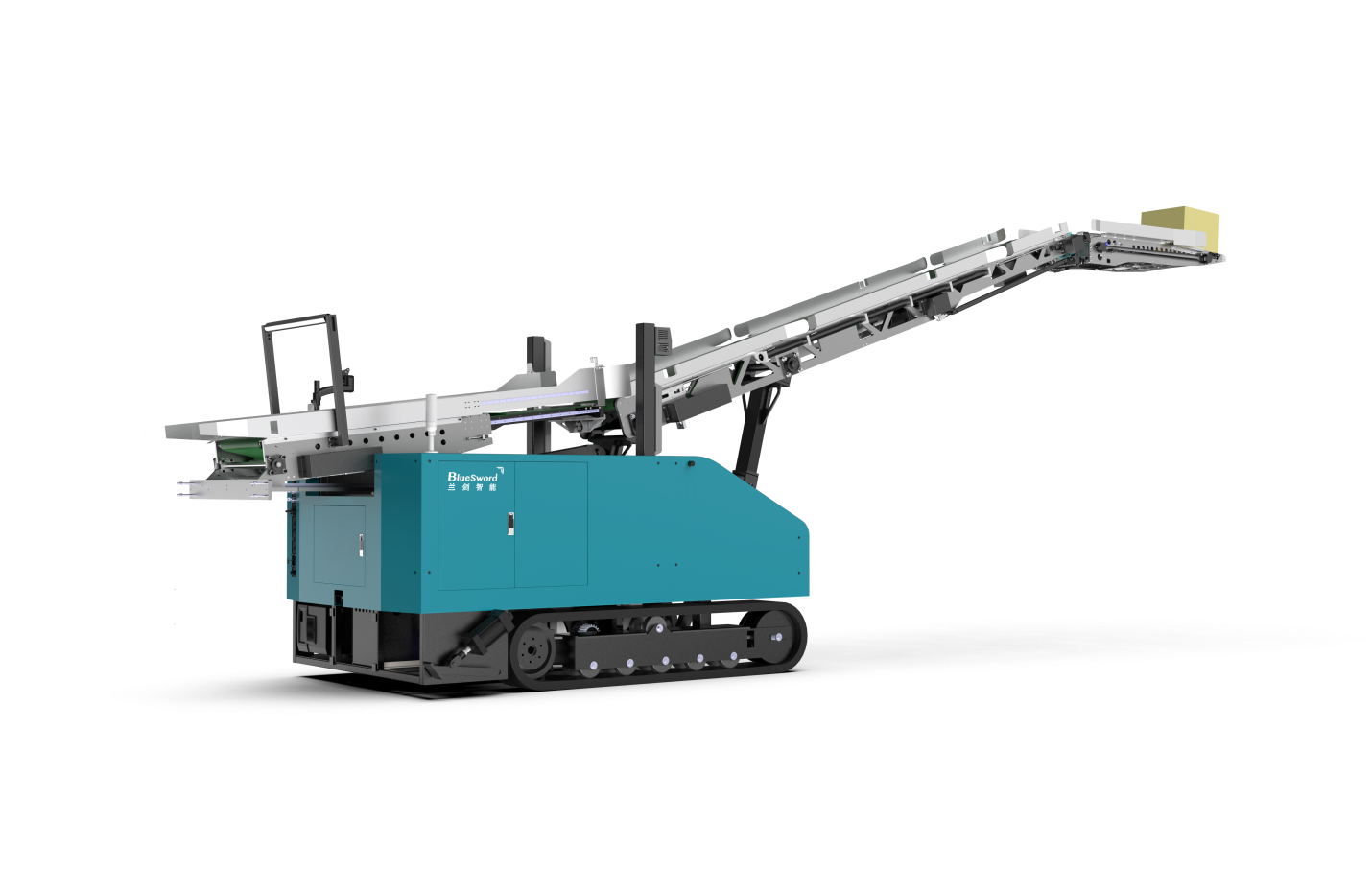
The system centers on BlueSword's intelligent robotic truck loading and unloading robot, integrated with barcode scanning, posture adjustment, carton conveying, robotic palletizing, automatic pallet destacking, and AGV transport — together automating unloading, scanning, palletizing, and inbound/outbound handling for carton goods without manual intervention. The core loading and unloading robot itself is built from five modules: a telescopic conveyor, mobile chassis, intermediate conveyor, vision inspection system, and end-effector.
Speed and Adaptability Inside the Truck
3D vision recognition identifies the condition, quantity, and orientation of cartons inside the truck and determines the optimal picking sequence, and a dedicated dual-carton gripper reaches unloading rates of 800–900 cartons per hour. The system handles cartons from 200–800mm in any dimension, up to 50kg each, and its tracked chassis stays stable on uneven truck floors with a maximum climbing angle of 8°.
It adapts automatically to enclosed trucks 7.6 meters and longer, with a lifting platform that aligns to different vehicle compartment heights, and operates across a -5°C to 40°C range at 10–90% humidity — a working range built for real dock conditions, not just controlled environments.
One Machine, Multiple Docks
A single unit can switch between multiple loading bays, reducing the capital investment needed compared with dedicated equipment per dock, and the telescopic conveyor adjusts both length and height to integrate with upstream and downstream systems while minimizing floor space. With minor hardware changes, the same machine can switch between loading and unloading — the kind of flexibility that keeps loading and unloading robot deployments running continuously across a warehouse dock.
Safety Built Into Every Layer
SLAM-based natural navigation with 360° obstacle detection stops the system automatically when something unexpected appears in its path, while anti-collision switches on both sides of the robotic arm and bottom-mounted sensors halt operation immediately on contact with carton sidewalls. A built-in safety control module calculates the arm's maximum swing range based on vehicle dimensions, preventing contact with truck walls or ceilings before it happens.
From Unload to Storage: The Full Sequence
After the robot unloads a truck, cartons move through a telescopic roller conveyor capable of 180° rotation and a 1:2.5 single-section extension ratio — in this deployment, extending to 24 meters and compressing down to 9.6 meters, allowing deep truck access during operation and compact storage when idle.
From there, a dimension inspection system measures each carton's height and width to determine orientation, followed by six-sided barcode scanning that identifies position and triggers a flipping mechanism to correct posture as needed, with all data uploaded to the central platform. A four-axis robotic arm then palletizes the cartons using a gripper designed to prevent drops, before two electric stacker AGVs and two omnidirectional AGVs — running on laser SLAM navigation and multi-vehicle coordination — complete inbound storage at a combined throughput of 15 pallets per hour.
The result is a dock-to-shelf process that runs without manual handling at any stage — reducing labor need substantially while giving China Tobacco Binzhou a more digitally managed, scalable operation than a partially automated system could offer.
Read More
-

 June 29 / 2026Inside the Electronics Factory: What Changed in Material Handling This YearREAD MORE
-
 April 28 / 2026Fixed or Flexible: What Manufacturing Deployments Are Telling Us
Fixed infrastructure once defined manufacturing efficiency. But as production cycles shorten and flexibility becomes critical, mobile automation is changing how factories think about material flow.
READ MORE
-
 March 27 / 2026The Part of Your Warehouse Nobody Wants to Talk About
The warehouse's biggest bottleneck may not be where you think. BlueSword looks at why the dock is becoming the next frontier of automation.
READ MORE
-
 January 28 / 20262026 Manufacturing Upgrade and Industry Trends
As manufacturers plan toward 2026, automation, smart manufacturing, and integrated material flow are becoming central to capacity and resilience. This article explores industry trends, labor constraints, and how integrated warehouse and production automation help reduce internal logistics losses and support phased manufacturing upgrades.
READ MORE
-
 September 24 / 2025Why Automated Warehousing Matters
Global supply chains face constant disruption. Automation is redefining warehouses as resilient hubs that keep goods moving no matter the challenge.
READ MORE
-
 August 27 / 2025How Automation Changes the Nature of Frontline Work: Confidence, Retention, and Workforce Value
Automation is no longer just about efficiency—it’s transforming warehouses and factories into safer, smarter, and more rewarding places to work.
READ MORE
-
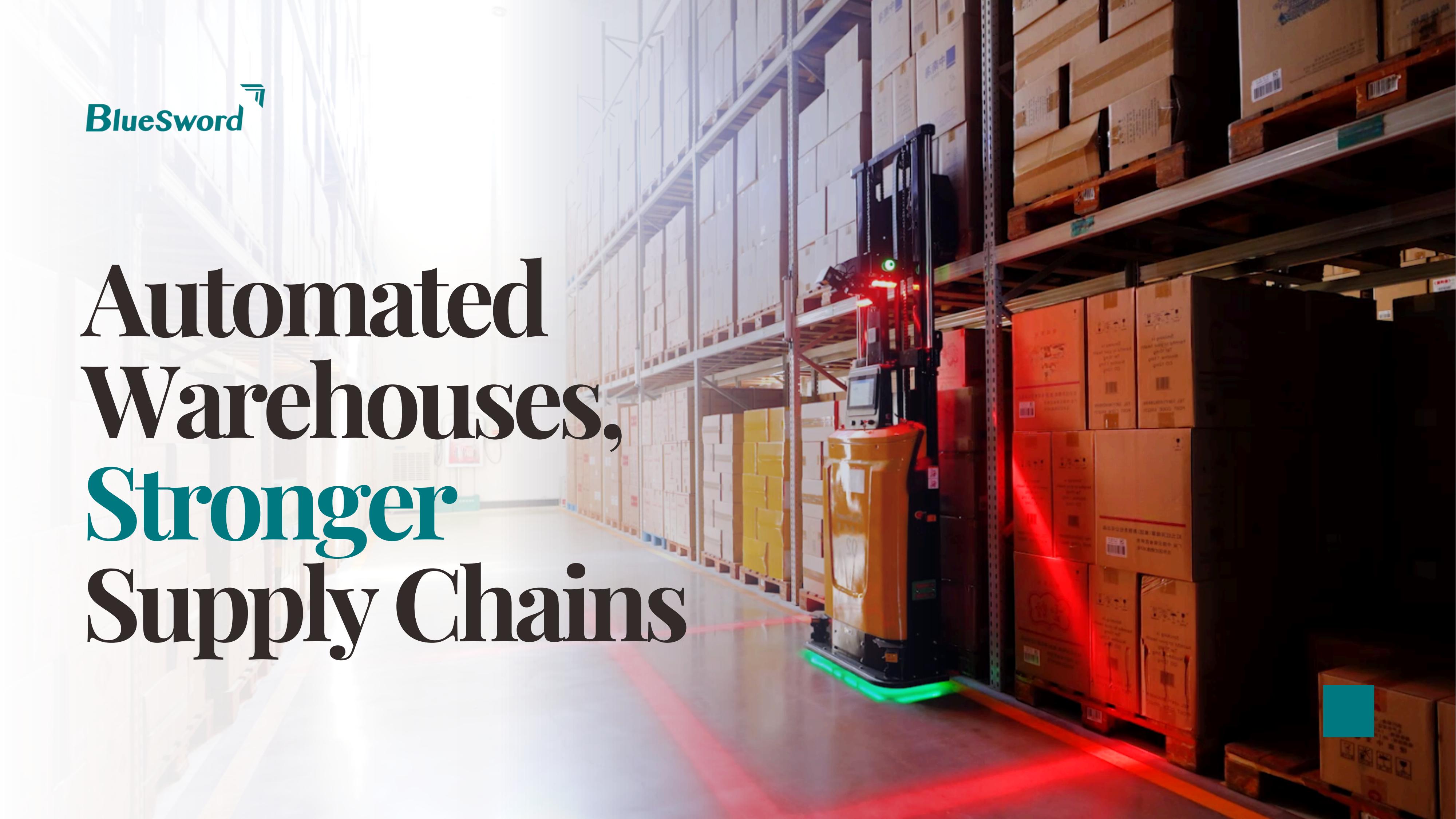 August 19 / 2025Automation in Logistics: Solving Workforce Challenges with Smart Systems
Discover smart logistics solutions with AMRs, shuttle systems, and automated warehouses. Future-proof your supply chain with intelligent intralogistics systems.
READ MORE
-
 July 25 / 2025Robotics Driving Real Safety Transformation in Factories and Warehouses
Safety in factories and warehouses is often discussed in terms of compliance and injury rates. But true safety goes beyond meeting standards. It requires addressing the root causes of risks and understanding how automation reshapes the daily reality for frontline workers—physically and mentally.
READ MORE
-
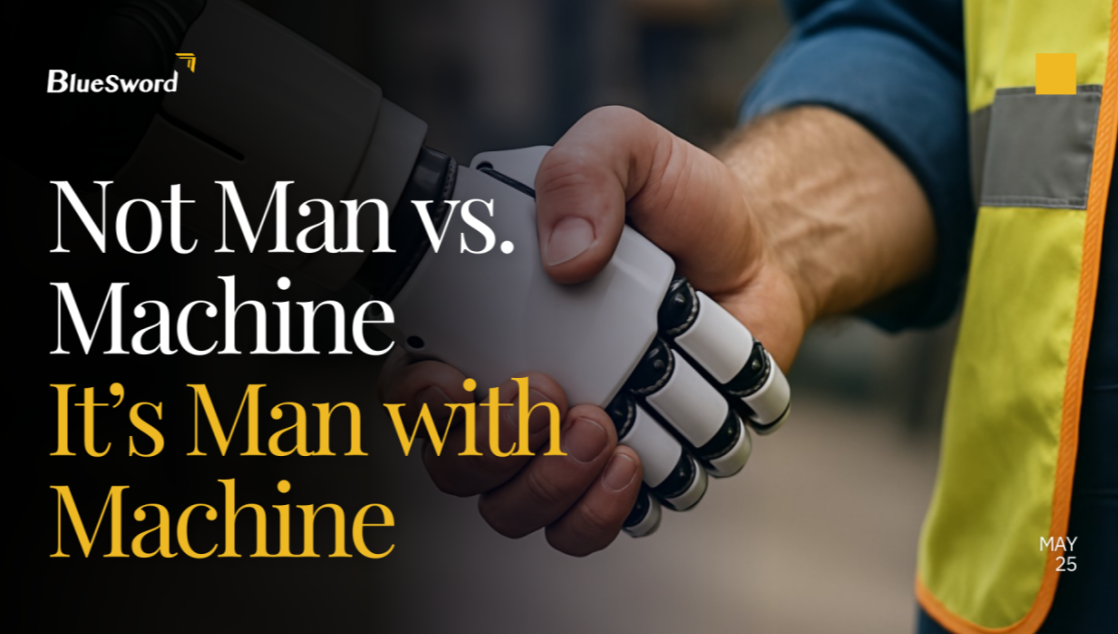 May 25 / 2025Are Warehouse Robots Here to Replace Workers—Or to Back Them Where It Counts?
Automation is advancing fast—but where does that leave the people on the ground? This article explores why the future of warehousing isn't a story of replacement, but one of smart collaboration. With real-world cases from BlueSword and global data, we dive into what human-machine partnerships really look like on the warehouse floor.
READ MORE
-
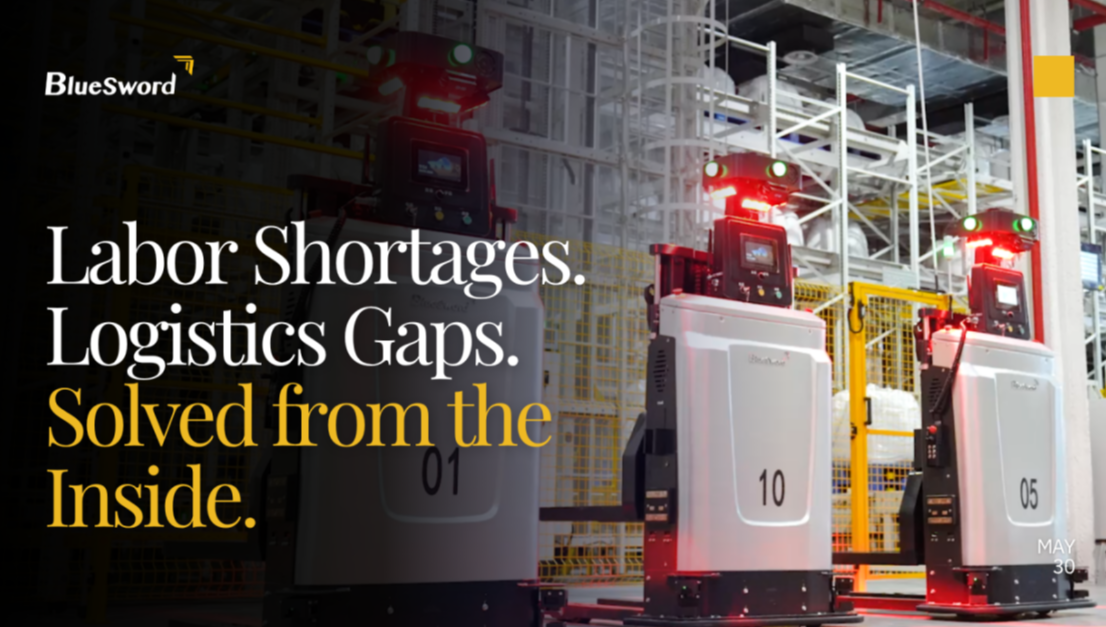 March 30 / 2025What’s Slowing Down Manufacturing—and What Leading Factories Are Doing About It
While automation continues to gain attention across the production line, internal logistics often remains untouched in traditional manufacturing plants.
READ MORE
-
 January 2 / 2025Building a Green Logistics Ecosystem with Servo Technology
The conveyor system is essential in modern production and logistics, facilitating the efficient storage, sorting, handling, and distribution of materials. By automating transport processes, it enhances efficiency, accuracy, and safety while effectively reducing labor costs.
READ MORE
-
 September 29 / 2024Logistics Transformation: Navigating Challenges in the FMCG Industry
Fast-moving consumer goods (FMCG) are an essential part of our everyday lives. With their large market size and ongoing growth, the FMCG industry plays an important role in the global economy.
READ MORE


