









UPDATES

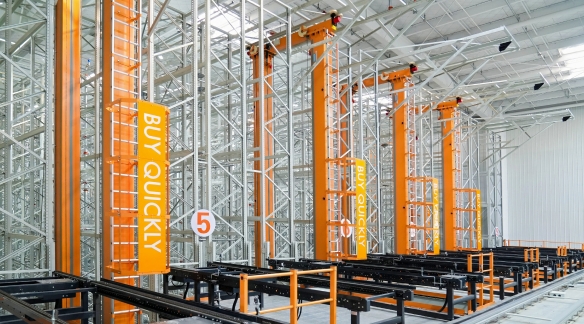
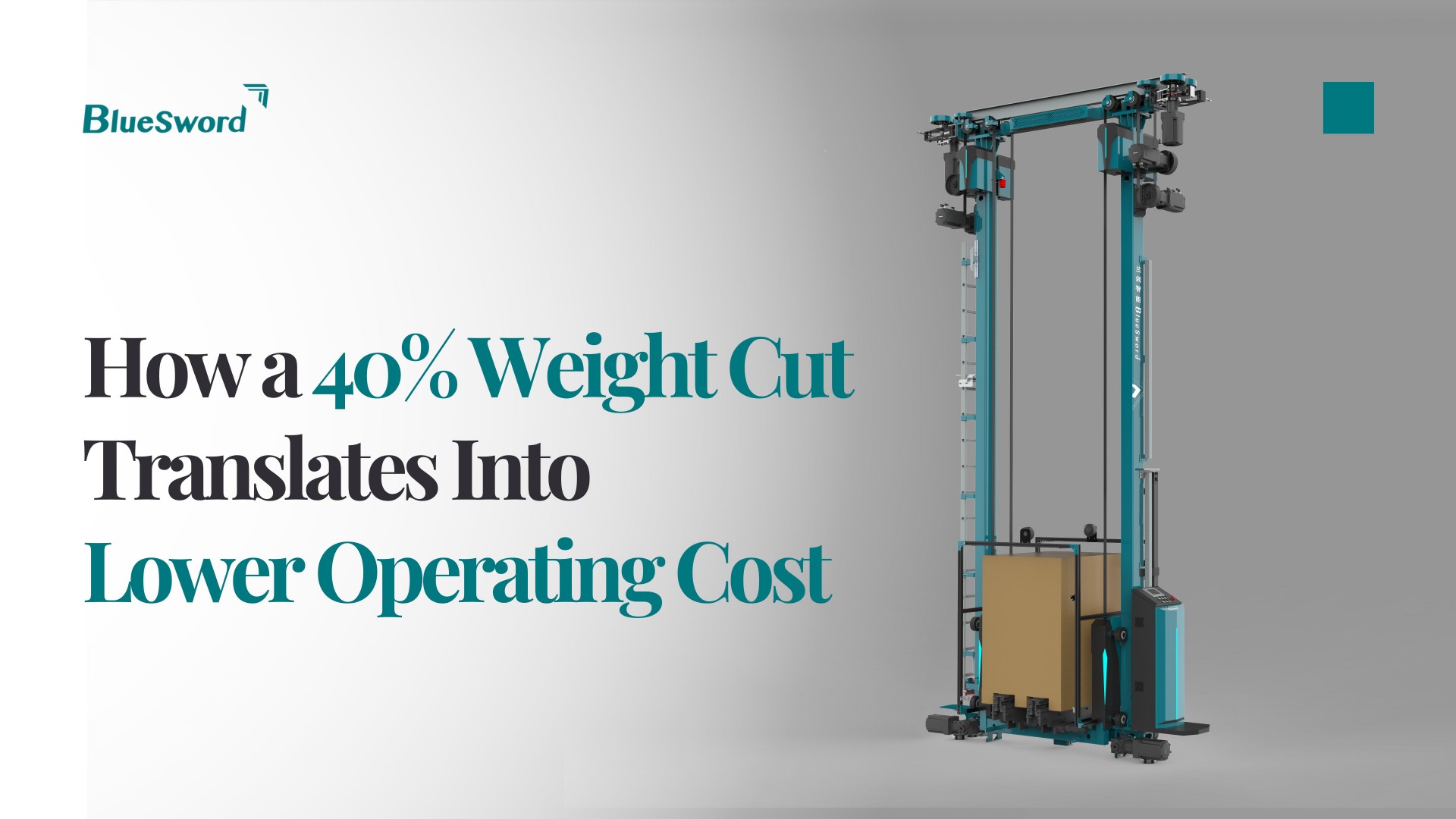
Most stacker cranes still run on the traditional asynchronous motor plus frequency converter setup — reliable, but not built for today's variable-load, frequent start-stop warehouse operations. BlueSword's distributed full-servo stacker crane, codenamed Jaguar, uses a different architecture, where its reduced weight translates directly into measurable cost savings.
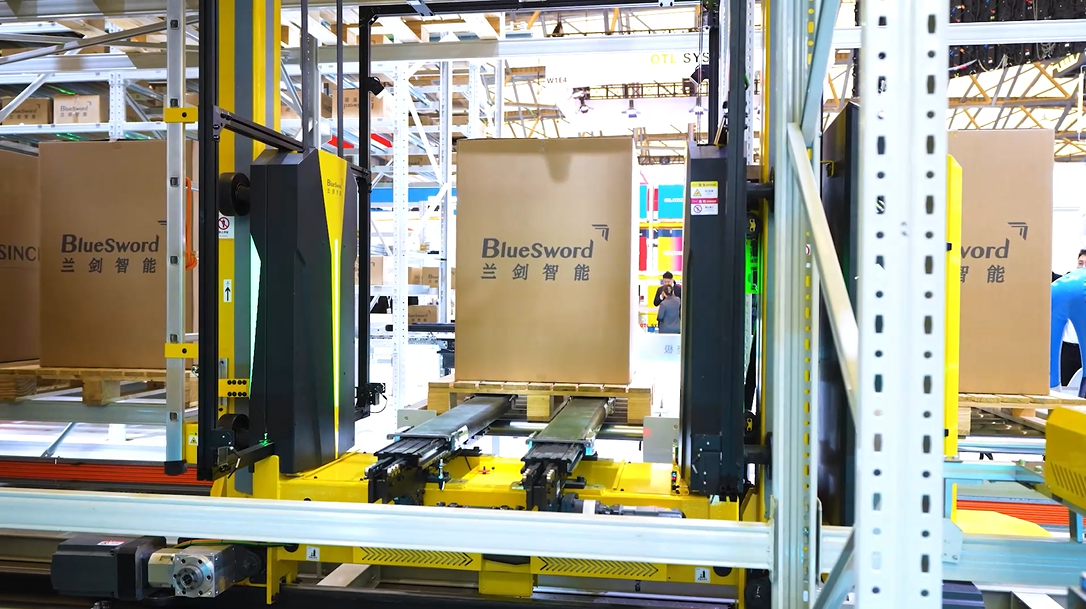
Lighter by Design: How the Jaguar Stacker Crane Cuts Weight
Combining a distributed architecture with servo drive technology, the Jaguar automated stacker crane cuts self-weight by 40% compared with conventional designs, which lowers ground load requirements and reduces the foundation construction needed to install it. As BlueSword's second servo-based product, it also cuts installed power by 40%, reducing the transformer capacity a warehouse zone needs, while improving power factor and lowering energy consumption by 20%.
Why Power Factor Matters for Warehouse Energy Efficiency
Power factor is the ratio of active power to apparent power in an AC circuit. A higher power factor reduces the current required to deliver the same active power, helping lower distribution losses, free electrical capacity and, where applicable, avoid utility penalties. Power authorities set benchmark power factor values by user category, and bills get adjusted up or down from the standard tariff depending on where a facility falls relative to that benchmark. Servo-based equipment tends to run with a better power factor than asynchronous alternatives, which doesn't just lower direct electricity use — it also helps avoid the surcharges that come from falling below the benchmark, adding a second layer of cost savings beyond the headline energy figure.
Fast Response Without Sacrificing Stability
The Jaguar's full servo drive supports rapid start, stop, and reversal, suited to high-speed operation with frequent cycling, and it can provide peak torque of up to three times the rated value under specified operating conditions. At the upper section, where vibration is most likely, a combined mechanical and algorithmic anti-sway approach keeps the system stable through start-stop transitions without the pauses that add up in conventional stacker cranes.
Faster to Install, Easier to Maintain
A one-click commissioning system — standardized design parameters, traceable debugging, structured test reports, and backed-up data feedback — cuts overall delivery cycles by 70%. The 40% weight reduction also makes individual modules easier to install on-site, and switching from a traditional winch-and-steel-rope design to flat belt transmission removes the need for ongoing lubrication, simplifying maintenance considerably.
The Broader Shift Toward Servo-Driven Systems
Beyond the direct efficiency gains, servo systems generate less heat and run quieter than asynchronous alternatives, which is why pallet handling solutions across the industry are increasingly shifting toward servo-driven architectures — trading physical weight for operating performance rather than the other way around.
With its weight reduction, lower energy consumption, faster deployment, and minimal maintenance, the Jaguar proves that physical lightness delivers a distinct operational edge. For modern warehouses aiming to optimize total cost of ownership, adopting distributed servo technology isn't just a minor upgrade—it is a practical path toward smarter, leaner automated storage.
Read More
-

 June 29 / 2026Inside the Electronics Factory: What Changed in Material Handling This YearREAD MORE
-
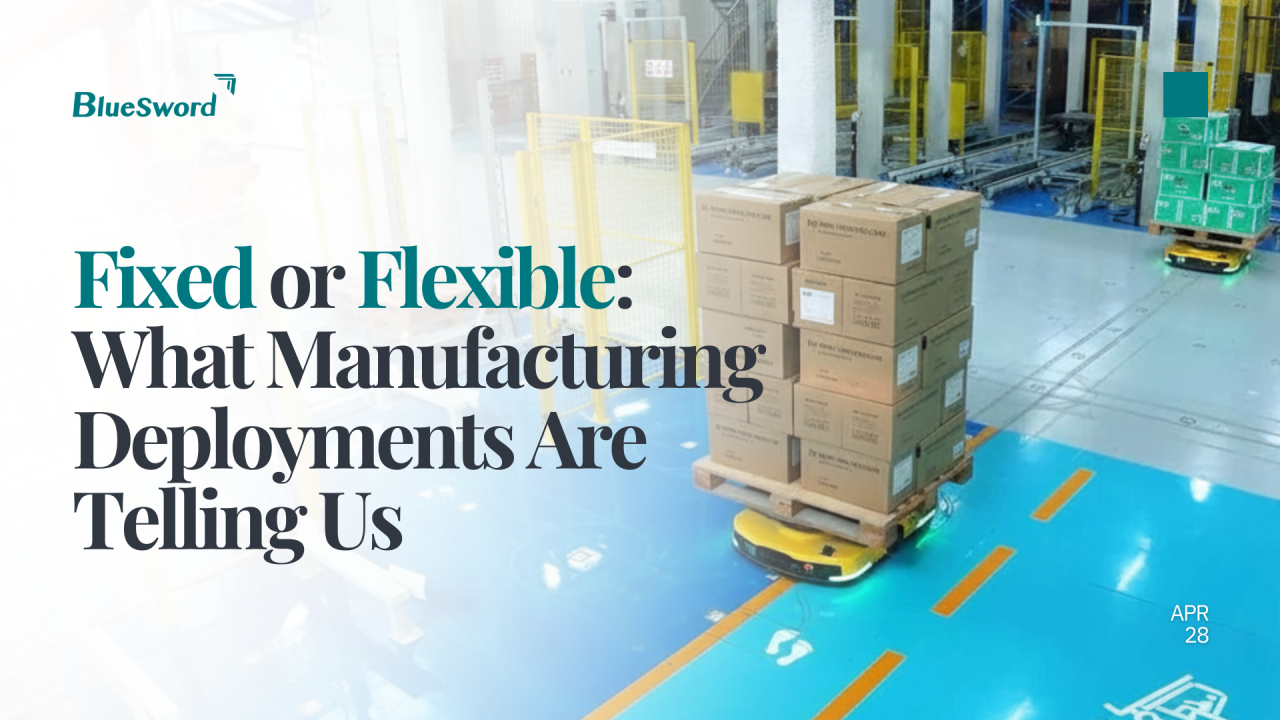 April 28 / 2026Fixed or Flexible: What Manufacturing Deployments Are Telling Us
Fixed infrastructure once defined manufacturing efficiency. But as production cycles shorten and flexibility becomes critical, mobile automation is changing how factories think about material flow.
READ MORE
-
 March 27 / 2026The Part of Your Warehouse Nobody Wants to Talk About
The warehouse's biggest bottleneck may not be where you think. BlueSword looks at why the dock is becoming the next frontier of automation.
READ MORE
-
 January 28 / 20262026 Manufacturing Upgrade and Industry Trends
As manufacturers plan toward 2026, automation, smart manufacturing, and integrated material flow are becoming central to capacity and resilience. This article explores industry trends, labor constraints, and how integrated warehouse and production automation help reduce internal logistics losses and support phased manufacturing upgrades.
READ MORE
-
 September 24 / 2025Why Automated Warehousing Matters
Global supply chains face constant disruption. Automation is redefining warehouses as resilient hubs that keep goods moving no matter the challenge.
READ MORE
-
 August 27 / 2025How Automation Changes the Nature of Frontline Work: Confidence, Retention, and Workforce Value
Automation is no longer just about efficiency—it’s transforming warehouses and factories into safer, smarter, and more rewarding places to work.
READ MORE
-
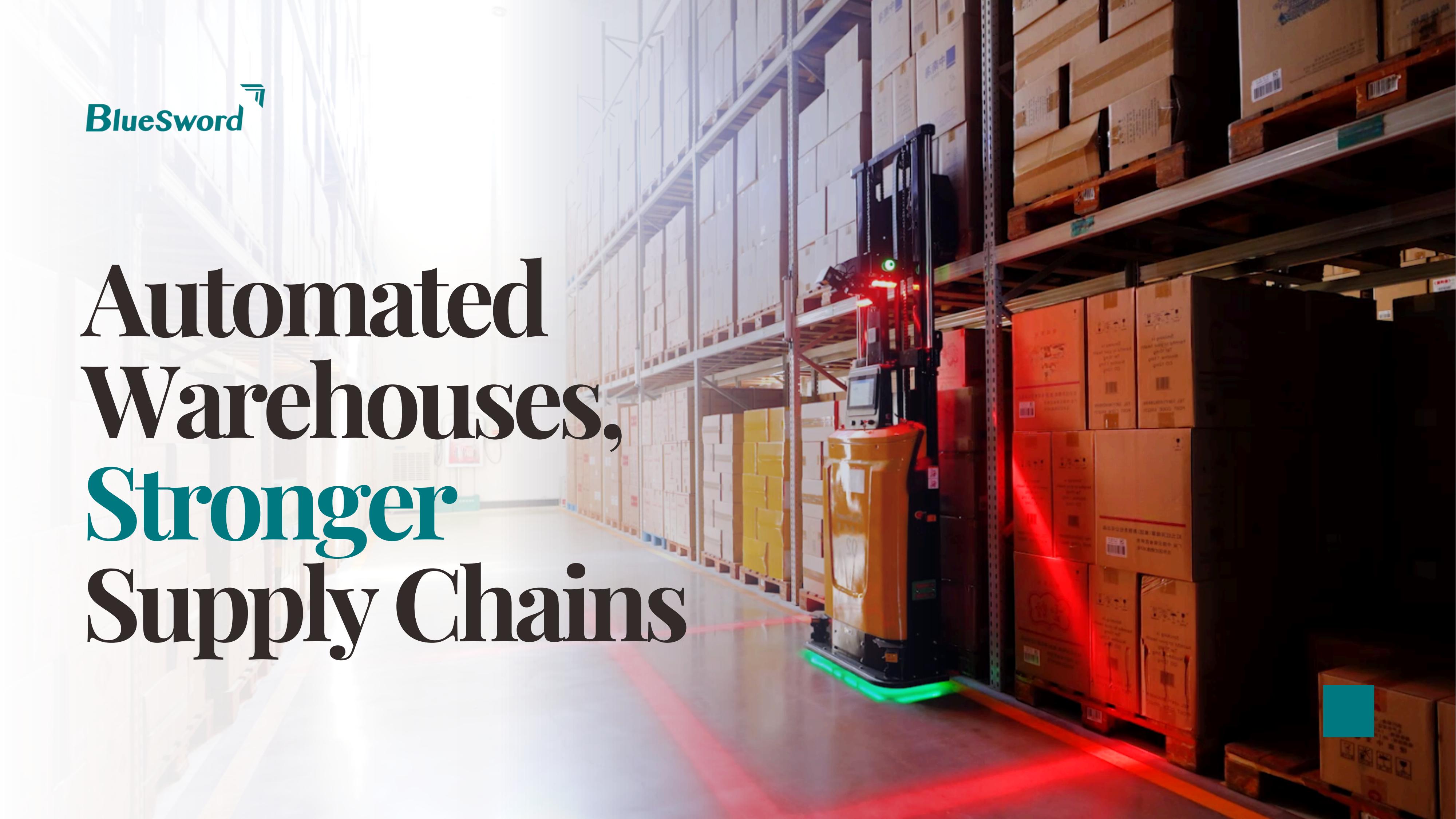 August 19 / 2025Automation in Logistics: Solving Workforce Challenges with Smart Systems
Discover smart logistics solutions with AMRs, shuttle systems, and automated warehouses. Future-proof your supply chain with intelligent intralogistics systems.
READ MORE
-
 July 25 / 2025Robotics Driving Real Safety Transformation in Factories and Warehouses
Safety in factories and warehouses is often discussed in terms of compliance and injury rates. But true safety goes beyond meeting standards. It requires addressing the root causes of risks and understanding how automation reshapes the daily reality for frontline workers—physically and mentally.
READ MORE
-
 May 25 / 2025Are Warehouse Robots Here to Replace Workers—Or to Back Them Where It Counts?
Automation is advancing fast—but where does that leave the people on the ground? This article explores why the future of warehousing isn't a story of replacement, but one of smart collaboration. With real-world cases from BlueSword and global data, we dive into what human-machine partnerships really look like on the warehouse floor.
READ MORE
-
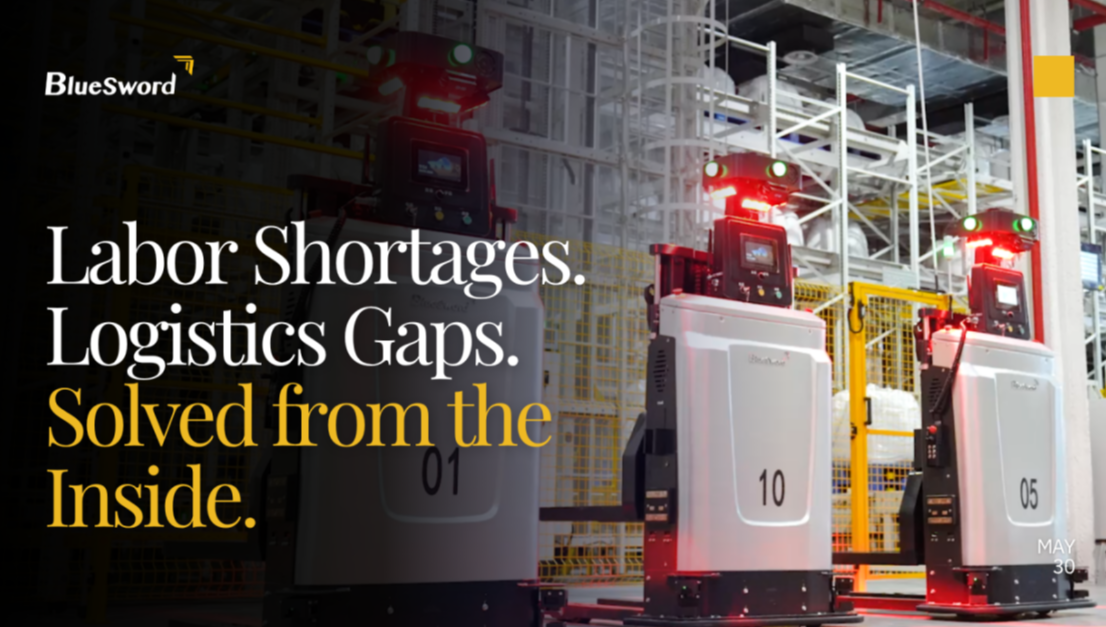 March 30 / 2025What’s Slowing Down Manufacturing—and What Leading Factories Are Doing About It
While automation continues to gain attention across the production line, internal logistics often remains untouched in traditional manufacturing plants.
READ MORE
-
 January 2 / 2025Building a Green Logistics Ecosystem with Servo Technology
The conveyor system is essential in modern production and logistics, facilitating the efficient storage, sorting, handling, and distribution of materials. By automating transport processes, it enhances efficiency, accuracy, and safety while effectively reducing labor costs.
READ MORE
-
 September 29 / 2024Logistics Transformation: Navigating Challenges in the FMCG Industry
Fast-moving consumer goods (FMCG) are an essential part of our everyday lives. With their large market size and ongoing growth, the FMCG industry plays an important role in the global economy.
READ MORE


