








UPDATES

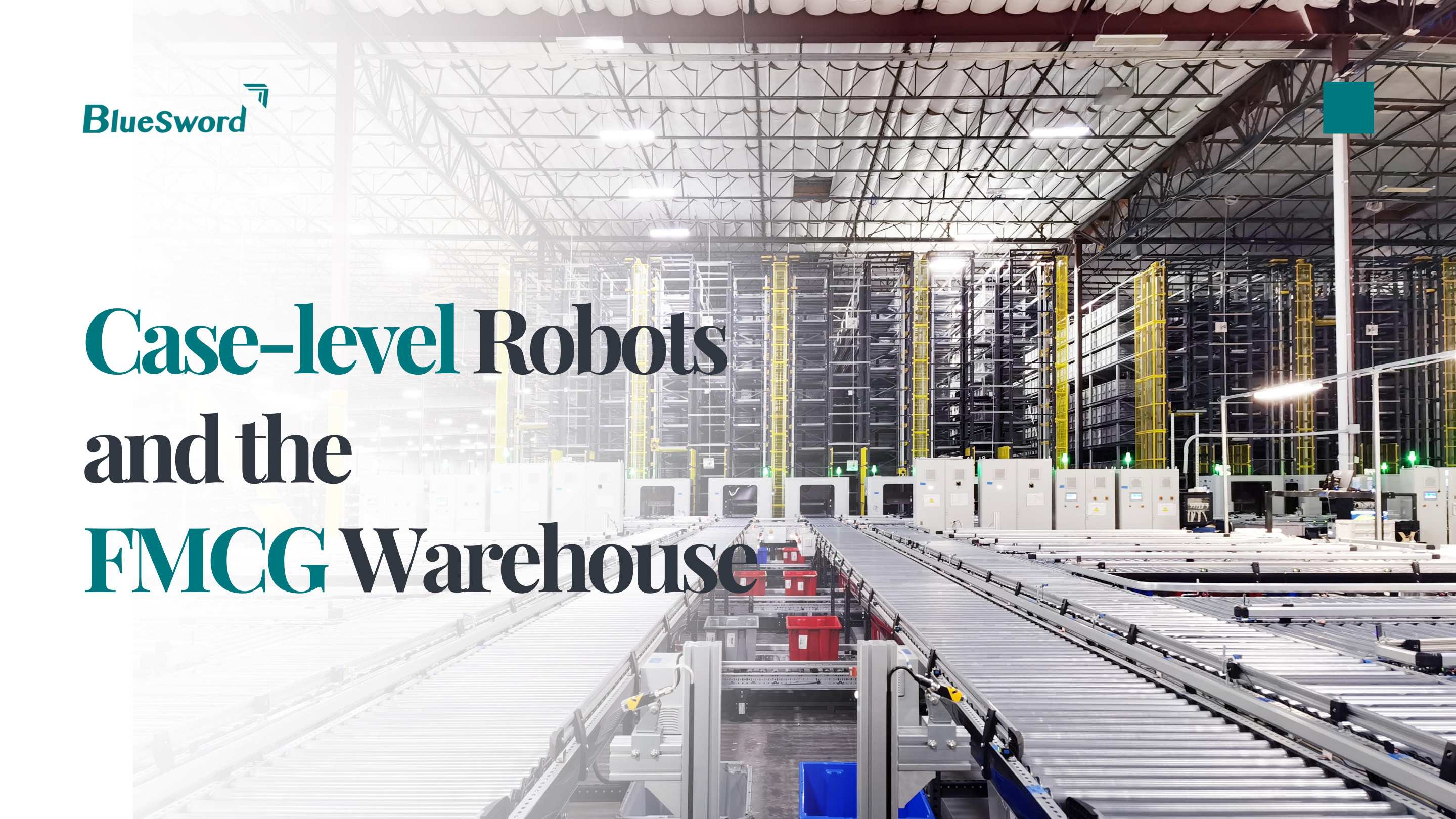
For FMCG and consumer goods operators, warehouse automation isn't just about speed — it's about handling constant SKU turnover, seasonal demand swings, and razor-thin margins for error, all at once. Case-handling robots have become a core answer to that problem. Here's why the technology emerged, and what's actually inside the systems driving it.
E-Commerce Set the Bar, FMCG Had to Meet It
Case-level robot adoption in China traces back to e-commerce's explosive growth, which set a demanding baseline for FMCG warehouse automation: near-continuous 24/7 operation requiring equipment reliability well beyond traditional industrial standards; tight delivery windows requiring high-speed, high-accuracy case-level throughput; massive SKU counts requiring precise recognition and near-zero error rates; and warehouse environments with real temperature, humidity, and layout variability that hardware has to tolerate.
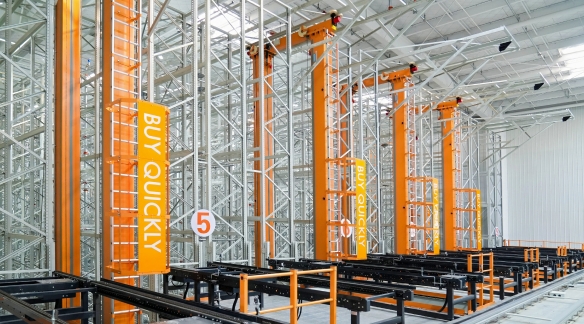
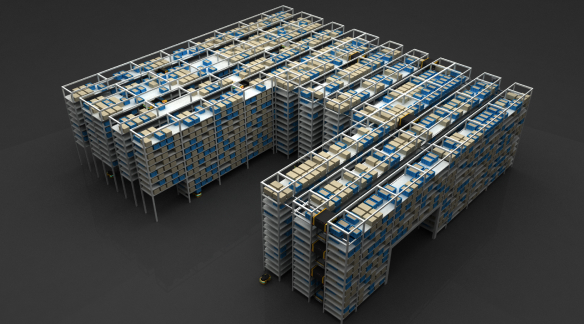
BlueSword's early answer was the Multi-level Shuttle System, a high-density storage shuttle system combining dense racking, high-speed shuttle robots, and lifts — a design that prioritized stability under continuous load and accurate high-speed access, and one that shaped much of the warehouse automation that followed in China.
From E-Commerce Into the FMCG Supply Chain
Once proven, case-level robots' core advantage — high-density storage combined with fast, accurate case-level access — carried over into adjacent sectors. Automotive plants adopted them first for small-parts distribution, then for inbound raw materials and WIP buffers. Pharmaceutical, apparel, footwear, and food and beverage companies followed, drawn by traceability requirements, clean-environment standards, and the need to absorb seasonal demand spikes without adding headcount. Across retail supply chains broadly, the same systems now support fulfillment for fast-, medium-, and slow-moving goods alike.
That trajectory reflects a shift from solving one industry's specific problem to becoming shared infrastructure across FMCG-adjacent manufacturing and distribution.
Matching the Robot to the Warehouse
Because space, budget, and flexibility needs vary so much across FMCG facilities, BlueSword offers more than one case robot form factor. The Gecko Case-handling Robot suits constrained or cost-sensitive spaces, using a one-robot-one-track design that adapts to different rack heights without floor modification. The Spider Case-handling Robot goes further, built for genuine 3D space utilization in irregular layouts — designed for the most complex and dynamic warehouse environments FMCG operators run into.
The Technology That Makes High Density Possible
A modern case robot deployment ties together several layers of technology. A 3D goods-to-person system integrates inspection, inbound, storage, picking, and consolidation into one automated flow, cutting labor and error rates while three-dimensional storage lifts space utilization well above flat layouts. Motion control built on full S-curve acceleration and micro servo systems keeps operations efficient and stable, with independently suspended driven wheels reducing vibration.
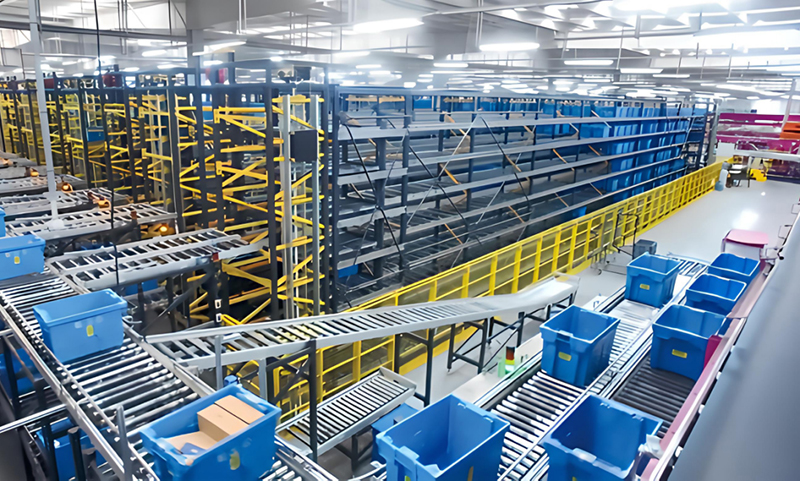
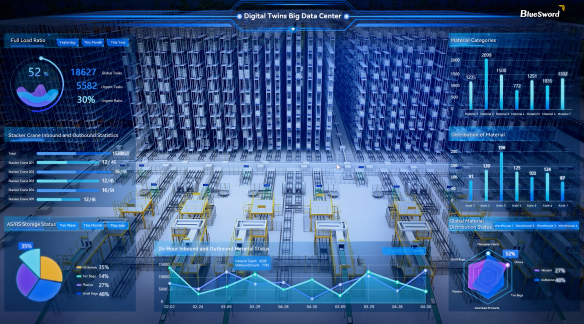
Dynamic slot positioning raises storage density for mixed-size cases by more than 30% versus fixed-location systems, while adaptive fork technology automatically adjusts to case size and detects displacement or deformation to keep handling safe. Stacking cases up to three high adds further density, and six-direction shuttle movement extends coverage across height and space. Underneath it all, intelligent logistics solutions handle scheduling — balancing inventory and tasks, predicting demand, and optimizing pick sequences — validated through digital twin simulation, with one-click deployment tools and ERP-integrated system visibility rounding out the stack.
For FMCG operators, that combination of density, speed, and adaptability is less a convenience than a requirement — margins and turnover in this sector leave little room for warehouses that can't flex with demand.
Read More
-

 June 29 / 2026Inside the Electronics Factory: What Changed in Material Handling This YearREAD MORE
-
 April 28 / 2026Fixed or Flexible: What Manufacturing Deployments Are Telling Us
Fixed infrastructure once defined manufacturing efficiency. But as production cycles shorten and flexibility becomes critical, mobile automation is changing how factories think about material flow.
READ MORE
-
 March 27 / 2026The Part of Your Warehouse Nobody Wants to Talk About
The warehouse's biggest bottleneck may not be where you think. BlueSword looks at why the dock is becoming the next frontier of automation.
READ MORE
-
 January 28 / 20262026 Manufacturing Upgrade and Industry Trends
As manufacturers plan toward 2026, automation, smart manufacturing, and integrated material flow are becoming central to capacity and resilience. This article explores industry trends, labor constraints, and how integrated warehouse and production automation help reduce internal logistics losses and support phased manufacturing upgrades.
READ MORE
-
 September 24 / 2025Why Automated Warehousing Matters
Global supply chains face constant disruption. Automation is redefining warehouses as resilient hubs that keep goods moving no matter the challenge.
READ MORE
-
 August 27 / 2025How Automation Changes the Nature of Frontline Work: Confidence, Retention, and Workforce Value
Automation is no longer just about efficiency—it’s transforming warehouses and factories into safer, smarter, and more rewarding places to work.
READ MORE
-
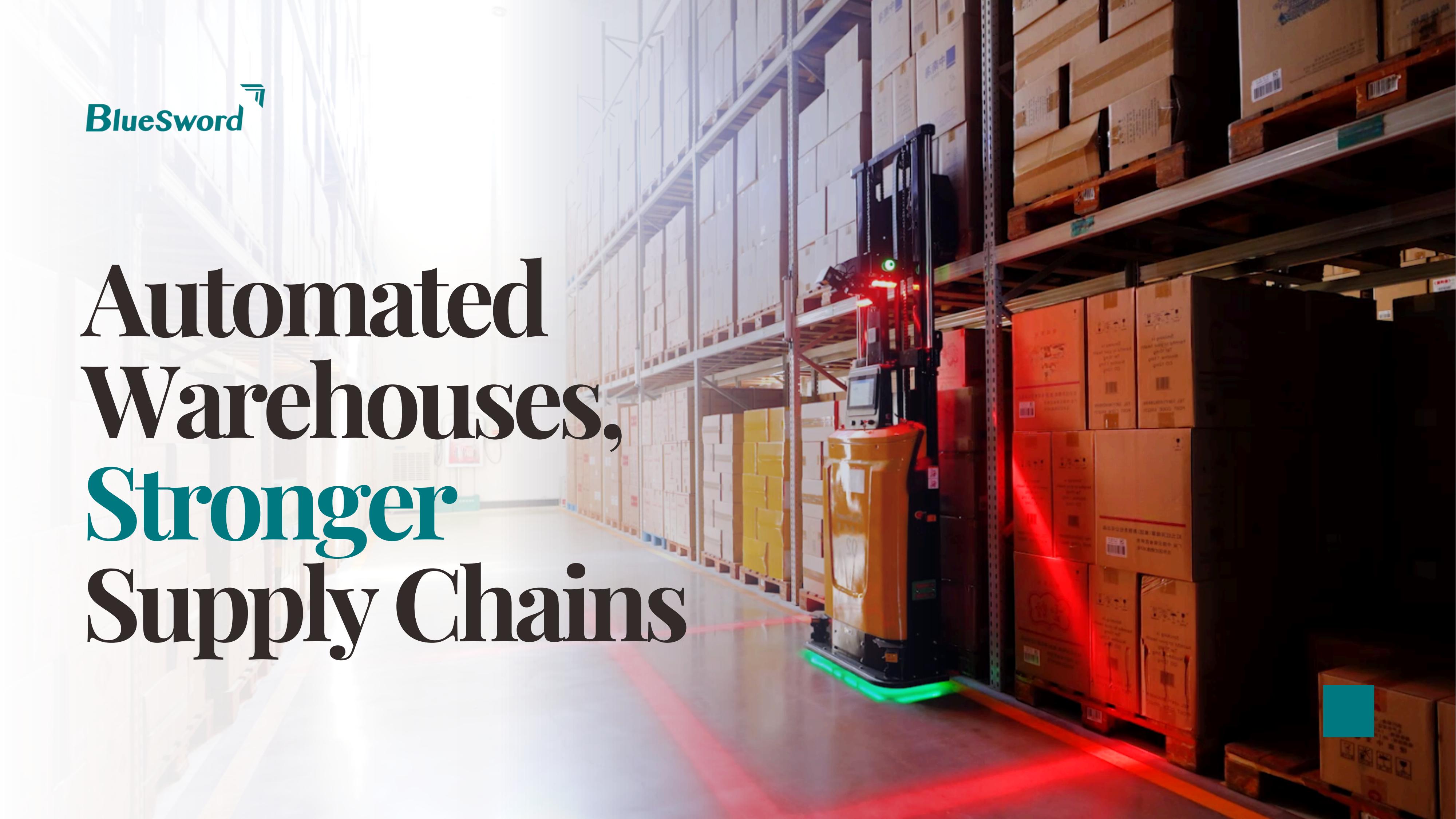 August 19 / 2025Automation in Logistics: Solving Workforce Challenges with Smart Systems
Discover smart logistics solutions with AMRs, shuttle systems, and automated warehouses. Future-proof your supply chain with intelligent intralogistics systems.
READ MORE
-
 July 25 / 2025Robotics Driving Real Safety Transformation in Factories and Warehouses
Safety in factories and warehouses is often discussed in terms of compliance and injury rates. But true safety goes beyond meeting standards. It requires addressing the root causes of risks and understanding how automation reshapes the daily reality for frontline workers—physically and mentally.
READ MORE
-
 May 25 / 2025Are Warehouse Robots Here to Replace Workers—Or to Back Them Where It Counts?
Automation is advancing fast—but where does that leave the people on the ground? This article explores why the future of warehousing isn't a story of replacement, but one of smart collaboration. With real-world cases from BlueSword and global data, we dive into what human-machine partnerships really look like on the warehouse floor.
READ MORE
-
 March 30 / 2025What’s Slowing Down Manufacturing—and What Leading Factories Are Doing About It
While automation continues to gain attention across the production line, internal logistics often remains untouched in traditional manufacturing plants.
READ MORE
-
 January 2 / 2025Building a Green Logistics Ecosystem with Servo Technology
The conveyor system is essential in modern production and logistics, facilitating the efficient storage, sorting, handling, and distribution of materials. By automating transport processes, it enhances efficiency, accuracy, and safety while effectively reducing labor costs.
READ MORE
-
 September 29 / 2024Logistics Transformation: Navigating Challenges in the FMCG Industry
Fast-moving consumer goods (FMCG) are an essential part of our everyday lives. With their large market size and ongoing growth, the FMCG industry plays an important role in the global economy.
READ MORE


