







UPDATES

As logistics and manufacturing operations continue to increase in scale and complexity, conveyor automation has become an important part of modern material handling strategies. Automated transportation systems help companies improve operational consistency, reduce manual handling pressure, and maintain stable product flow across warehouses and production facilities. For industries managing high order volumes or continuous production cycles, conveyor automation can directly support efficiency and throughput targets.
E-Commerce and Retail Distribution
The e-commerce and retail industries are among the largest beneficiaries of conveyor automation. Rapid order growth, SKU diversification, and strict delivery timelines require distribution centers to process large quantities of cartons and packages continuously throughout the day.
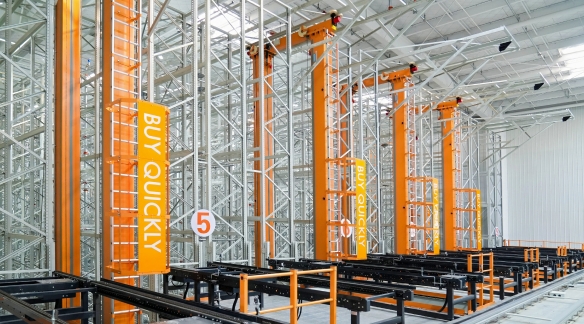
Automated warehouse conveyor systems help streamline the movement of goods between receiving, storage, picking, sorting, and shipping areas. Conveyor automation reduces unnecessary manual transportation while improving operational rhythm during peak order periods.
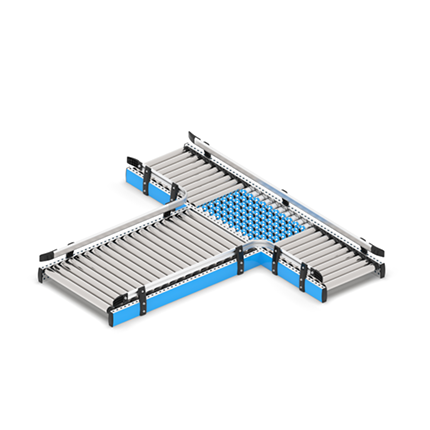
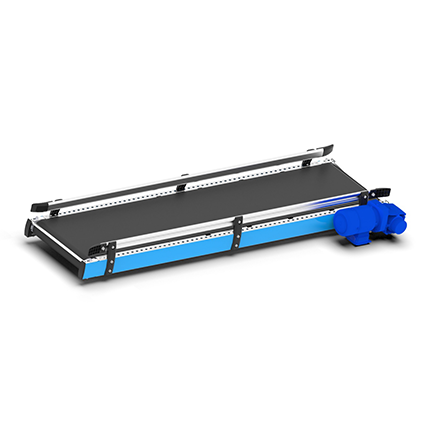
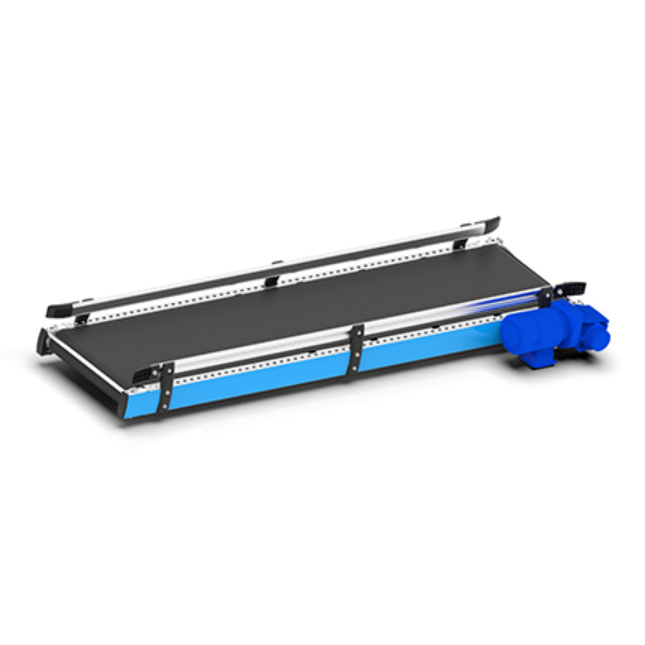
BlueSword’s Case Belt Conveyor is designed to transport both bulk materials and individual items such as cartons or bags. Since there is no relative motion between the belt and the goods, the system supports gentle product handling while maintaining transport stability. With speeds up to 90 m/min and a load capacity of 50 kg, the system can support high-throughput distribution environments efficiently.
In addition, plug-and-play conveyor components can reduce installation time by approximately 40%, allowing retail distribution centers to expand capacity more quickly when operational demand increases.
Manufacturing and Industrial Production
Manufacturing facilities also benefit significantly from conveyor automation, especially where stable material flow is essential for production continuity. Automated conveyor systems help synchronize component transportation between assembly, packaging, inspection, and storage areas.
Industries such as electronics, automotive parts, consumer goods, and industrial equipment manufacturing often require continuous movement of products with minimal interruption. In these environments, automated warehouse conveyor systems help reduce production delays caused by manual handling bottlenecks.
BlueSword integrates communication and IO-based controls into its conveyor solutions to support coordination between conveyors and production equipment. Real-time diagnostics through CAN bus technology further improve operational visibility by helping maintenance teams identify issues more quickly. This approach can reduce downtime by up to 30%, supporting more stable manufacturing operations.
For manufacturers planning future production adjustments, scalable conveyor layouts also provide operational flexibility. Systems that can expand without large-scale rewiring help facilities adapt to new production requirements while minimizing disruption.
Logistics and Parcel Handling Centers
Third-party logistics providers and parcel handling facilities rely heavily on conveyor automation to maintain shipment accuracy and processing efficiency. These facilities often operate around the clock while handling products of varying sizes and packaging conditions.
Automated conveyor systems manufacturers increasingly focus on flexible layouts that support both current operations and future logistics growth. Conveyor systems must adapt to changing shipment volumes, routing requirements, and warehouse configurations without requiring complete infrastructure replacement.
The BlueSword Case Belt Conveyor supports multiple drive configurations, including three-phase motors and motorized rollers, allowing operators to select solutions according to throughput and energy management requirements. Because the system can handle both cartons and bagged goods, it is suitable for mixed logistics operations where product diversity is common.
Scalable conveyor architecture is especially valuable in logistics centers that regularly expand sorting lines or introduce new automation equipment. Flexible automated warehouse conveyor systems help maintain operational continuity during these transitions.
Supporting Industry Growth Through Conveyor Automation
Conveyor automation delivers measurable operational benefits across industries that depend on efficient material movement and stable workflow coordination. Retail distribution, manufacturing, and logistics operations all benefit from improved throughput, reduced downtime, and more consistent handling performance.