








UPDATES

As warehouse and logistics operations continue to pursue higher throughput and lower manual dependency, the performance of a loading and unloading robot has become increasingly important in distribution centers and manufacturing facilities. An efficient automated truck loading and unloading system not only improves handling efficiency but also supports stable material flow across the supply chain. However, loading automation performance is influenced by several operational and technical factors, ranging from cargo characteristics to system coordination.
Cargo Type and Packaging Consistency
One of the most significant factors affecting loading automation performance is the consistency of cargo dimensions and packaging quality. A loading and unloading robot relies on stable object recognition and gripping conditions to maintain handling speed and positioning accuracy.
Corrugated cartons, material bags, and totes each present different handling challenges. Irregular shapes, damaged packaging, or unstable stacking patterns can reduce gripping efficiency and increase correction time during loading operations. In an automated truck loading and unloading system, package uniformity directly influences conveyor synchronization and robotic motion planning.
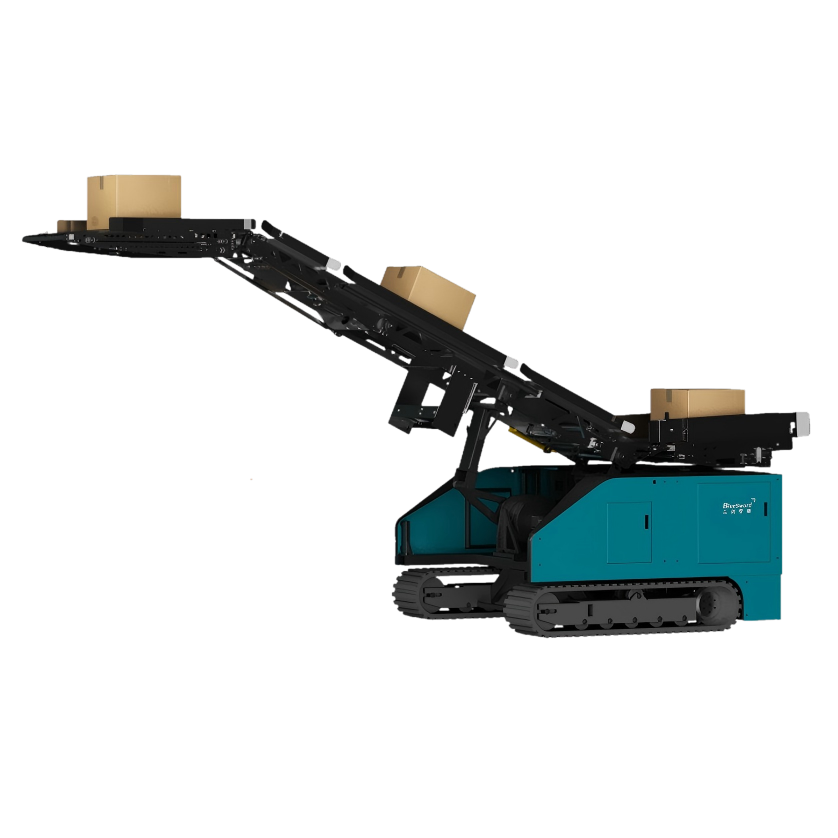
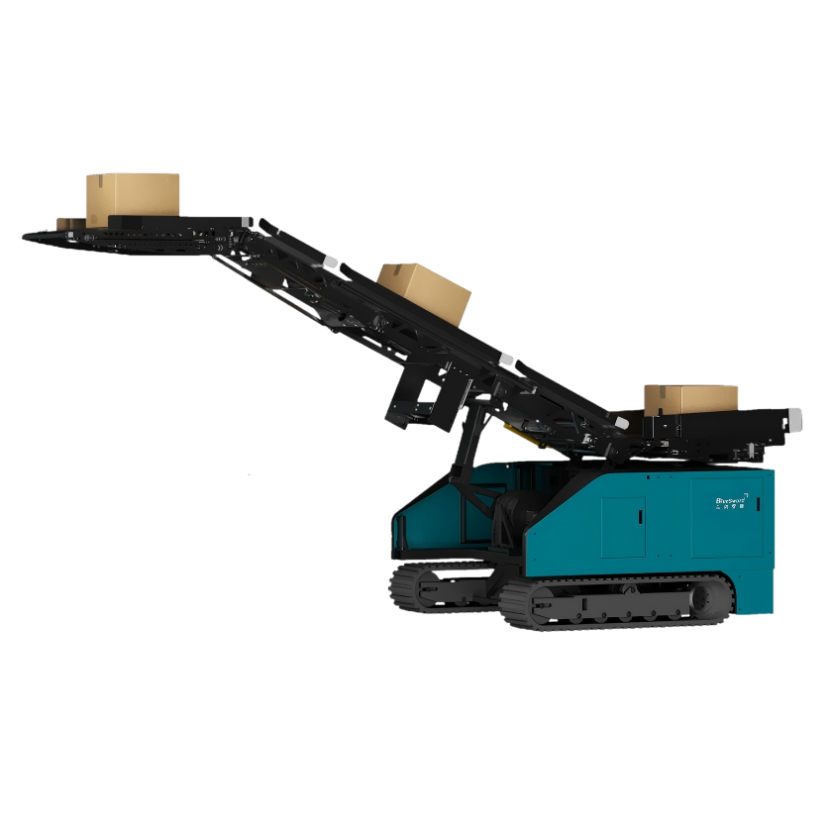
The BlueSword Loading and Unloading Robot is designed to accommodate multiple cargo forms while maintaining operational flexibility. With a rated load capacity of 35 kg and support for both single-grip and dual-grip modes, the system can adapt to changing logistics requirements without extensive manual intervention.
Equipment Coordination and System Throughput
Automation performance is also closely related to the coordination between robotic equipment, conveyors, and warehouse management systems. Even when a loading and unloading robot operates at high speed, bottlenecks may occur if upstream or downstream systems cannot maintain synchronized flow.
For example, conveyor speed, vehicle positioning accuracy, and dock scheduling all influence operational continuity. The Loading and Unloading Robot supports a maximum conveyor speed of 1 m/s and a maximum travel speed of 0.8 m/s, helping maintain stable movement between loading points and transport systems.
In high-volume operations, dual-grip configurations can significantly improve throughput. BlueSword’s system achieves approximately 800–1000 pieces per hour under dual-grip operation, while single-grip handling supports around 500–600 pieces per hour. Selecting the appropriate gripping mode depends on product weight, loading density, and throughput targets within the automated truck loading and unloading system.
Facility Layout and Operational Flexibility
Warehouse layout design has a direct impact on automation efficiency. Narrow loading areas, uneven dock spacing, or frequent vehicle changes can reduce the effectiveness of a loading and unloading robot if the system lacks mobility and adaptability.
Modern logistics facilities often require automation equipment that can serve multiple docks instead of remaining fixed at a single station. The ability to reposition robotic systems quickly helps improve equipment utilization and reduces idle time during peak operational periods.
BlueSword developed the Asian Elephant Robot with mobility in mind, allowing rapid deployment across multiple loading docks. This flexibility supports changing shipment schedules and helps facilities optimize automation investment without excessive infrastructure modification.
Building Stable and Scalable Loading Operations
Loading automation performance depends on the interaction between cargo stability, system coordination, and facility design. A well-planned automated truck loading and unloading system should balance throughput, flexibility, and operational reliability according to actual logistics demands.