







UPDATES

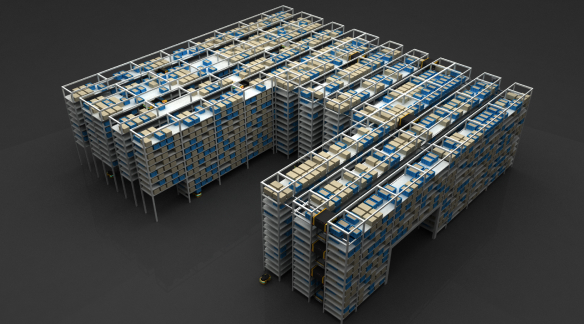
Warehouse automation projects require careful equipment planning to ensure operational stability, storage efficiency, and long-term scalability. Among automated storage technologies, the pallet stacker crane plays a central role in high-density warehouse systems by supporting fast and accurate pallet handling. For businesses evaluating automated warehousing, selecting an experienced stacker crane manufacturer is an important part of building reliable logistics infrastructure.
BlueSword develops intelligent crane systems designed for different warehouse environments, including cold storage, corrosion-resistant operations, and explosion-proof applications. Through integrated automation technologies and data-driven system management, BlueSword helps businesses optimize pallet storage and material flow efficiency.
Warehouse Structure and Storage Requirements
One of the most important factors in pallet stacker crane design is warehouse structure. Ceiling height, aisle width, rack configuration, and floor conditions directly influence crane dimensions and movement performance. During system planning, warehouse operators must determine storage density targets, pallet dimensions, and inventory turnover rates to ensure the crane system matches operational requirements.
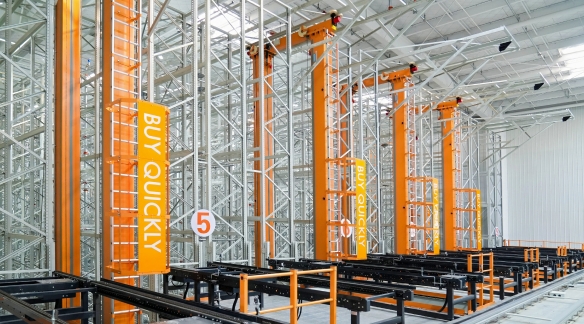
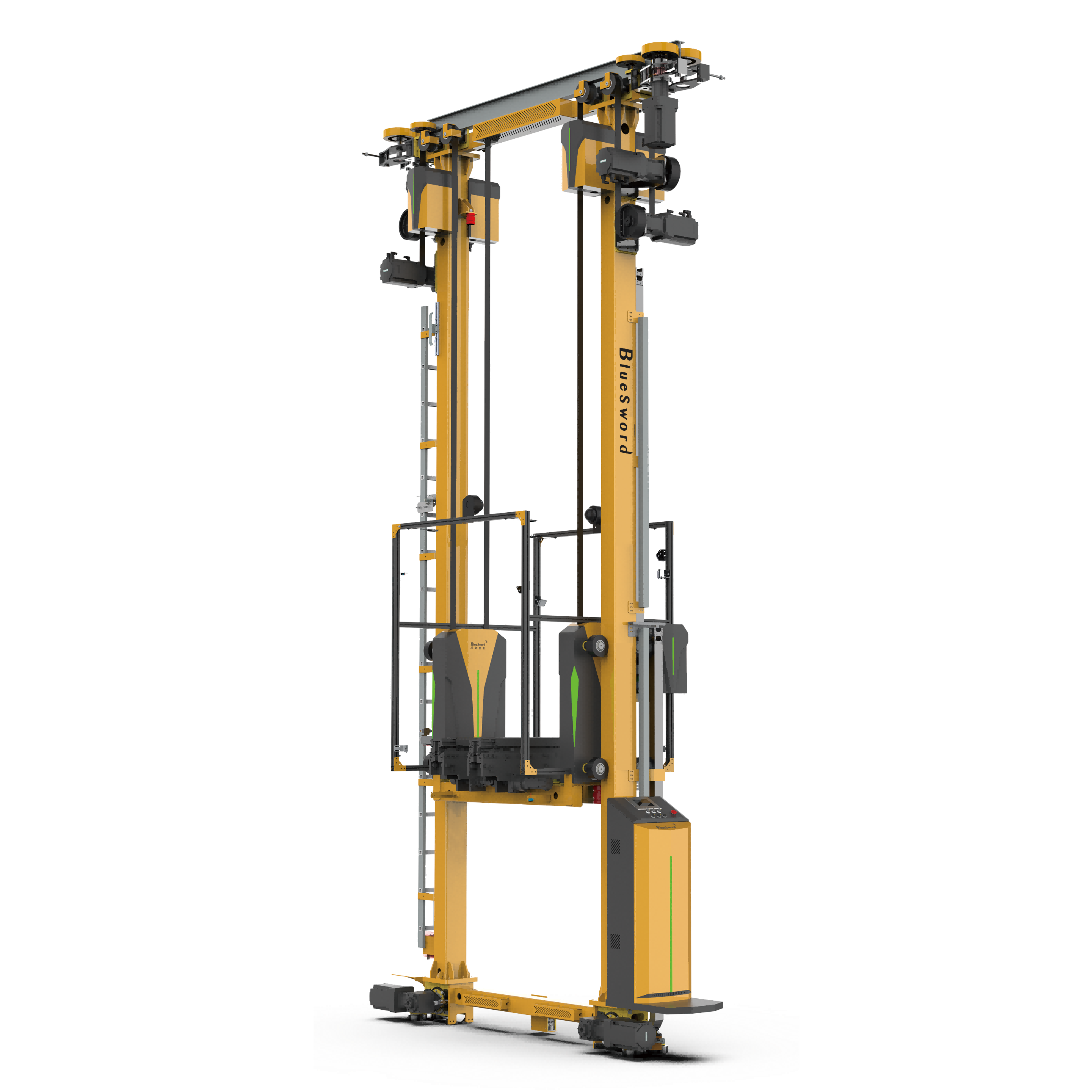
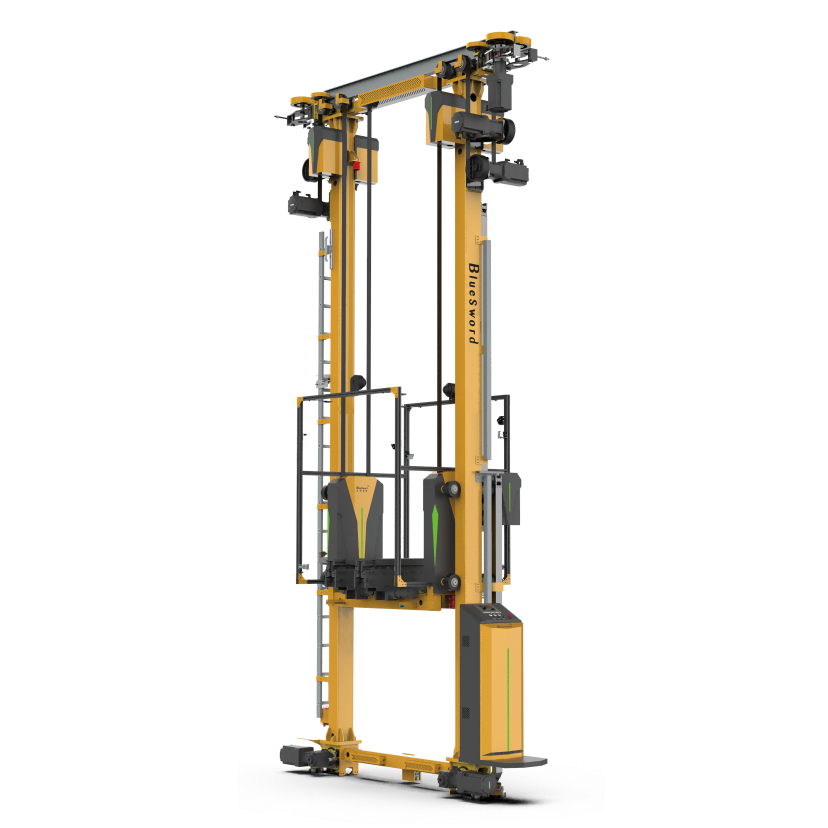
BlueSword offers a versatile range of stacker crane configurations designed to meet diverse architectural and operational requirements. The Jaguar Full-Servo Stacker Crane, engineered with advanced full-servo drive technology, focuses on superior precision, high acceleration, and exceptional energy efficiency, making it the ideal choice for high-performance warehouse applications. For projects prioritizing maximum vertical capacity, the UnitLoad-Summit Stacker Crane is specifically designed for ultra-high-bay automated storage systems, capable of reaching lifting heights of up to 45 meters. Beyond these base models, our systems are highly customizable; we provide a wide array of configurations—including single-mast or double-mast structures, single or multi-deep storage, and single or multi-load handling positions—to ensure a perfect fit for any specific logistical or manufacturing environment.
Load capacity is another critical consideration. Different industries handle different pallet weights, requiring customized crane configurations. BlueSword’s pallet stacker crane supports loads up to31,000 kg, allowing it to adapt to multiple logistics and manufacturing environments.
Many businesses also require specialized environmental protection during system design. A professional stacker crane manufacturer must consider conditions such as low temperatures, humidity, corrosion exposure, or hazardous materials when selecting structural materials and control systems.
Movement Performance and Operational Efficiency
The operational speed of a pallet stacker crane significantly affects warehouse throughput and fulfillment efficiency. Crane travel speed, acceleration, lifting performance, and fork operation must all align with warehouse processing demands.
The Jaguar Full-Servo Stacker Crane operates with horizontal speeds of 120–160 m/min and vertical speeds of 30 m/min. These movement capabilities help improve pallet handling efficiency in high-volume warehouse operations.
However, performance design is not only about speed. Excessive acceleration may increase equipment wear or affect operational stability. For this reason, stacker crane manufacturer teams must balance movement efficiency with long-term mechanical reliability.
BlueSword integrates full-servo control technology to improve movement precision and reduce positioning errors during storage and retrieval operations. Stable movement control is particularly important in automated warehouses handling continuous pallet flow and high-frequency inventory movement.
Energy efficiency is also becoming a larger consideration in crane system planning. BlueSword uses regenerative energy conversion and shared DC bus technology to reduce operational energy consumption, helping businesses improve long-term operating cost control.
Software Integration and Maintenance Planning
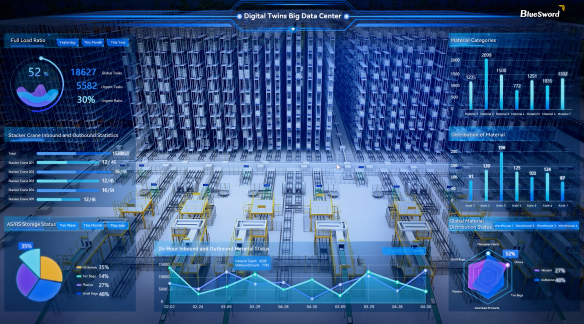
Modern crane systems rely heavily on software coordination and real-time monitoring. Warehouse control systems, inventory management software, and equipment diagnostics all contribute to efficient crane operation.
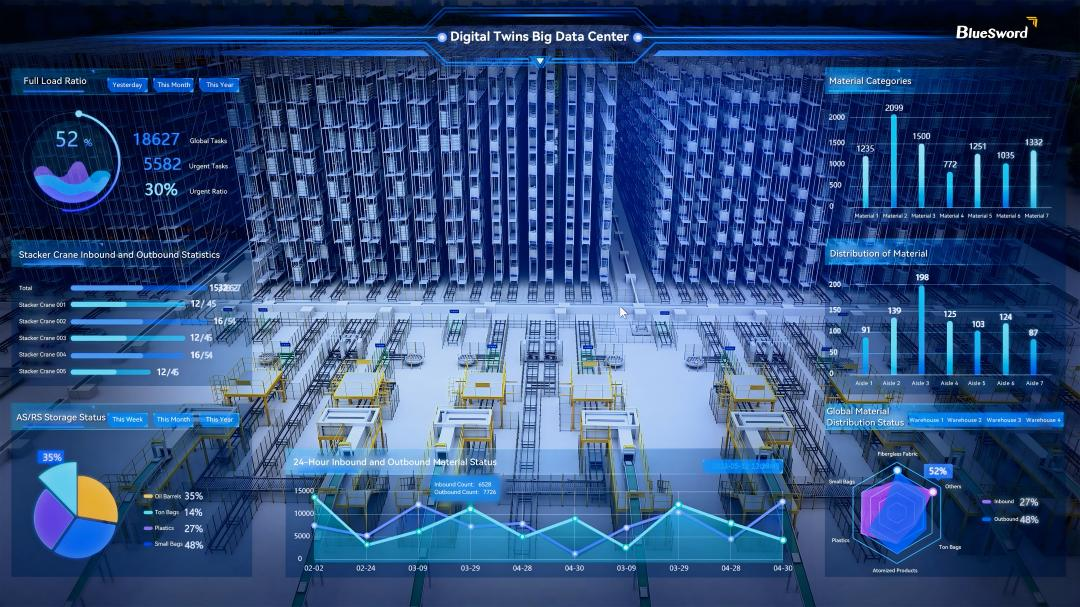
BlueSword integrates IoT-powered monitoring and AI-based stocktaking into its pallet stacker crane systems. Real-time operational monitoring allows warehouse managers to track equipment status, inventory movement, and system performance more accurately.
Many businesses now prioritize predictive maintenance when selecting a stacker crane manufacturer. Equipment downtime can disrupt warehouse operations and increase labor costs. Predictive maintenance systems help identify potential mechanical issues before failures occur, improving operational continuity and extending equipment service life.
Software integration also affects warehouse flexibility. Crane systems must communicate effectively with warehouse management systems and other automation equipment to support synchronized inventory movement and order fulfillment.
BlueSword’s Approach to Intelligent Crane System Design
The design of a pallet stacker crane depends on multiple operational and technical factors, including warehouse structure, movement efficiency, software coordination, and maintenance strategy. Businesses increasingly seek stacker crane manufacturer partners that can provide adaptable and data-driven automation solutions for complex logistics environments.