







UPDATES

Fast-moving consumer goods supply chains operate under constant pressure from high order frequency, short product life cycles, and fluctuating demand patterns. As a result, operational efficiency and adaptability have become critical for maintaining service levels across the distribution network. In this context, many companies are evaluating whether FMCG logistics automation can be tailored to specific operational requirements rather than applied as a fixed standard solution.
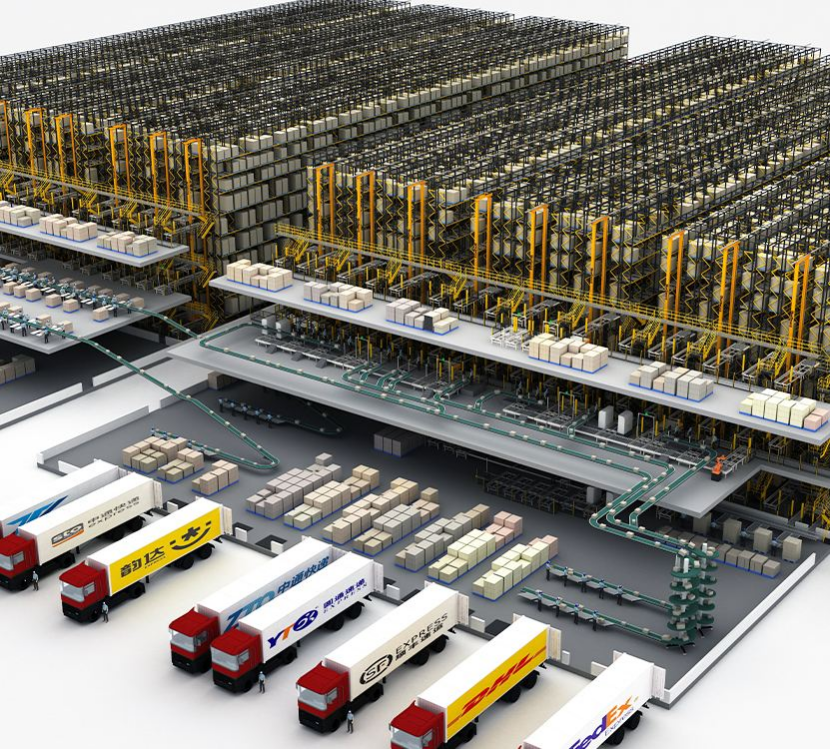
Operational Diversity Requires Flexible System Design
FMCG warehouses typically handle a wide range of products, from packaged food and beverages to household and personal care items. Each category has different storage conditions, turnover rates, and picking strategies, making uniform automation difficult to apply effectively.
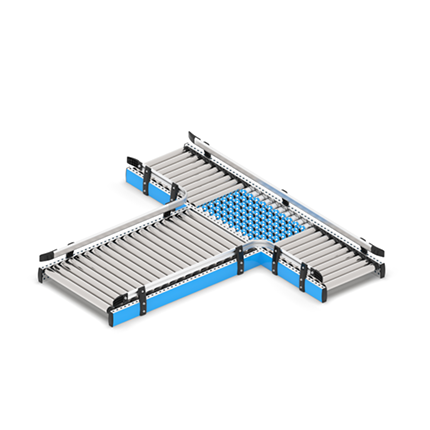
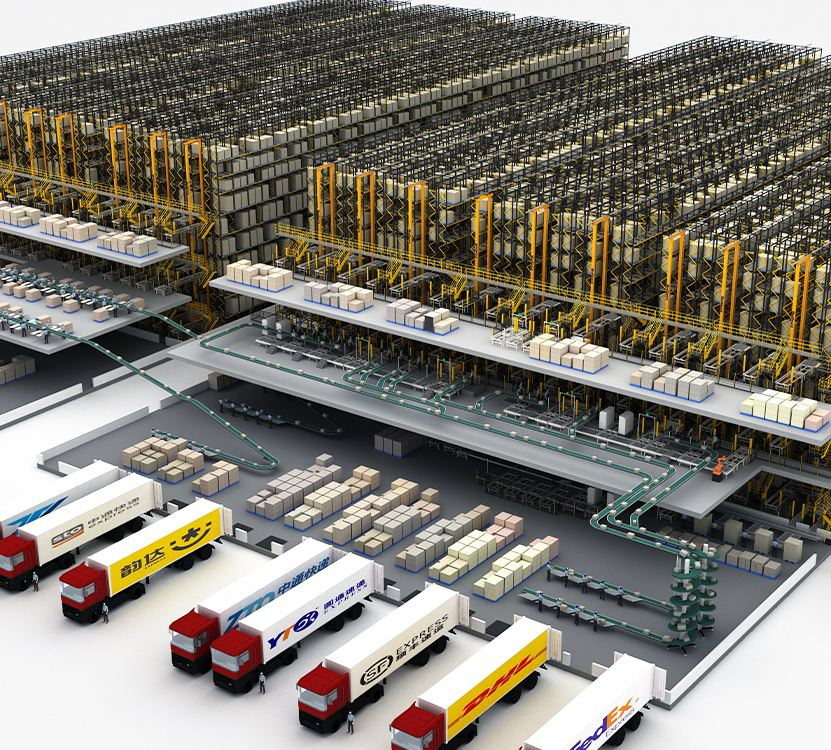
To address this complexity, FMCG logistics automation systems are now designed with customization in mind. Layout design, storage density, and picking methods can be adjusted according to SKU velocity and order structure. For FMCG logistics companies, this flexibility is essential for balancing fast-moving high-volume products with slower-moving inventory.
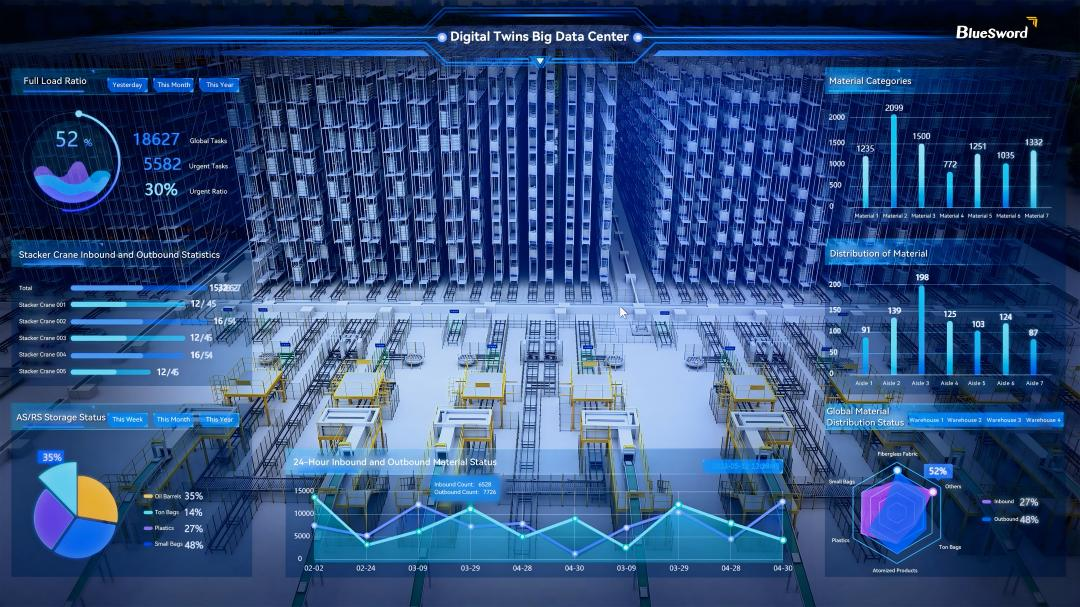
BlueSword develops solutions that allow warehouse operators to configure systems based on operational priorities. Instead of forcing a single workflow model, automation can be adapted to support mixed SKU environments, helping ensure smoother integration into existing logistics processes.
High-Speed Handling and Intelligent Control Systems
One of the most important aspects of FMCG logistics is speed. Order cycles are short, and replenishment must be completed quickly to avoid stockouts. Modern FMCG logistics automation systems rely heavily on intelligent motion control and high-performance equipment to maintain operational continuity.
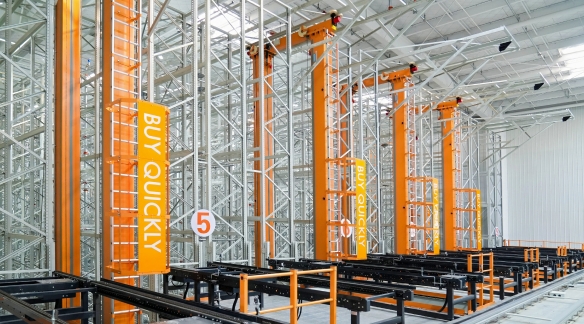
Advanced stacker crane systems equipped with S-curve control technology demonstrate how customization extends beyond layout into motion behavior. These systems can reach operating speeds of up to 240 m/min while maintaining stable acceleration and deceleration patterns. This ensures fast order picking without compromising handling accuracy or system stability.
For FMCG logistics companies, such capabilities are particularly valuable in high-volume distribution centers where peak demand periods require sustained throughput. BlueSword integrates intelligent control logic into its automation systems to ensure that speed and stability can be adjusted according to operational needs rather than fixed performance limits.
Storage Optimization and Process Simplification
Another area where customization plays a key role is storage strategy. FMCG warehouses must maximize space utilization while ensuring fast access to high-turnover goods. Traditional fixed storage models often limit operational efficiency when product ranges expand or shift frequently.
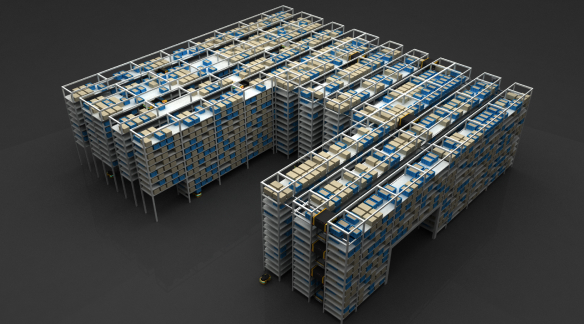
Modern FMCG logistics automation solutions support more flexible storage configurations, including non-wrapping storage models that streamline handling processes. By eliminating unnecessary packaging constraints, these systems help reduce handling steps and improve retrieval efficiency.
For FMCG logistics companies, this approach enables better alignment between storage design and real-time demand patterns. BlueSword emphasizes storage efficiency through system designs that support dynamic adjustment of rack structures and automated retrieval logic, allowing warehouses to respond quickly to changing product flows.
Building Adaptive FMCG Logistics Systems
Customization has become a defining requirement in FMCG logistics automation. As supply chains grow more complex, standardized systems are no longer sufficient to meet the operational demands of fast-moving consumer markets.
Through adaptable system architecture, intelligent control technologies, and optimized storage strategies, BlueSword supports the evolving needs of FMCG logistics companies. By enabling configurable FMCG logistics automation, modern warehouses can achieve higher efficiency, better responsiveness, and improved long-term scalability in increasingly competitive distribution environments.