












UPDATES

In China, the weeks leading up to Chinese New Year represent one of the most concentrated fulfillment periods of the year. Holiday shopping compresses demand into a narrow window, while at the same time frontline warehouse workers, line-haul drivers, and last-mile couriers begin returning home. Order volumes increase sharply, but workforce stability declines. This creates operational pressure across warehousing and distribution networks, requiring structural solutions rather than short-term adjustments.
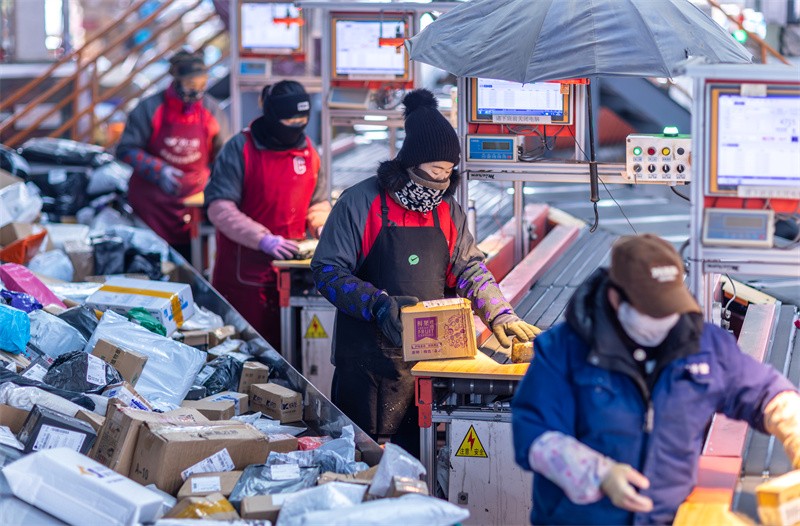
Image source:New Gansu - Gansu Economic Daily. Photo by correspondent Yang Xiao
Chinese New Year demand is highly concentrated
Chinese New Year shopping brings multiple product categories into the same release period, including gift boxes, snacks, alcohol, fresh food, ready-to-cook meals, and household goods. Orders tend to include multiple SKUs, small quantities per line, and strict delivery deadlines. The challenge lies not in total annual volume, but in the intensity of throughput within a limited timeframe.
Data from China’s State Post Bureau shows that during the 2025 Chinese New Year period, 8.65 billion parcels were delivered, representing a 35% year-on-year increase. In the week before Chinese New Year 2026, parcel volume reached 4.686 billion, averaging nearly 670 million parcels per day. At the macro level, total express parcel volume in 2024 reached 174.5 billion, up approximately 21% year-on-year. As the overall base continues to grow, peak-season pressure increases proportionally. The Chinese New Year surge is a recurring, predictable event occurring at an expanding scale.
Workforce stability decreases during the same period
Warehouse operations rely on experienced operators for picking accuracy, exception handling, packing standards, and dock coordination. In the period leading up to Chinese New Year, experienced workers often leave earlier than usual, team structures become fragmented, and shift flexibility decreases. Temporary labor can fill numerical gaps, but skill levels and coordination efficiency do not immediately match those of established teams.
Research from MIT’s supply chain programs highlights that Chinese New Year combines large-scale population movement with logistics congestion, creating widespread labor and transportation constraints. For warehouses, this means operational stability may be affected internally and across upstream and downstream networks at the same time.
Labor expansion alone cannot ensure operational stability
Increasing overtime or hiring temporary workers can raise short-term output, but operational consistency becomes more difficult to maintain. Lower experience levels impact picking and verification accuracy, packing flow, and dock coordination. The delivery window before Chinese New Year is limited, reducing the opportunity to correct errors. Maintaining stable throughput and accuracy therefore becomes more important than simply increasing headcount.
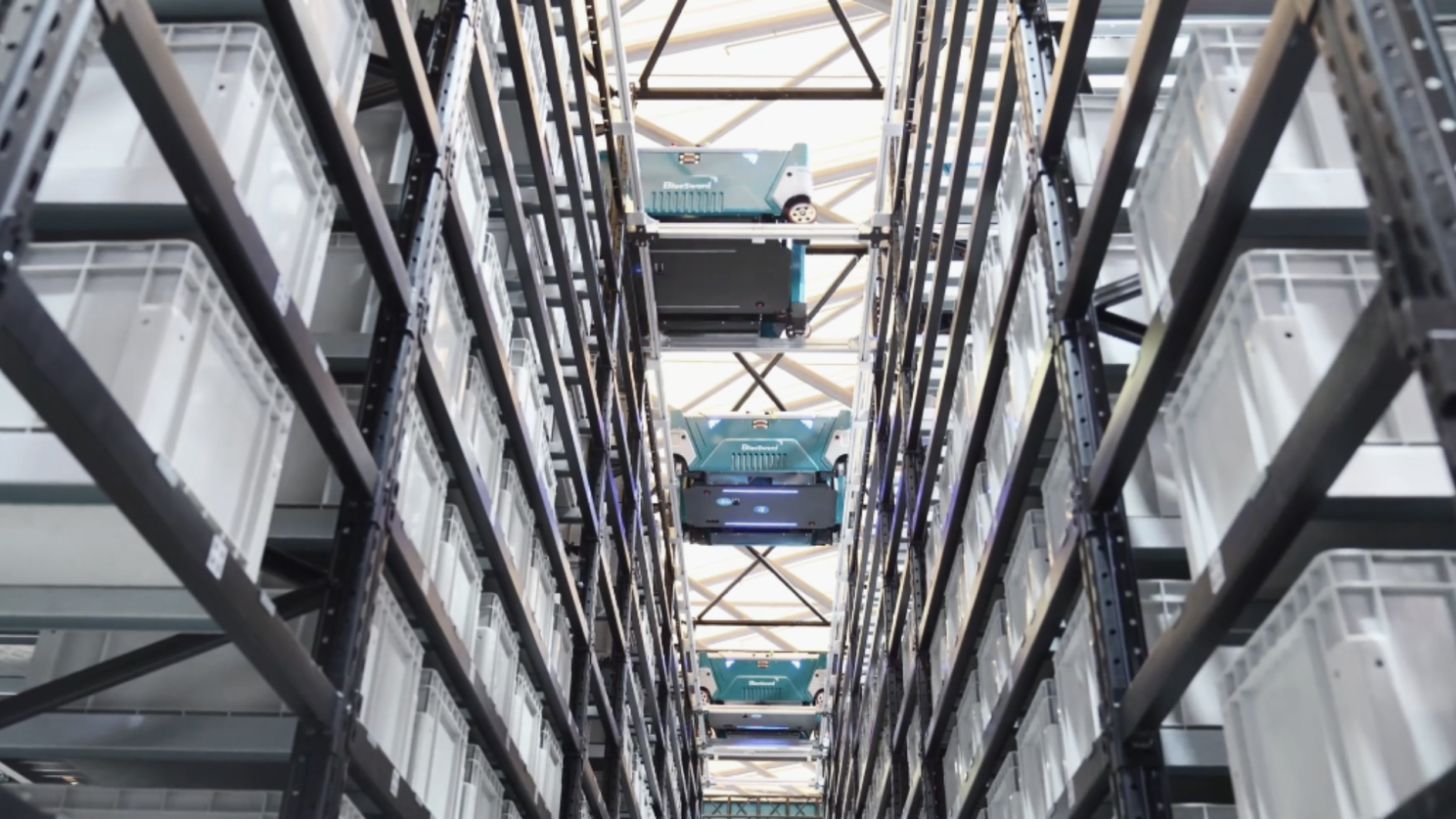
Spider Sky-Shuttle Case-Handling Robot - Automation That Fits Any Warehouse
Automation supports structural stability in fulfillment operations
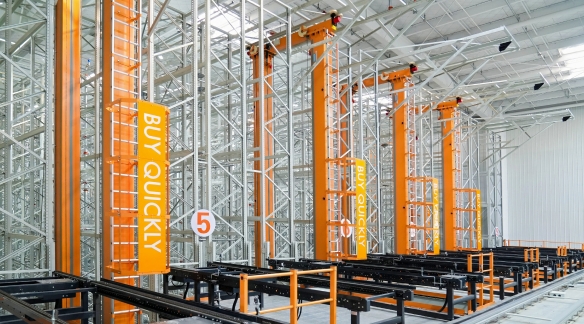
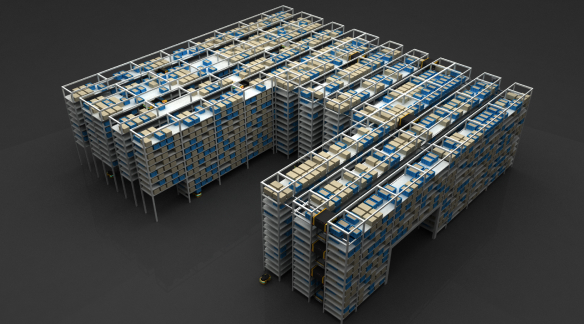
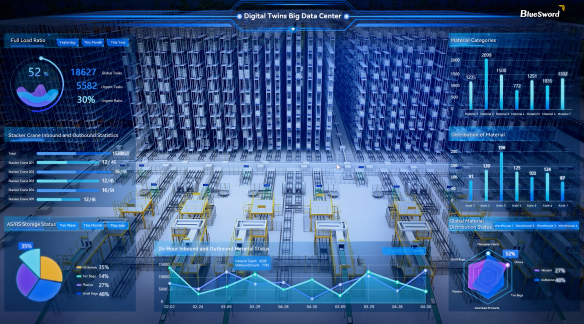
Automation provides a structured approach to maintaining throughput stability during concentrated demand periods. High-density storage systems, standardized goods-to-person picking, and automated sortation help transform variable manual output into predictable system performance. Modular system architecture and intelligent orchestration enable capacity adjustments based on engineered scalability rather than recruitment speed. Automated scanning and data-driven verification maintain consistent accuracy levels across varying workforce conditions. Automation in this context supports rhythm control, workload balancing, and predictable output across peak periods.
Typical Chinese New Year scenarios and automation deployment approaches
The Chinese New Year season includes multiple operational models. Each scenario requires a tailored automation strategy.
Scenario 1: Comprehensive e-commerce warehouses with increased gift-box and multi-SKU orders. These warehouses manage high SKU density combined with complex order composition. Large gift boxes and mixed-item orders extend picking paths and increase wave coordination complexity. A suitable approach involves high-density bin-based automated storage such as multi-level tote shuttle systems or compact AS/RS structures with dynamic slotting strategies to position high-velocity Chinese New Year SKUs closer to dispatch zones. At the picking stage, goods-to-person systems or mobile-robot-assisted workstations reduce operator travel distance and standardize task execution. Downstream automated sortation supports carrier and route separation. This structure stabilizes picking and dispatch performance in multi-SKU environments.
Scenario 2: Food, fresh, and ready-meal operations with strict time and batch requirements. In these environments, timing and traceability are critical. High-density automated storage combined with FIFO logic ensures batch accuracy. Automated material handling systems, including conveyors, vertical lifts, and outbound buffer zones, reduce internal transfer time and support steady dispatch flow. Integrated scanning and traceability systems embed compliance into daily operations. Automation deployment focuses on reducing dwell time and strengthening batch management during compressed release windows.
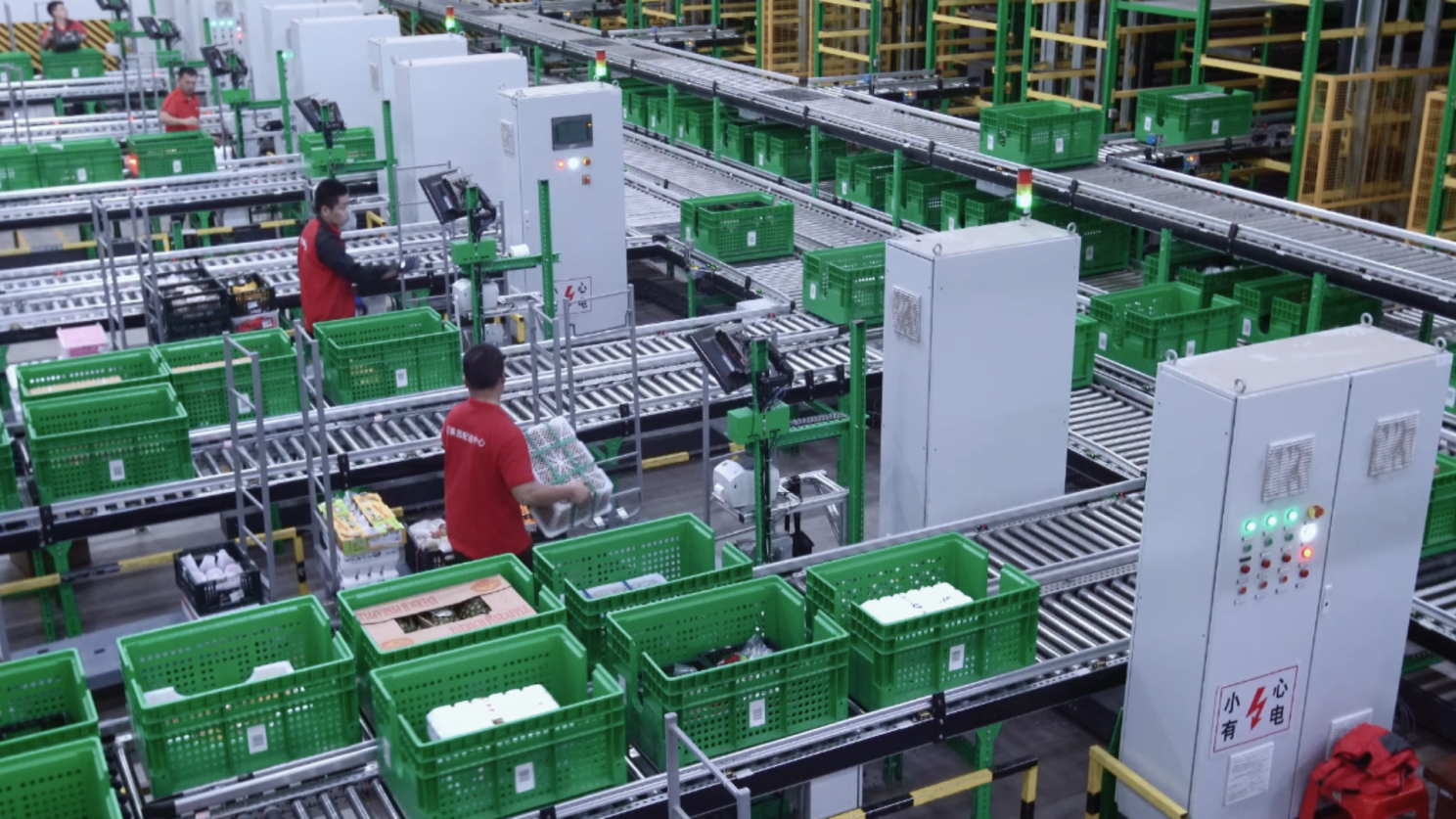
BlueSword Project - Fresh Food Logistics - Pagoda
Transforming Fresh Food Logistics With Proven Shuttle Solution
Scenario 3: Livestream and short-video commerce with high order volatility. Livestream campaigns generate sharp demand spikes within short periods. Warehouses must respond quickly without relying solely on emergency labor expansion. Fast-access automated storage for high-velocity SKUs, combined with flexible mobile robot fleets or modular picking cells, increases parallel processing capacity. High-speed sortation systems with buffer staging areas allow staged order release to prevent congestion. Automation deployment in this scenario emphasizes scalability and dynamic workload distribution.
Proven Automation Expertise
Chinese New Year represents a concentrated operational period for China’s e-commerce logistics sector. Parcel volumes continue to expand, while workforce stability declines during the same timeframe. Maintaining fulfillment reliability requires structured capacity planning and system-level automation. By implementing scalable storage, standardized picking, automated material handling, and data-driven verification, warehouses can sustain stable performance throughout the peak period.
Operating in a market of this scale and complexity requires more than technology alone. Years of experience in high-volume e-commerce environments have built a deep understanding of peak-season dynamics, regional infrastructure differences, and operational variability across industries. With an experienced engineering and project team dedicated to requirement analysis, scenario evaluation, and realistic capacity modeling, tailored solutions can be developed that reflect local market characteristics and withstand real peak-season pressure.
Read More
-

 June 29 / 2026Inside the Electronics Factory: What Changed in Material Handling This YearREAD MORE
-
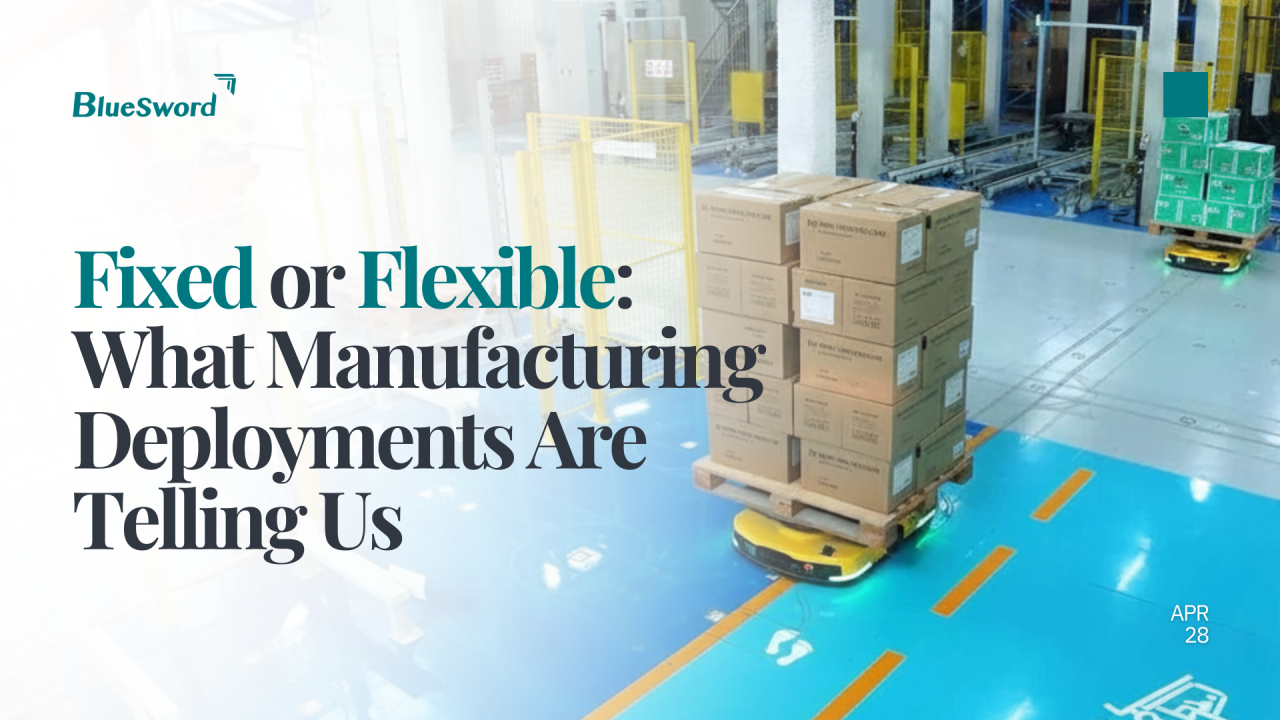 April 28 / 2026Fixed or Flexible: What Manufacturing Deployments Are Telling Us
Fixed infrastructure once defined manufacturing efficiency. But as production cycles shorten and flexibility becomes critical, mobile automation is changing how factories think about material flow.
READ MORE
-
 March 27 / 2026The Part of Your Warehouse Nobody Wants to Talk About
The warehouse's biggest bottleneck may not be where you think. BlueSword looks at why the dock is becoming the next frontier of automation.
READ MORE
-
 January 28 / 20262026 Manufacturing Upgrade and Industry Trends
As manufacturers plan toward 2026, automation, smart manufacturing, and integrated material flow are becoming central to capacity and resilience. This article explores industry trends, labor constraints, and how integrated warehouse and production automation help reduce internal logistics losses and support phased manufacturing upgrades.
READ MORE
-
 September 24 / 2025Why Automated Warehousing Matters
Global supply chains face constant disruption. Automation is redefining warehouses as resilient hubs that keep goods moving no matter the challenge.
READ MORE
-
 August 27 / 2025How Automation Changes the Nature of Frontline Work: Confidence, Retention, and Workforce Value
Automation is no longer just about efficiency—it’s transforming warehouses and factories into safer, smarter, and more rewarding places to work.
READ MORE
-
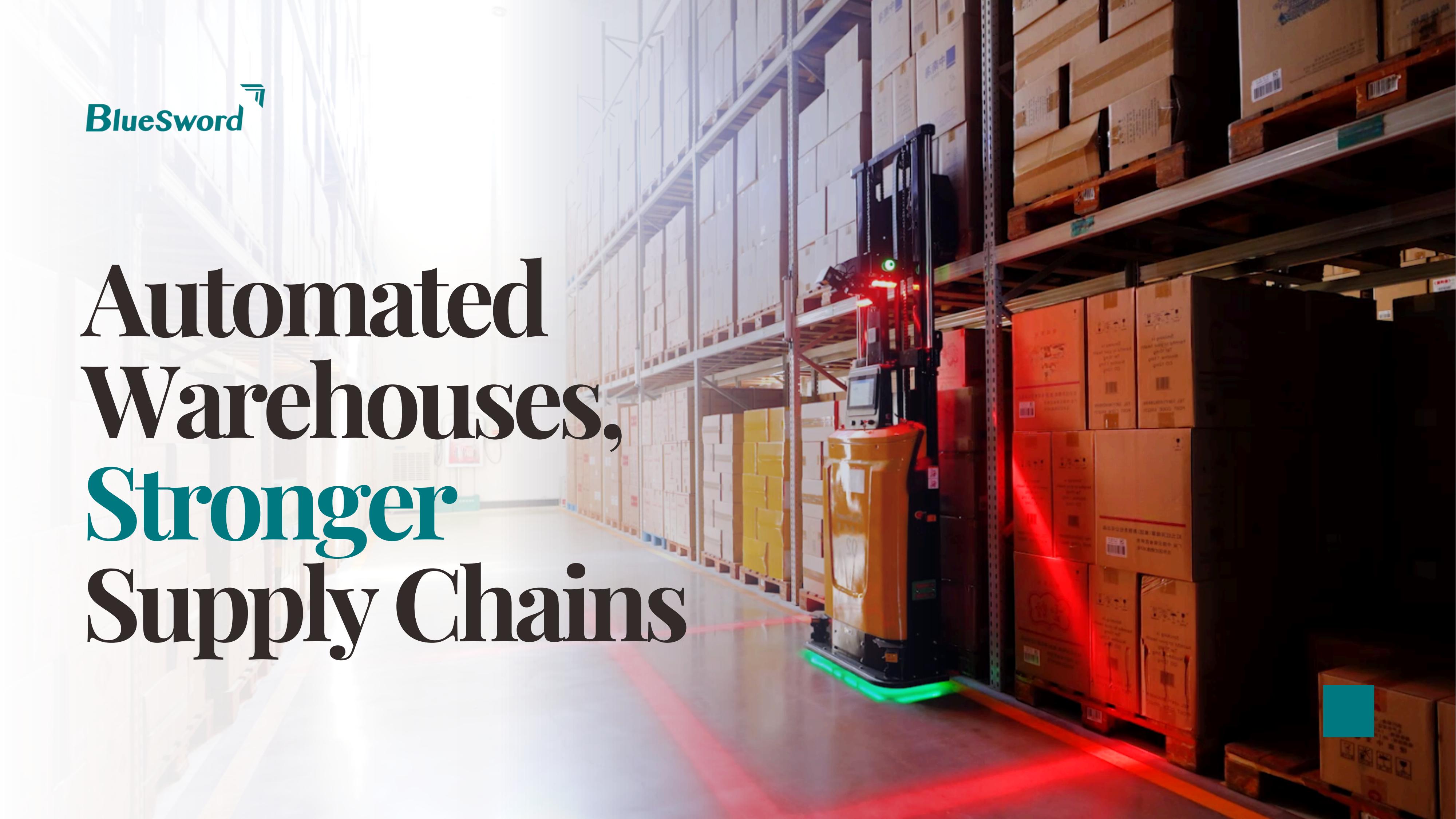 August 19 / 2025Automation in Logistics: Solving Workforce Challenges with Smart Systems
Discover smart logistics solutions with AMRs, shuttle systems, and automated warehouses. Future-proof your supply chain with intelligent intralogistics systems.
READ MORE
-
 July 25 / 2025Robotics Driving Real Safety Transformation in Factories and Warehouses
Safety in factories and warehouses is often discussed in terms of compliance and injury rates. But true safety goes beyond meeting standards. It requires addressing the root causes of risks and understanding how automation reshapes the daily reality for frontline workers—physically and mentally.
READ MORE
-
 May 25 / 2025Are Warehouse Robots Here to Replace Workers—Or to Back Them Where It Counts?
Automation is advancing fast—but where does that leave the people on the ground? This article explores why the future of warehousing isn't a story of replacement, but one of smart collaboration. With real-world cases from BlueSword and global data, we dive into what human-machine partnerships really look like on the warehouse floor.
READ MORE
-
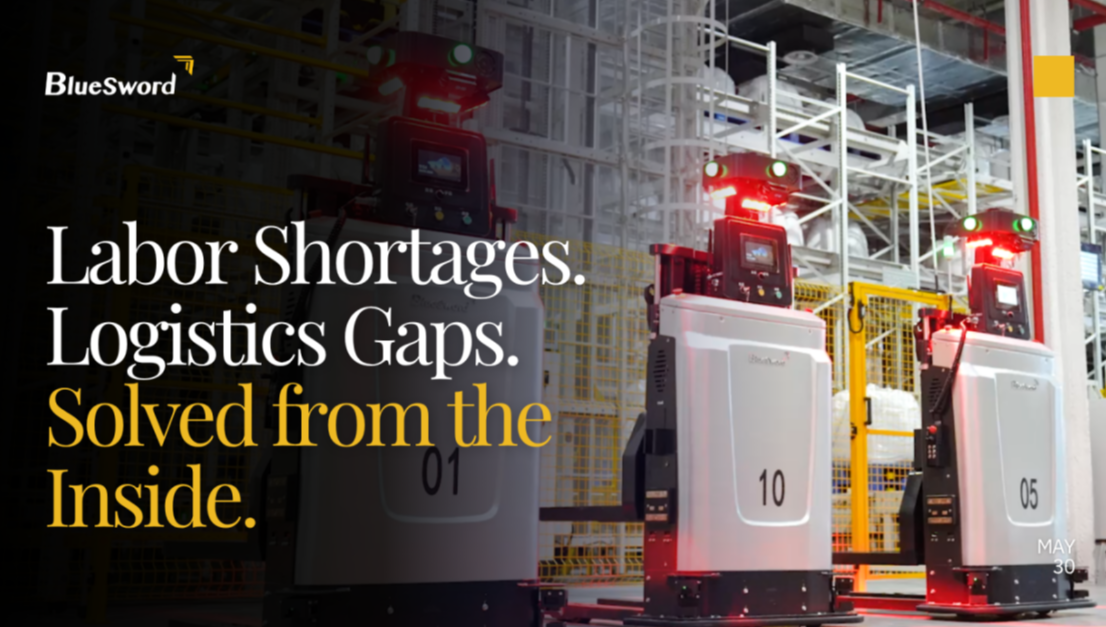 March 30 / 2025What’s Slowing Down Manufacturing—and What Leading Factories Are Doing About It
While automation continues to gain attention across the production line, internal logistics often remains untouched in traditional manufacturing plants.
READ MORE
-
 January 2 / 2025Building a Green Logistics Ecosystem with Servo Technology
The conveyor system is essential in modern production and logistics, facilitating the efficient storage, sorting, handling, and distribution of materials. By automating transport processes, it enhances efficiency, accuracy, and safety while effectively reducing labor costs.
READ MORE
-
 September 29 / 2024Logistics Transformation: Navigating Challenges in the FMCG Industry
Fast-moving consumer goods (FMCG) are an essential part of our everyday lives. With their large market size and ongoing growth, the FMCG industry plays an important role in the global economy.
READ MORE


