










UPDATES

What Really Happens Inside the Warehouse When Promotions Hit
From Black Friday and Cyber Monday to Christmas, Boxing Day, Singles Day and Lunar New Year sales, peak season has become a connected global event. Order volumes jump to two to five times the normal level in many ecommerce and retail operations, and a small forecasting error in one node can quickly turn into stockouts, missed carrier cutoffs or penalty fees across the network.
On the surface, the story is familiar. Marketing launches campaigns, traffic spikes, carts fill and customers expect next day or even same day delivery at promotional prices. Inside the warehouse, the reality is different. Inventory is in the wrong place, labour is stretched, aisles are congested and returns are already starting to build up before the last promotion ends.
This article looks at peak season from the warehouse floor. It outlines five structural problems that appear every year, explains how common automation technologies respond to them, and then connects this to a more data driven way of preparing before the peak and reviewing after it.

Ⅰ- Five structural challenges inside a peak season warehouse
1. Volatile demand and poor inventory positioning.
As soon as promotions start, demand becomes more erratic. A small change in price or a social media mention can push one SKU from normal volume to “hero” status in a single day. If the warehouse relies on static slotting rules or manual judgement, fast movers end up buried in the wrong zone while slow movers sit in prime locations.
This leads to longer travel paths, more touches and extra safety stock scattered across multiple locations. When storage space is already tight from pre peak stock build up, the cost of wrong positioning is amplified. Many warehouses report that the pressure to maximise every square metre of storage is highest exactly when they have the least time to re organise it.
2. Labour limits during promotions
Peak season arrives in a labour market that is already constrained. In recent surveys, more than three quarters of warehouses cite labour availability as a major challenge, with wage pressure and training time eroding margins.
Traditional responses include extended overtime, temporary staff and cross training, yet these measures have clear limits. Overtime raises fatigue and error rates, temporary workers take time to reach acceptable productivity and supervisors are pulled away from continuous improvement into firefighting.
During major events such as Black Friday and Christmas, these human limits collide with exponential order growth. Manual picker to goods models struggle to keep up, leading to late waves, missed cutoffs and order backlogs that carry into the next day.
3. Congestion, bottlenecks and unsafe traffic patterns
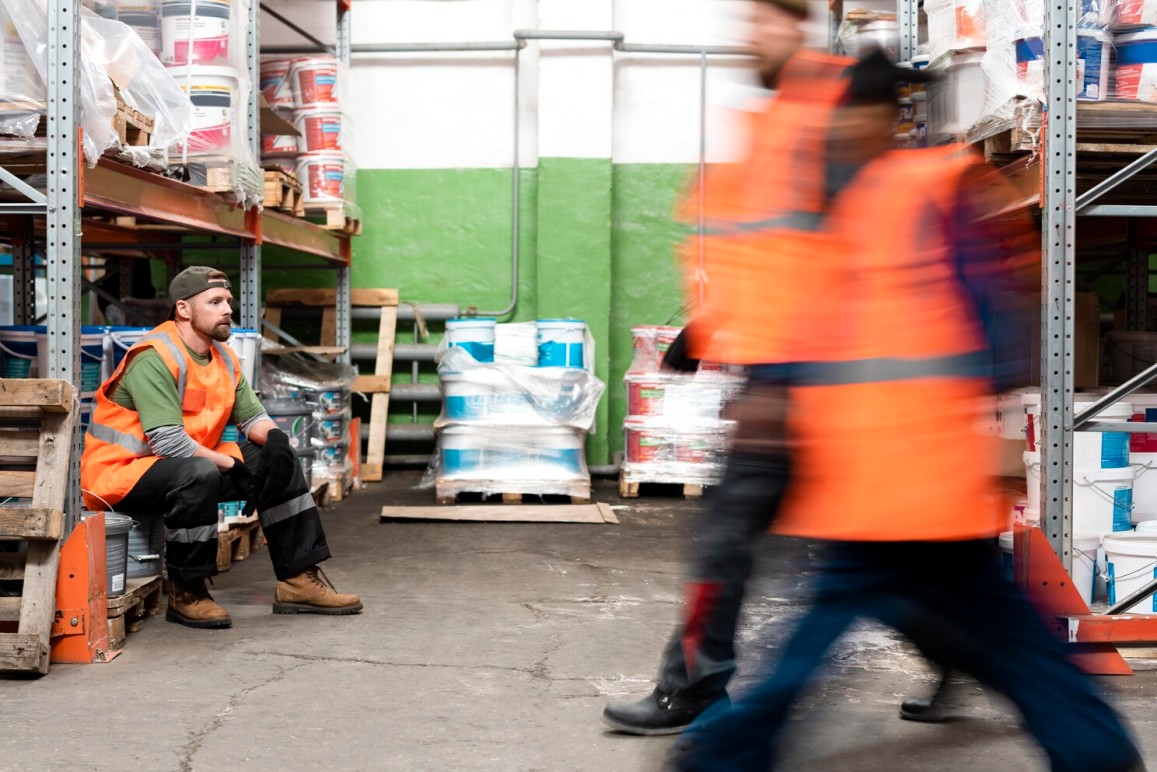
When volumes spike, the warehouse often experiences a physical traffic problem. More people and more equipment are trying to move through the same aisles and staging areas. Replenishment pallets compete with outbound trolleys, and cross dock flows fight for the same dock doors as parcel carriers.
Layout weaknesses that seem acceptable in April become critical in November. Narrow main aisles, poorly placed fast movers, single point induction or discharge stations and lack of dedicated returns lanes all combine into congestion. Once queues form at key nodes such as packing or sortation, the whole system starts to pulse rather than flow.
4. Order complexity and error risk
Peak season rarely brings only more orders. It also brings more complex baskets and stricter service promises. Multi line ecommerce orders, mixed temperature profiles, click and collect flows and marketplace fulfilment all have to run in parallel.
Under time pressure, manual check steps are cut. Workers rush scanning or skip double checks. The result is mis picks, wrong quantities or missed items that only show up later as customer complaints or returns. The cost is not limited to replacement and freight. Each error injects additional turbulence into already stressed inventory and transport plans.
5. Return waves and reverse logistics
The last and often most underestimated challenge is the reverse flow. Post holiday periods are now associated with a sharp rise in returns, particularly in fashion, electronics and gift driven categories. In some operations, returns volumes have increased by nearly 95 percent over the past few years.
If reverse processes sit inside the same footprint and labour pool as outbound, they become a direct competitor for space and attention. Items wait in cages for inspection, grading and re stocking. Without a clear strategy, returns quickly erode the gains made during the main promotional period.

Ⅱ - How mainstream automation responds
1. Shuttle-Based Automated Storage and Retrieval Systems
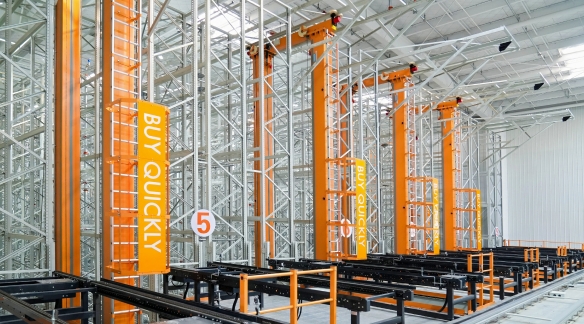
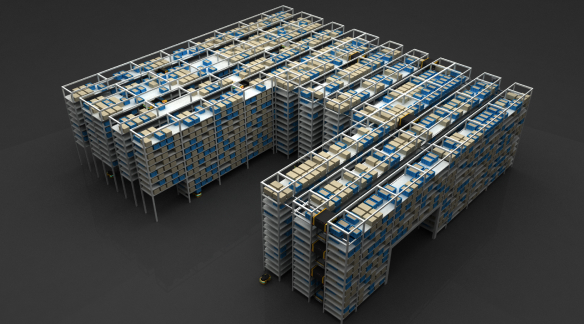
Across the industry, shuttle ASRS remains one of the most reliable ways to stabilise storage density and retrieval throughput during peak-season volatility. These systems reduce the penalty of mis-slotting, maintain access to fast-moving SKUs as demand fluctuates, and keep upstream replenishment steady even when order structures shift every hour. They support dynamic reallocation of inventory, buffer creation ahead of promotional waves, and controlled sequencing of cases and totes into downstream areas.
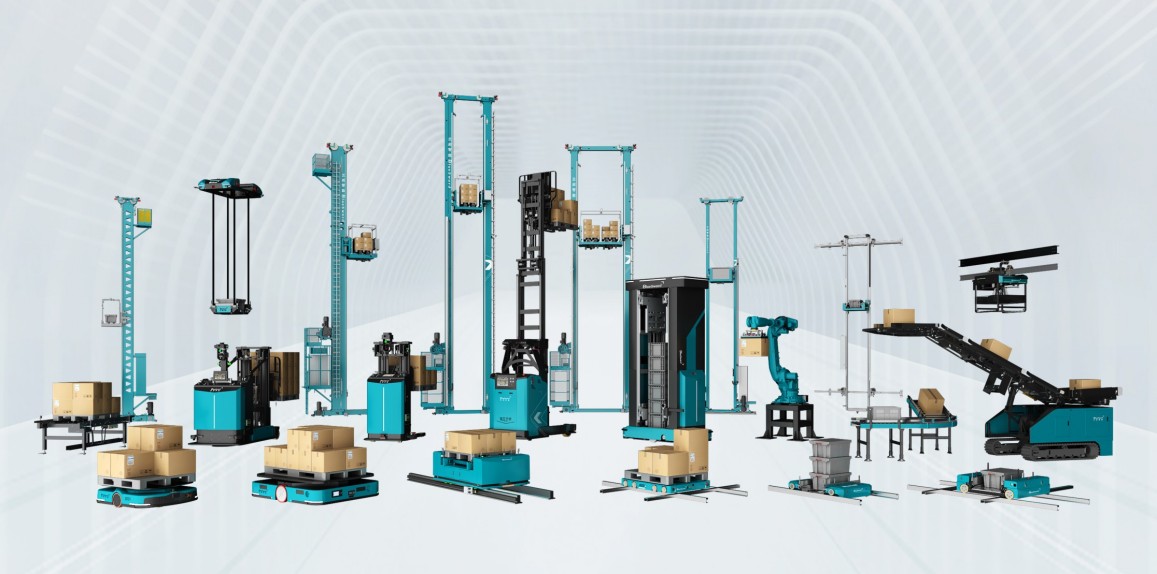
BlueSword fits naturally inside this category with its multi-level shuttle systems for totes and pallet shuttles designed for dense pallet storage. The Spider Sky-Shuttle extends this by lifting and carrying totes through narrow, high-bay grids and reaching any level or aisle as required. It then transfers them into conveyors, AMRs or manual induction points, keeping a stable flow of inventory into downstream picking and packing even when peak-season demand shifts quickly.
2. Goods-to-Person Workstations and Pick-Assist AMRs
GTP systems and pick-assist AMRs are widely deployed to reduce worker travel distance, stabilise lines-per-hour, and absorb productivity fluctuations from temporary staff. They guide workers through complex multi-line orders, support fragmented order profiles common in peak periods, and keep picking pace predictable even when staffing levels vary daily. AMRs help rebalance traffic inside aisles, avoid congestion, and move totes or cartons between zones with fewer manual touches.
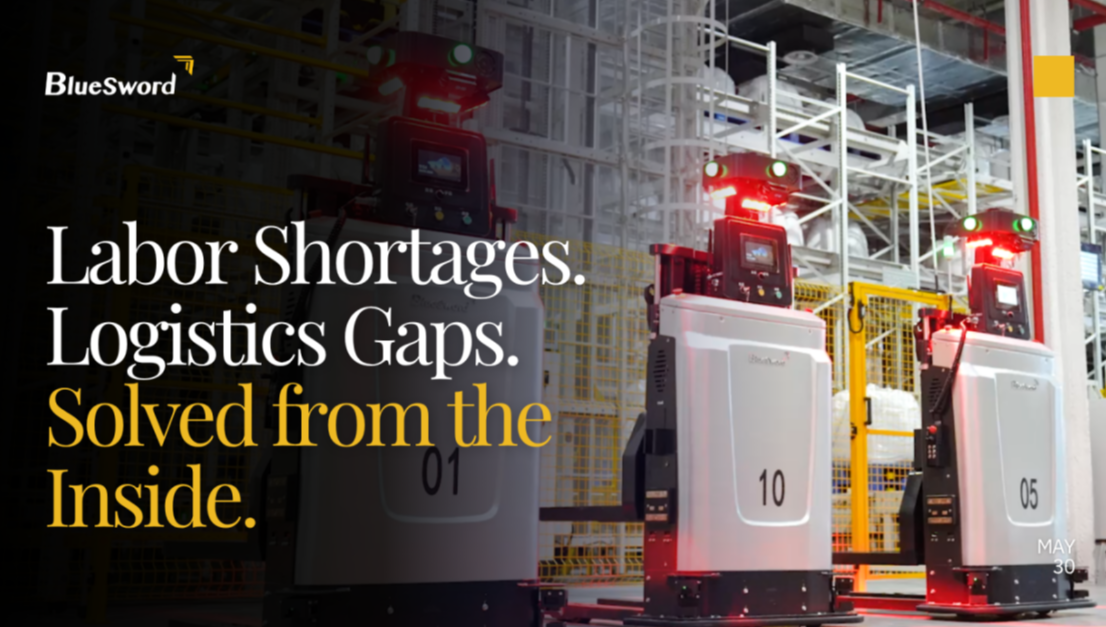
In BlueSword projects these roles are carried out by its AMR portfolio, which uses multi-technology navigation and real time mapping to autonomously move pallets, racks and totes between receiving, storage and picking, integrating with the wider system to keep aisle traffic controlled and maintain a stable flow into GTP and packing stations during peak season.
3.Orchestration software and digital twins
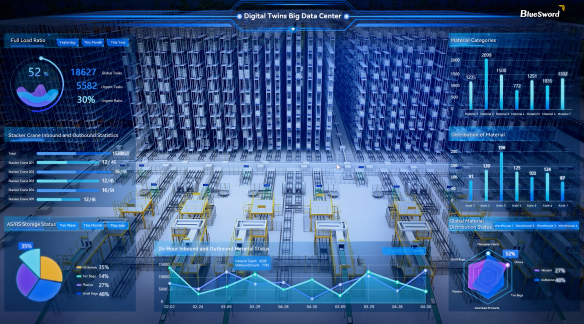
Hardware adds capacity, but software determines whether that capacity is available when it is needed. Modern WMS and WES platforms use simulation engines and digital twins to test scenarios before the first peak order arrives. Engineers can rerun historical peak data to see where queues formed, test different labour mixes and shift patterns, and evaluate new promotion or SKU strategies without disrupting live operations. This turns peak season from a one-off event into an iterative design task.
BlueSword’s IMHS and VirtuSync Digital Twins support the same process by providing 3D modelling, flow simulation and real-time system monitoring, allowing teams to validate layouts and resource plans in advance and keep warehouse performance stable during peak demand.
4.Sortation, packing automation and returns handling
Unit sorters, cross belt systems, print-and-apply labelling and semi-automated packing lines reduce repetitive manual work and keep induction, consolidation and dispatch running at a steady pace during peak demand. They also create structured lanes for returns, ensuring items are scanned, graded and routed back into inventory without disrupting outbound flow.
In BlueSword setups these functions connect with its picking and packing solutions, which provide ergonomic stations and automated sealing, and with its conveyor systems that move totes and cartons through induction, sorting and packing with controlled, consistent flow. This keeps both outbound and return operations stable when volumes surge.
Ⅲ - Turning peak season into a design problem
Peak season always puts pressure on warehouse operations. Promotions bring a sudden rise in order volume, more mixed baskets and higher service expectations. The dates stay the same every year, and the real difference comes from how early and how clearly each warehouse prepares for this period.
Teams that handle peak more comfortably treat it as part of their yearly design work. They plan for swings in demand, tight labour capacity and heavier return flows, and they rely on data and automation to keep the operation steady when volumes climb.
BlueSword supports this approach with shuttle-based storage, case-handling systems and coordinated control software. These tools help warehouses keep flow stable during busy seasons and use each promotion to refine layout, logic and capacity planning for the next cycle.
If this view aligns with your own planning, feel free to share it with your team. It can open a conversation about what already works well in your warehouse and which areas could benefit from stronger automation or updated processes before the next peak arrives.
You can also catch more videos and demos on our YouTube channel.
If you prefer to reach out directly, drop us a line at: sales@bluesword.com
Read More
-

 June 29 / 2026Inside the Electronics Factory: What Changed in Material Handling This YearREAD MORE
-
 April 28 / 2026Fixed or Flexible: What Manufacturing Deployments Are Telling Us
Fixed infrastructure once defined manufacturing efficiency. But as production cycles shorten and flexibility becomes critical, mobile automation is changing how factories think about material flow.
READ MORE
-
 March 27 / 2026The Part of Your Warehouse Nobody Wants to Talk About
The warehouse's biggest bottleneck may not be where you think. BlueSword looks at why the dock is becoming the next frontier of automation.
READ MORE
-
 January 28 / 20262026 Manufacturing Upgrade and Industry Trends
As manufacturers plan toward 2026, automation, smart manufacturing, and integrated material flow are becoming central to capacity and resilience. This article explores industry trends, labor constraints, and how integrated warehouse and production automation help reduce internal logistics losses and support phased manufacturing upgrades.
READ MORE
-
 September 24 / 2025Why Automated Warehousing Matters
Global supply chains face constant disruption. Automation is redefining warehouses as resilient hubs that keep goods moving no matter the challenge.
READ MORE
-
 August 27 / 2025How Automation Changes the Nature of Frontline Work: Confidence, Retention, and Workforce Value
Automation is no longer just about efficiency—it’s transforming warehouses and factories into safer, smarter, and more rewarding places to work.
READ MORE
-
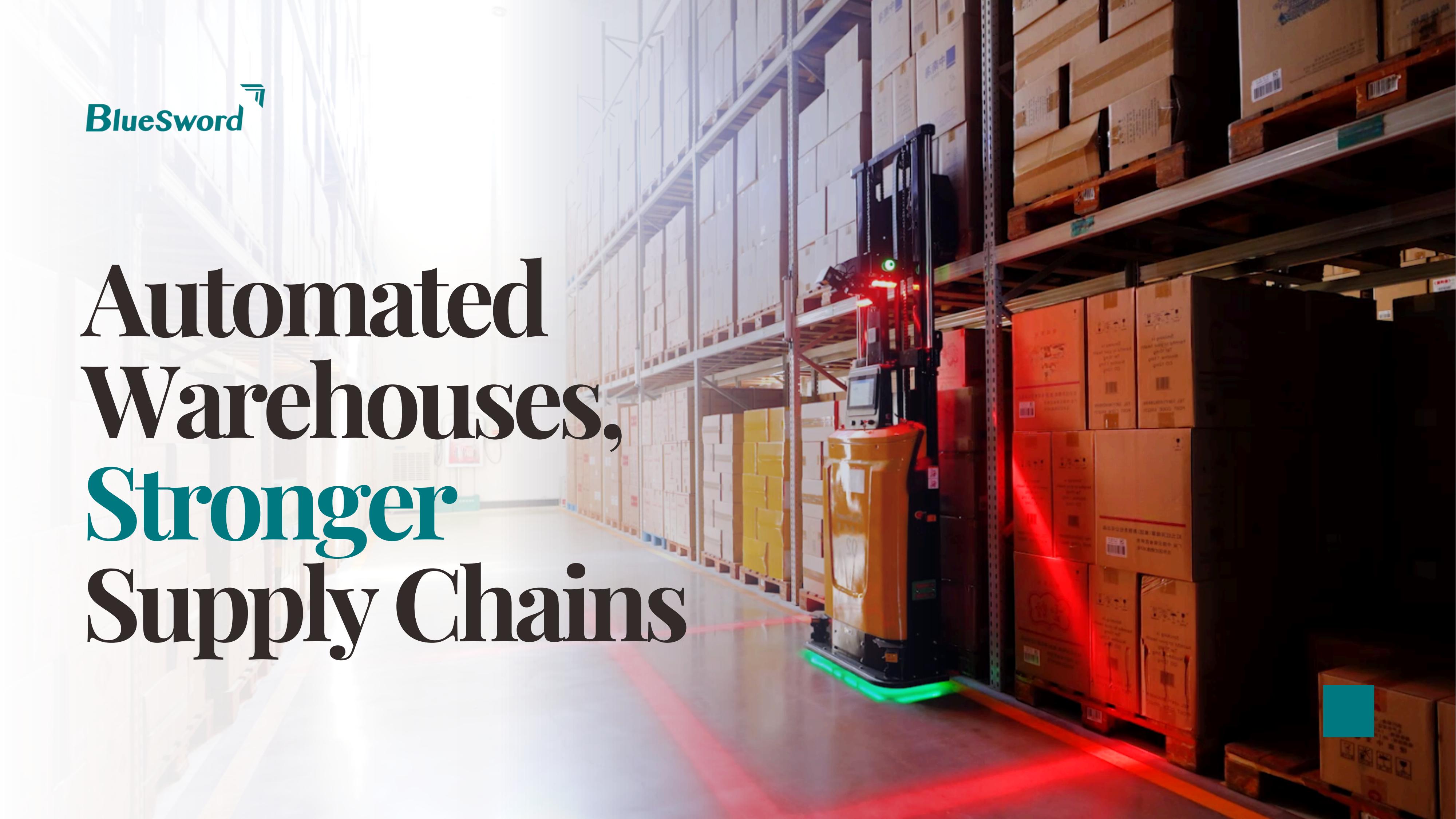 August 19 / 2025Automation in Logistics: Solving Workforce Challenges with Smart Systems
Discover smart logistics solutions with AMRs, shuttle systems, and automated warehouses. Future-proof your supply chain with intelligent intralogistics systems.
READ MORE
-
 July 25 / 2025Robotics Driving Real Safety Transformation in Factories and Warehouses
Safety in factories and warehouses is often discussed in terms of compliance and injury rates. But true safety goes beyond meeting standards. It requires addressing the root causes of risks and understanding how automation reshapes the daily reality for frontline workers—physically and mentally.
READ MORE
-
 May 25 / 2025Are Warehouse Robots Here to Replace Workers—Or to Back Them Where It Counts?
Automation is advancing fast—but where does that leave the people on the ground? This article explores why the future of warehousing isn't a story of replacement, but one of smart collaboration. With real-world cases from BlueSword and global data, we dive into what human-machine partnerships really look like on the warehouse floor.
READ MORE
-
 March 30 / 2025What’s Slowing Down Manufacturing—and What Leading Factories Are Doing About It
While automation continues to gain attention across the production line, internal logistics often remains untouched in traditional manufacturing plants.
READ MORE
-
 January 2 / 2025Building a Green Logistics Ecosystem with Servo Technology
The conveyor system is essential in modern production and logistics, facilitating the efficient storage, sorting, handling, and distribution of materials. By automating transport processes, it enhances efficiency, accuracy, and safety while effectively reducing labor costs.
READ MORE
-
 September 29 / 2024Logistics Transformation: Navigating Challenges in the FMCG Industry
Fast-moving consumer goods (FMCG) are an essential part of our everyday lives. With their large market size and ongoing growth, the FMCG industry plays an important role in the global economy.
READ MORE


